After more than a year of artificial stability, the reprieve for CLP Power customers is over. Starting next month, the utility giant will increase its fuel cost adjustment, a move that signals the end of a rare period of price stagnation in an otherwise volatile energy market. While the headline figures might seem incremental to the casual observer, the underlying mechanics of this hike reveal a complex interplay between global commodity shifts and the rigid regulatory framework of Hong Kong’s electricity sector.
Residents will see their bills climb because the cushion provided by lower international fuel prices has finally deflated. For the past fifteen months, CLP managed to hold the line, but the reality of procurement costs has caught up with the balance sheet. This is not merely a seasonal fluctuation; it is a structural correction.
The Friction in the Fuel Clause
To understand why your bill is rising now, you have to look at the Fuel Clause Recovery Account. This is essentially a massive tab that the utility runs with its customers. When global prices for coal and natural gas spike, the company doesn’t always pass those costs on immediately. Instead, they carry a deficit. When prices drop, they use the surplus to pay down that debt or, in rare cases, offer rebates.
The problem arises when the gap between what CLP pays for fuel and what it charges customers becomes unsustainable. For over a year, CLP benefited from a downward trend in North Asian liquefied natural gas (LNG) benchmarks. That downward trend has flattened. The "adjustment" is the mechanism through which the company ensures it remains whole. It is a pass-through cost, meaning CLP technically makes no profit on the fuel itself, but the timing of these adjustments is often a matter of intense negotiation with the government.
The timing of this specific increase is particularly pointed. It arrives just as the city enters the warmer months when air conditioning usage begins to ramp up. A few cents per kilowatt-hour might look like rounding error on a spreadsheet. In a cramped Kowloon apartment during a July heatwave, it is a tangible erosion of disposable income.
The Natural Gas Trap
Hong Kong has made a deliberate, policy-driven shift away from coal. On the surface, this is a win for local air quality and carbon targets. Below the surface, it has tied the city’s economic heartbeat to the most volatile commodity on the planet. Natural gas is cleaner, but its price is sensitive to everything from Siberian pipeline politics to droughts in the Panama Canal.
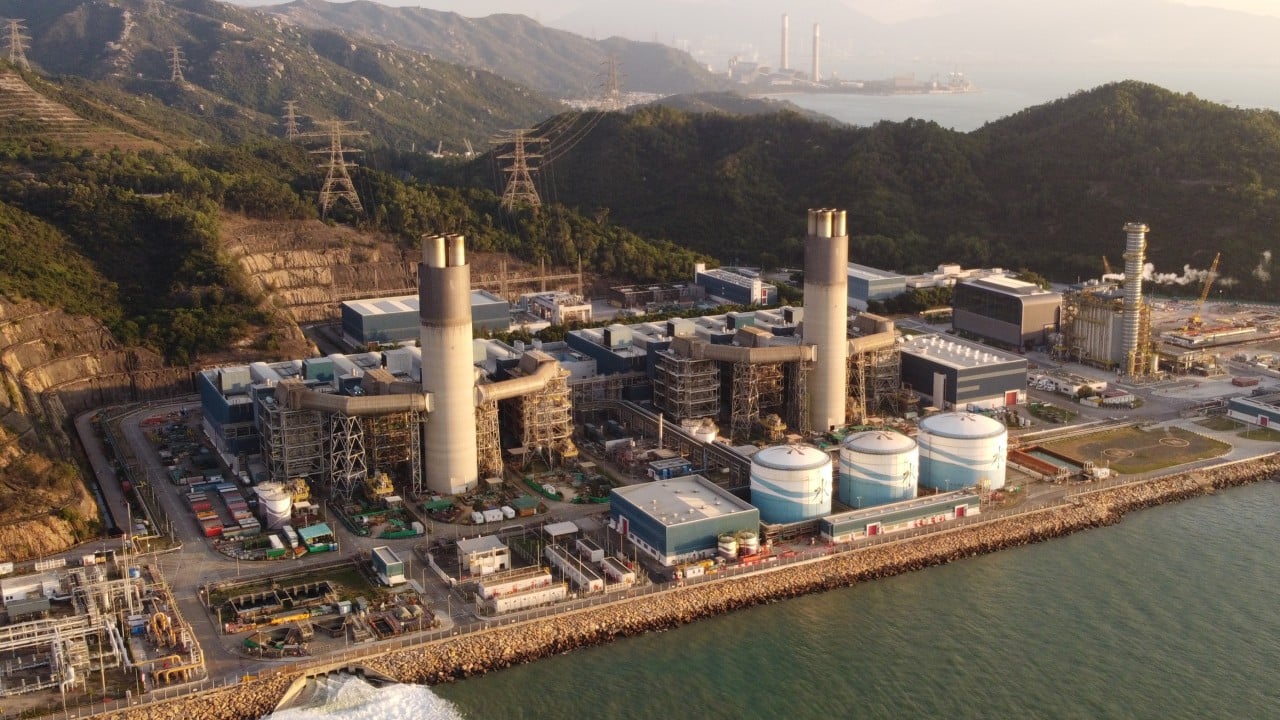
CLP’s reliance on the Black Point Power Station means that when LNG prices move in Singapore or Tokyo, the ripples eventually hit the shores of the New Territories. The offshore LNG terminal, a joint venture between CLP and HK Electric, was sold as a tool for energy security. It allows the city to buy from the global spot market rather than relying solely on Chinese pipelines.
The irony is that "security" in this context means the ability to buy fuel at any price, not necessarily a cheap price. By diversifying supply, the utilities have increased their exposure to the whims of global traders. When you pay your bill next month, you aren't just paying for electrons; you are paying a premium for a diversified supply chain that is increasingly expensive to maintain.
Regulatory Comfort and Public Burden
The Scheme of Control Agreement (SCA) is the invisible hand that governs this entire process. This agreement between the government and the power companies guarantees a net return on fixed assets. It is a deal that critics have long attacked for being too generous to the utilities while offering limited protection to the consumer during inflationary cycles.
Under the SCA, the fuel cost is a separate line item. Because it is a pass-through, the utility has less incentive to aggressively hedge against price spikes than a company in a fully competitive market might. If the price goes up, the adjustment eventually goes up. The risk sits almost entirely on the shoulders of the ratepayer.
Breaking Down the Math
Consider the impact on a typical three-person household. If that household consumes 400 units of electricity a month, a modest increase in the fuel adjustment might only add the cost of a couple of cups of coffee to the monthly total. But inflation does not happen in a vacuum. This increase hits at the same time as rising transport fares and food costs.
For the city’s "energy poor"—those living in subdivided flats where insulation is non-existent and sub-metering is often exploitative—the impact is magnified. These residents often pay rates higher than the official CLP tariff because landlords tack on their own "administrative" fees. When the official rate goes up, the unofficial rate often jumps by a higher percentage.
The Green Transition Premium
There is a hard truth that neither the government nor the utility companies like to emphasize: the transition to a carbon-neutral Hong Kong by 2050 is going to be expensive. Transitioning to renewable energy, hydrogen, and advanced gas firing isn't just a technical challenge; it is a financial one.
Every new wind farm or upgraded turbine is a capital expenditure that enters the asset base, which in turn influences the base tariff. The fuel adjustment is the short-term pain, but the long-term trend for electricity prices in Hong Kong is almost certainly upward. The era of cheap, coal-fired power is dead, and the bill for its funeral is being delivered to your mailbox every month.
We are seeing a shift where electricity is moving from a stable utility cost to a variable expense that requires active management by the consumer. The government’s response has typically been to offer one-off subsidies or credits. While these provide temporary relief, they mask the underlying issue. Subsidies are a band-aid on a structural wound. They use taxpayer money to pay utility bills, which effectively means the public is paying for the increase twice—once through their bills and once through the depletion of public coffers.
Efficiency as the Only Defense
If the price of the commodity is outside of local control, the only variable left is consumption. The government has pushed for "Smart Power" initiatives and energy audits, but for the average person, the options are limited. You can turn off the lights, but you can't easily change the energy efficiency of a building you don't own.
The burden of efficiency has been placed on the individual, while the structural costs of the energy mix are dictated by high-level policy. This disconnect is where the frustration lies. As CLP raises the fuel cost adjustment, it serves as a reminder that the "frozen" prices of the last year were an anomaly, not the new normal.
The global energy market is no longer a place of predictable cycles. It is a theater of constant disruption. Whether it is geopolitical tension in the Middle East or a cold snap in Europe, the price of gas in the South China Sea will react. Hong Kong is an island of high consumption in a sea of volatile pricing.
Check your meter. The period of stability was a gift, and the gift has been rescinded.