In a small, dimly lit apartment in Ohio, a man named Elias stares at a flickering screen. It isn’t a stock ticker or a sports betting app. He is watching a line graph that represents the probability of a specific environmental bill passing the Senate by Tuesday. Elias isn't a lobbyist. He isn’t a politician. He’s a middle-school math teacher who has put $200 on the "No" side of that graph. To Elias, this isn't gambling. It’s a hedge against a future he fears. If the bill passes, his cost of living goes up, but if it fails, he walks away with enough profit to cover his rising grocery bills.
This is the world of prediction markets. It’s a place where the collective wisdom of thousands of strangers is distilled into a single, fluctuating price. It is arguably the most accurate crystal ball humanity has ever built. But right now, that crystal ball is being smashed against the mahogany desks of federal regulators.
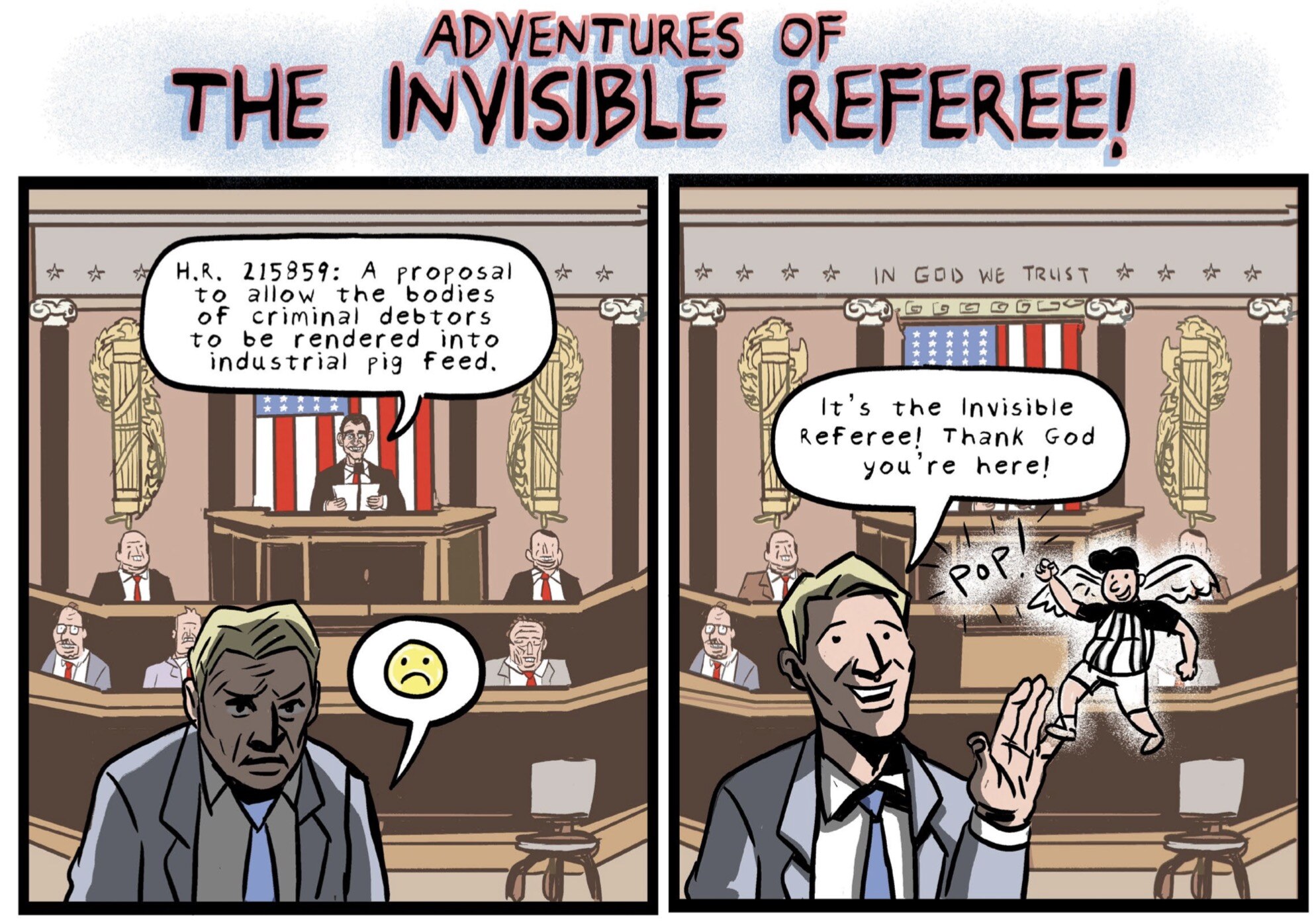
The Commodity Futures Trading Commission (CFTC) has spent the last year sharpening its knives. For decades, this agency has been the "invisible referee" of the financial world, ensuring that when you buy a bushel of wheat or a barrel of oil for future delivery, the game isn't rigged. But as platforms like Kalshi and Polymarket rose to prominence, the CFTC saw something they didn't like: people betting on the messy, unpredictable theater of human life.
The Gritty Reality of the Rulebook
At the heart of the conflict is a deceptively simple question. Is a prediction market a sophisticated data tool, or is it just a casino with a better vocabulary?
The CFTC argues the latter. Their stance is rooted in a specific interpretation of the Commodity Exchange Act. They believe that markets involving "gaming" or activities "contrary to the public interest" have no place under their supervision. To the regulators, allowing people to bet on elections or legislative outcomes feels like a step toward the "gamification" of democracy. They worry about the integrity of the vote. They worry about the optics of a world where a candidate’s worth is measured in cents on a dollar.
But while the feds are trying to pull the plug, the states are beginning to scream.
From Texas to West Virginia, state attorneys general are pushing back. They argue that the CFTC is overstepping its bounds, attempting to ban an entire class of economic activity that provides genuine value to the public. These states see prediction markets as a vital source of "truth serum" in an era of biased polling and "fake news."
When a poll says a candidate is up by ten points, the pollster doesn't lose money if they’re wrong. When a prediction market says that same candidate has a 60% chance of winning, every person behind that number has skin in the game. That financial risk creates a unique kind of honesty.
A Tale of Two Jurisdictions
Consider a hypothetical scenario. Let’s call her Sarah. Sarah runs a small construction firm in Georgia. She needs to know if a new federal infrastructure project is actually going to get funded before she hires ten new workers and leases three new excavators. Traditional news outlets give her conflicting opinions. Social media is a swamp of partisan shouting.
Sarah turns to a prediction market. She sees that the "Infrastructure Funding" contract is trading at $0.75. This means the collective market—thousands of people with their own private information—thinks there is a 75% chance the money is coming. Sarah uses that data to make a real-world business decision.
In this moment, the market isn't a "game." It’s an insurance policy. It’s a piece of infrastructure as vital as the steel she uses on her job sites.
However, the CFTC sees Sarah’s activity through a different lens. To them, if the underlying event is a political vote, it’s "public interest" territory. They argue that if a wealthy entity could move the market price significantly, they could influence public perception or even the behavior of voters. They see a dark path where the market doesn't just predict the outcome—it dictates it.
The legal battle currently unfolding is a clash of philosophies. On one side, you have the "Protectionists"—the federal regulators who believe that certain parts of the human experience, like our elections and our laws, are too sacred to be commodified. On the other, you have the "Informationists"—the states and platform founders who believe that information is the most valuable commodity we have, and that suppressing it is a disservice to a free society.
The Friction of the Enforcement Machine
The CFTC's recent enforcement actions haven't been quiet. They have gone after offshore platforms with the full weight of the federal government, seeking to bring them to heel or shut them down entirely. They are demanding that even domestic, regulated exchanges like Kalshi stop offering "election-related" contracts.
The agency’s logic is a bit like a fire marshal trying to ban matches because someone might start a fire. Yes, the risk is there. But without the fire, we’re all sitting in the dark, cold and uninformed.
The states challenging this authority are using a potent legal argument: the "Major Questions Doctrine." This is a fancy way of saying that if a federal agency wants to make a massive, industry-changing rule that affects millions of people, they need clear permission from Congress. They can't just find a dusty sentence in a 1930s law and use it to ban 21st-century technology.
The Emotional Cost of the Dark
Why does this matter to the average person who doesn't know a "binary option" from a "basis point"?
It matters because we live in a world of profound uncertainty. We are constantly being lied to. We are constantly being sold a version of reality that serves someone else’s bottom line. Prediction markets are one of the few places where the only thing that matters is being right.
If the CFTC succeeds in driving these markets back into the shadows—or forcing them into the unregulated, offshore corners of the internet—the "Eliases" and "Sarahs" of the world lose. They lose their hedge. They lose their clarity. They are forced to go back to guessing.
The irony is that the regulators claim to be protecting the "public interest." But the public's greatest interest is in knowing the truth. When the CFTC sues to stop a market from predicting a Supreme Court decision or a climate policy, they aren't just protecting a process. They are gatekeeping the future.
We are watching a slow-motion collision between the old world of centralized control and the new world of decentralized intelligence. The old world wants to make sure everything is "orderly" and "authorized." The new world just wants to see the math.
As the lawsuits move through the courts, the price of these prediction contracts continues to tick up and down. Every tick is a heartbeat. Every fluctuation is a piece of news being digested, a rumor being debunked, or a reality being forged.
The states are betting that the courts will see these markets for what they are: a vital organ of a modern, data-driven democracy. The CFTC is betting that the fear of the unknown will be enough to keep the status quo in place.
Elias, back in his apartment, doesn't care about the Major Questions Doctrine. He doesn't care about the jurisdictional squabbles between Washington D.C. and state capitals. He just wants to know if he’s going to be able to pay for his heat this winter. He looks at the screen. The line moves. For a brief, shining moment, the chaos of the world feels manageable because it has a price.
The referee is holding a whistle, ready to blow it and end the play. But the players are already on the field, and the crowd has already seen the score. You can't un-know the truth once it's been priced into the world.
The screen stays lit, the numbers keep moving, and somewhere in the silence of the courtroom, the future waits for its verdict.