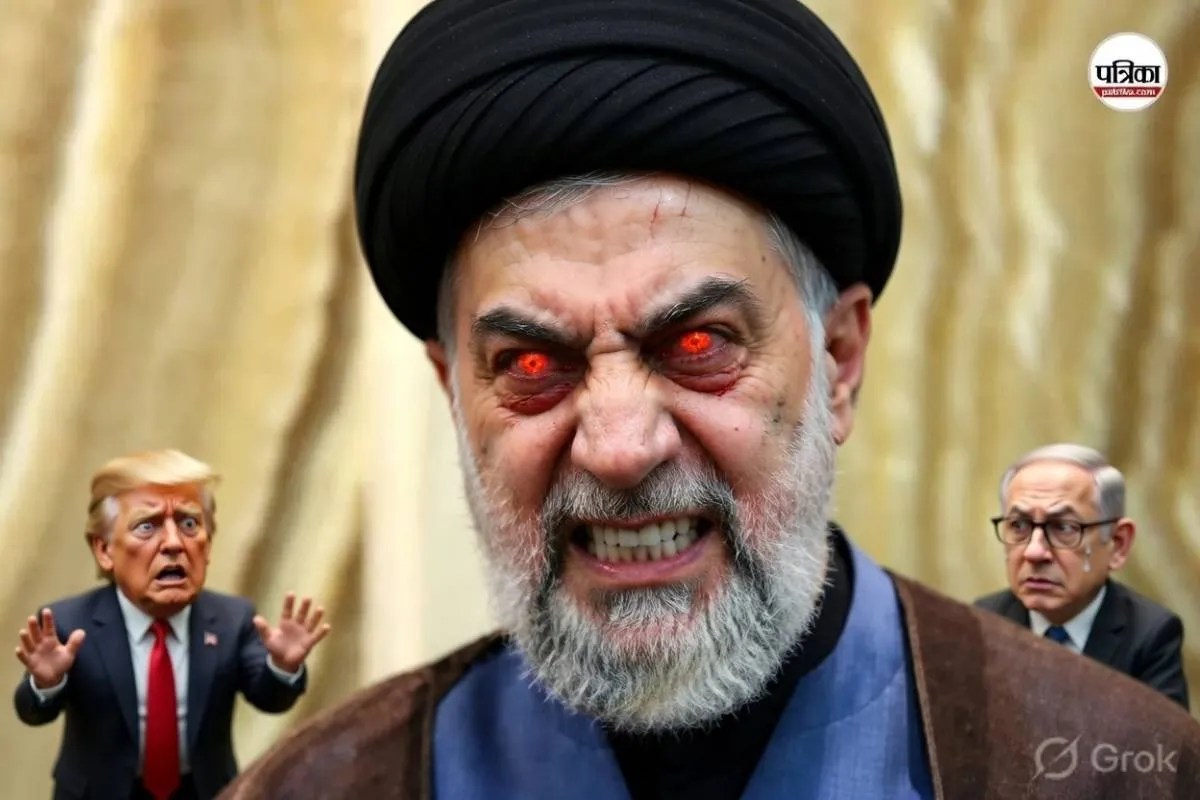
The wind in Tehran doesn’t just carry the scent of exhaust and toasted sangak bread anymore. It carries a heavy, expectant silence. In the narrow alleys of the Grand Bazaar, where copper smiths once drowned out the world with their rhythmic hammering, the conversations have dropped to a frantic whisper. They aren't talking about the price of saffron or the fluctuation of the rial. They are talking about a ghost.
His name is Mojtaba.
For years, Mojtaba Khamenei—the second son of Iran’s Supreme Leader—was a figure of rumors, a man of the shadows who supposedly held the keys to the kingdom without ever having to turn the lock in public. But something shifted when the dust of the latest regional escalations refused to settle. The reports began to trickle out, jagged and sharp like broken glass. He was injured. He was targeted. He was, perhaps, the final chess piece on a board that was being kicked over by a giant from across the Atlantic.
The Iranian establishment didn't just deny these claims. They roared. "Mojtaba is wounded, so what? He is still alive!" It was a defiance that sounded suspiciously like a frantic reassurance. When a government feels the need to scream that its future is still breathing, the people start to look for the oxygen tanks.
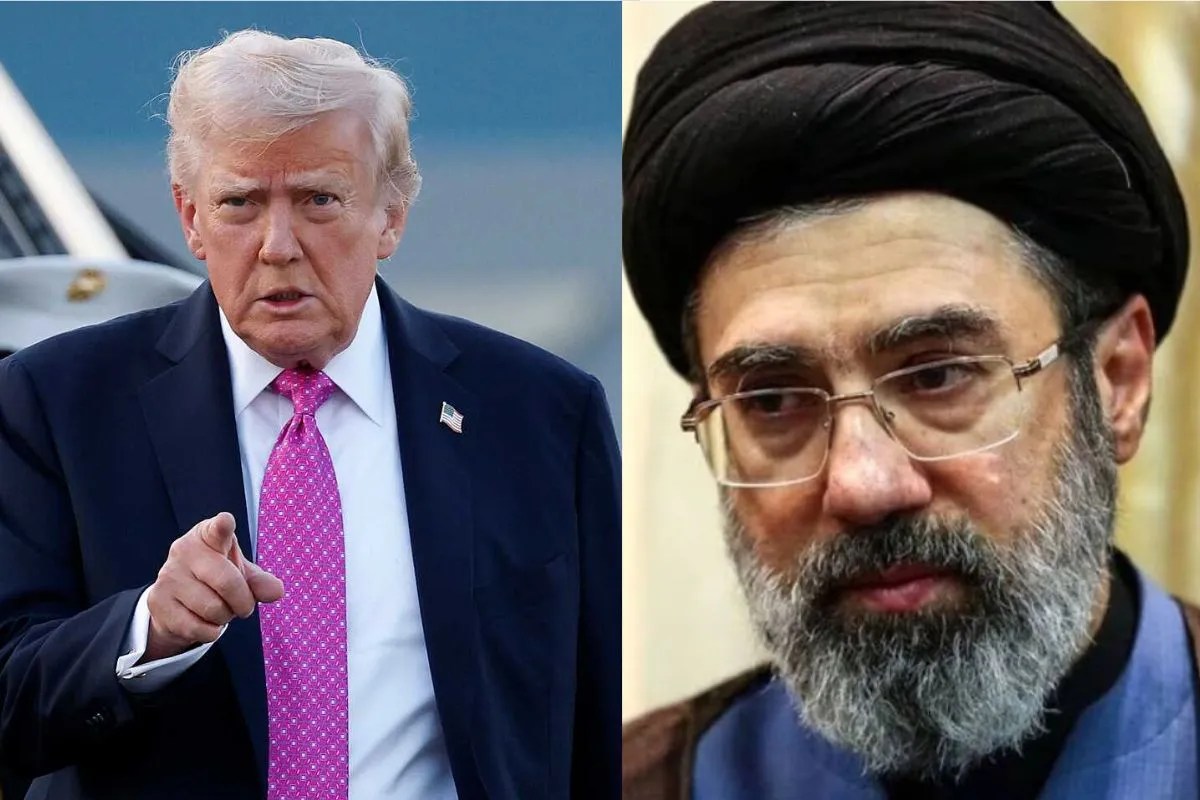
Across the ocean, in a gold-leafed office where the air is kept at a precise chill, Donald Trump watched the screens. The American President doesn't deal in the nuances of Persian diplomacy. He deals in leverage. He deals in the visceral weight of a name. When he spoke, he didn't offer the measured, gray-suited caution of a State Department official. He spoke with the blunt force of a man who knows that in the theater of power, perception is the only reality that matters.
"They think they can play the long game," Trump’s rhetoric suggested, even if the exact transcript was sanitized for the evening news. "But the long game is over."
Consider the stakes for a moment. This isn't just about a father and a son. This is about the "Maravi," the concept of a legacy that transcends the individual. In the high-walled compounds of Tehran, the survival of Mojtaba isn't just a familial concern. It is the survival of a specific vision of the Islamic Republic. If Mojtaba is the heir, and the heir is vulnerable, then the entire structure of the future is built on sand.
The rhetoric coming out of Iran is designed to sound like steel. They want the world to believe that even a wounded leader is a martyr in the making, and a martyr is more dangerous than a king. They are leaning into the imagery of the battlefield, trying to turn a physical vulnerability into a spiritual strength. But the people in the streets of Tehran aren't looking for spiritual metaphors. They are looking at the price of eggs. They are looking at the sky, wondering if the next sound they hear will be a bird or a drone.
The tension in the Middle East has always been a symphony of proxies and backroom deals. But this is different. This is personal. When the names of the leaders' children enter the fray, the gloves aren't just off; the hands are reaching for the throat.
Trump’s strategy has always been to find the pressure point and press until something breaks. By acknowledging the fragility of the Iranian succession, he isn't just making a diplomatic point. He is planting a seed of doubt in the minds of the Iranian elite. He is asking them: Who are you going to follow when the current sun sets?
Imagine a mid-level commander in the Revolutionary Guard. He has spent twenty years climbing the ranks, fueled by a mixture of genuine belief and a very practical desire for survival. He hears the official broadcasts shouting that everything is fine. Then he hears the rumors. He sees the American President laughing at the idea of Iranian stability. That commander doesn't look at the flag anymore. He looks at the door.
The "human-centric" reality of this geopolitical earthquake is found in that commander's hesitation. It’s found in the mother in Isfahan who turns off the news because she can’t bear to hear another "victory" speech that feels like a funeral march. It’s found in the young students who realize that their entire future might be tethered to the health of a man they have never actually seen speak in person.
We often talk about "geopolitics" as if it’s a game of Risk played by giants on a board. It isn't. It’s a series of heartbeats. It’s the adrenaline spike of a pilot over the Persian Gulf. It’s the trembling hands of a translator trying to find the right word for "retaliation" without starting a fire they can't put out.
The Iranian response—the loud, public insistence on Mojtaba’s vitality—is a classic psychological defense. In psychology, we call it overcompensation. When you are terrified that someone has seen your bruise, you don't just cover it; you claim that the bruise is actually a sign of elite warrior status.
But the American side isn't buying the warrior story. Trump’s approach is a wrecking ball to the carefully maintained mystique of the Iranian leadership. He treats the Supreme Leader’s inner circle not as a holy council, but as a group of people who are running out of time and options.
The real story isn't the "clash of civilizations" that academics love to debate. The real story is the clash of egos and the desperate scramble for continuity. Iran is trying to prove it is still a monolith. Trump is trying to prove it is a cracked vase.
Behind the headlines of "war" and "threats," there is a deep, agonizing uncertainty. If Mojtaba Khamenei is indeed the chosen successor, his physical safety is the single most important variable in the region's stability. A vacuum in Tehran wouldn't just be a political shift. It would be a supernova. It would pull every neighboring country, every extremist group, and every global superpower into its gravitational well.
This is why the anger in Trump’s voice matters. This is why the desperation in the Iranian "shout-back" matters. They both know that the margin for error has evaporated. There are no more "minor" incidents. A scratched finger on the wrong person is now a declaration of intent.
In the end, power is a fragile thing. It’s a collective agreement to believe in a certain story. For decades, the story in Iran was one of endurance and divine mandate. But as the names of the heirs start appearing in the crosshairs of global tension, the story is changing. It’s becoming a story about mortality.
The streets of Tehran will wake up tomorrow, and the smell of bread will return. The vendors will hawk their wares, and the traffic will choke the avenues. But the silence will remain. Everyone is waiting to see if the ghost in the shadows is as strong as the shouts from the minarets claim, or if the giant in the gold-leafed office has finally found the thread that unspools the entire tapestry.
When the sun goes down over the Alborz mountains, the shadows grow long. In those shadows, the future of a nation is being decided not by grand ideologies, but by the strength of a pulse and the whim of a man who refuses to look away. The world watches, holding its breath, realizing that sometimes, the most important thing a leader can do is simply prove they are still there.
The defiance of Tehran is a scream into the dark. Trump’s response is a match struck in a room full of gunpowder. And in the middle of it all, a man named Mojtaba remains the most important secret in the world, a living question mark in a land that only allows for periods.