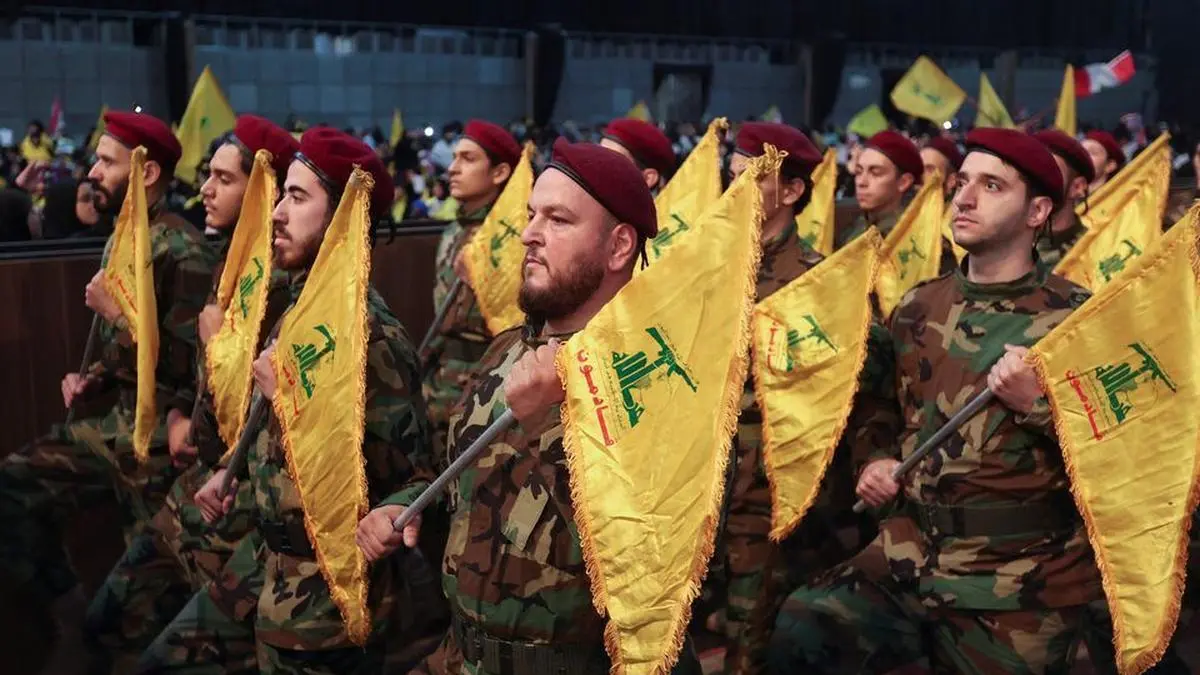
Sanctions are often described as a blunt instrument, but the reality is more like a high-stakes game of whack-a-mole played across five continents. The latest U.S. Treasury Department action targets a sprawling, multi-layered financial network that serves as the lifeblood for Hezbollah, the Lebanese militant group. This isn’t just about freezing a few bank accounts. It is a targeted strike against a sophisticated shadow economy that moves hundreds of millions of dollars through exchange houses, commercial shipping, and front companies in places like Turkey, the UAE, and West Africa.
To understand why this matters, one must look past the headlines of "Hezbollah-linked" entities. The core problem is the resilience of the Hawala system—an informal method of transferring money based on trust rather than digital ledgers—and how it has been weaponized by non-state actors. By operating outside the traditional banking perimeter, these networks allow funds to flow from illicit drug trades in South America or gold smuggling in Africa directly into the coffers used to procure advanced drone technology and ballistic missiles.
The Architecture of a Shadow State
Hezbollah does not operate like a traditional insurgent group. It functions as a state within a state, providing social services, healthcare, and infrastructure. This requires a massive, steady stream of liquid capital. The U.S. Treasury's recent designations reveal that the group has mastered the art of "layering"—the process of distancing illegal funds from their source through a series of complex transactions.
Most of these transactions occur in jurisdictions with weak anti-money laundering (AML) enforcement. For instance, a small electronics trading firm in Dubai might be used to purchase dual-use components from Europe. On paper, it looks like a standard business deal. In reality, the money used for the purchase originated from a currency exchange in Beirut that was recently infused with cash from the sale of Captagon—a highly addictive amphetamine—across the Middle East.
The sheer volume of these transactions makes them difficult to track. Even with the most advanced AI monitoring tools, a shell company that exists for only six months and processes $50 million in "textile imports" can easily blend into the noise of global trade. By the time regulators flag the activity, the company has folded, and the assets have migrated to a new entity with a different name and a different "owner" in a different country.
Why Conventional Sanctions Often Fail
There is a dirty secret in the world of financial intelligence. Sanctions are frequently a reactive measure rather than a preventative one. When the U.S. Treasury names an individual like Hassan Moukalled or a firm like CTEX, they are often identifying actors who have already been operational for years. The damage is done, the infrastructure is built, and the network is already pivoting.
The effectiveness of these measures is also hampered by "de-risking." When large international banks see a region as too high-risk because of sanctions, they pull out entirely. This doesn't stop the flow of money to bad actors; it simply pushes legitimate businesses and NGOs into the same informal channels used by Hezbollah. This creates a feedback loop where the shadow economy becomes the only viable economy for millions of people, making it even harder to distinguish between a family sending remittances and a militant group moving operational funds.
The Role of Third Party Jurisdictions
Turkey and the United Arab Emirates frequently appear in these investigative reports. These nations serve as critical hubs for the "grey market." While both countries have made public commitments to tightening their financial regulations, the sheer scale of their trade volumes provides ample cover. A Hezbollah financier doesn't need to break the law in Istanbul; they just need to use the existing legal frameworks for gold trading or real estate investment to wash their capital.
Historical data suggests that as long as there is a demand for specialized financial services that bypass the SWIFT system, there will be a supply. Hezbollah has spent decades cultivating relationships with business families across the Lebanese diaspora. These families, often operating in the charcoal, timber, or diamond industries in Africa, provide the "nodes" for this global network. They aren't necessarily ideologically aligned with the group, but they are often coerced or incentivized to provide liquidity when needed.
The Cryptocurrency Pivot
We are seeing a shift in how these networks move value. While cash is still king in the Levant, Tether (USDT) has become an essential tool for Middle Eastern militant groups. Stablecoins offer the speed of the digital age without the volatility of Bitcoin. They allow a financier in Beirut to settle a debt with a supplier in Southeast Asia in minutes, bypassing every Western correspondent bank.
Tracking these on-chain movements is possible, but it requires a level of international cooperation that currently does not exist. If a centralized exchange is based in a country that ignores U.S. subpoenas, the trail goes cold. This digital frontier is the next battlefield for the Treasury Department’s Office of Foreign Assets Control (OFAC).
The Human Cost of Financial Warfare
It is easy to view this through the lens of spreadsheets and policy papers. However, the strangulation of Hezbollah’s financial network has direct consequences for the Lebanese people. The country is already in the midst of one of the worst economic collapses in modern history. When the U.S. sanctions a major exchange house, it often wipes out the life savings of ordinary citizens who used that house for basic currency needs.
This creates a recruitment opportunity for the very group the sanctions are meant to weaken. Hezbollah can point to the "economic siege" by the West as the cause of the misery, positioning itself as the only protector of the marginalized. It is a catch-22 for Western policymakers. Do you cut off the oxygen to a militant group if it means suffocating a civilian population?
The Mechanics of Evasion
- Smurfing: Breaking down large sums of cash into small, inconspicuous amounts that are deposited into various accounts.
- Trade-Based Money Laundering (TBML): Over-invoicing or under-invoicing goods to move value across borders.
- Front Companies: Legitimate-looking businesses (e.g., used car lots, beauty supply stores) that mix illicit cash with legal revenue.
- Nested Accounts: Using a smaller bank's relationship with a larger bank to gain access to the global system.
The "network" identified in the latest round of sanctions used all four methods. It wasn't a pyramid; it was a web. If you cut one strand, the rest of the structure remains intact. To actually dismantle the organization, the strategy must move beyond individual designations toward a systemic overhaul of how we monitor "dual-use" financial services.
The Fragility of the Victory
Declaring success after a round of sanctions is a mistake. The individuals named today will be replaced by their deputies tomorrow. The shell companies shuttered this week will be reopened under different jurisdictions by next month. The real victory lies not in the "list" but in the persistent, unglamorous work of identifying the professional money launderers who serve multiple masters. These are the "service providers" who move money for Hezbollah today and a drug cartel tomorrow. They are the true backbone of global instability.
Western intelligence must stop treating this as a game of individual targets and start treating it as a war on the infrastructure of secrecy. This means forcing transparency on beneficial ownership in tax havens and putting real pressure on "allied" nations that turn a blind eye to the exchange houses on their streets. Without that, we are just rearranging deck chairs on a sinking ship of global financial integrity.
Financial institutions need to move away from simple "check-the-box" compliance and toward an aggressive, investigative model of KYC (Know Your Customer). If a shipping company in a high-risk zone suddenly sees a 400% increase in revenue without a corresponding increase in physical assets, the red flags should trigger more than just a report. They should trigger an immediate freeze. The tools exist. The data exists. What is missing is the collective political will to prioritize long-term security over short-term trade interests.
The next time you see a headline about sanctioned networks, ask yourself where that money goes when the door is closed. It doesn't vanish. It just finds a new hallway. The goal shouldn't be to close the door, but to burn down the building that houses the maze. Until the cost of doing business with Hezbollah outweighs the profit for these global intermediaries, the pipeline will remain open.