He didn’t look like a man holding the world’s most volatile remote control.
Elias sat in a dimly lit control room in Rotterdam, the air smelling faintly of ozone and burnt coffee. On his monitors, the global economy wasn't a series of stock tickers or GDP reports. It was a rhythmic, pulsing map of blue lines. These were the tankers, the steel leviathans carrying millions of barrels of crude oil across the "chokepoints"—those narrow, terrifyingly fragile strips of water like the Strait of Hormuz or the Suez Canal.
One glitch in the software, one stray missile from a regional proxy war, or one ill-timed maritime accident, and the "blue lines" stop moving. When they stop, the world screams.
Most of us view oil as a commodity we buy at a plastic pump. We check the price, grumble about inflation, and move on. But that is a surface-level understanding of a deep-sea reality. Oil is not just fuel. It is the connective tissue of modern civilization. It is the reason your grocery store has avocados in February and why the plastic casing on your smartphone exists. To understand the politics of disruption is to understand that we are all living on a giant, pressurized vessel, and the valves are being turned by hands we will never shake.
The Geography of Anxiety
Power used to be about who owned the fields. If you had the black gold under your sand or soil, you were the king. That era is dying. Today, power belongs to the disruptors—the entities capable of snapping the supply chain.
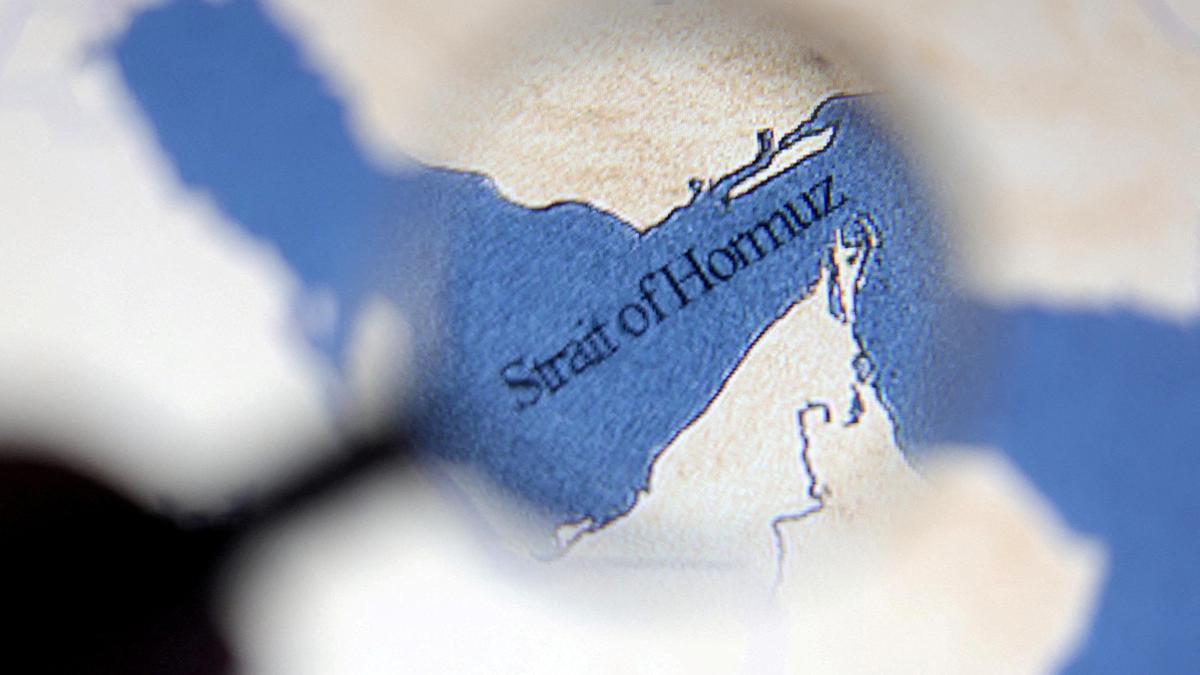
Consider the Strait of Hormuz. At its narrowest, the shipping lanes are only two miles wide. Through this tiny throat passes roughly one-fifth of the world’s total oil consumption. Imagine a hypothetical scenario: a small fleet of naval drones, costing less than a mid-sized sedan, disables a single mega-tanker in those lanes.
The immediate result isn't just a rise in gas prices. It is a systemic cardiac arrest.
Insurance premiums for every vessel in the Indian Ocean skyrocket. Traders in London panic. Refineries in South Korea, designed for specific grades of crude, begin to calculate how many days of "run time" they have left before the machines have to go cold. This is the politics of the bottleneck. In the past, wars were fought to seize resources. Now, influence is gained simply by proving you can prevent everyone else from getting them.
The Great Re-Routing
For decades, the flow of energy was predictable. It moved from the Middle East to the West. But the map has been crumpled and redrawn.
The United States, once the world’s most desperate customer, became its most prolific producer through the sheer, brute-force ingenuity of hydraulic fracturing. This changed the psychology of the planet. When the U.S. no longer needs the Middle East to keep its lights on, the security guarantees that held the region together for fifty years begin to fray.
Elias watched this shift on his screens over a decade. He saw the "Dark Fleet"—thousands of aging, uninsured tankers with their transponders turned off—emerge to bypass sanctions. These "ghost ships" are the shadow economy’s blood cells. They carry Iranian or Russian oil to thirsty markets in Asia, navigating outside the lines of international law.
This isn't just a business maneuver. It is a middle finger to the established order. When a nation can move its energy without using the traditional banking systems or shipping routes, the "policemen" of the world lose their badge. The disruption is digital as much as it is physical.
The Human Toll of a Cent-Per-Gallon Shift
It is easy to get lost in the macroeconomics. But let’s look at a hypothetical family in a suburb of Ohio or a village outside Nairobi.
For the family in Ohio, a $1 increase at the pump is an annoyance. They might skip a dinner out. But for the small-scale farmer in Kenya who relies on a diesel generator to pump water to his crops, that same price spike is a death sentence for his livelihood.
Oil disruption is a regressive tax on the poor.
Because petroleum is baked into the cost of fertilizer (via ammonia production) and transport, an energy crisis is always, eventually, a food crisis. The "disruption" discussed in boardroom meetings in Dubai or D.C. manifests as hunger in the Global South. We are tethered to this carbon molecule in ways that feel almost biological. We have built a world where our very survival is predicated on the constant, uninterrupted flow of a flammable liquid from some of the most unstable places on Earth.
The Green Mirage
There is a comforting narrative that we are "transitioning" away from this volatility. We talk about EVs and wind farms as if they are an exit ramp.
The reality is more of a messy, dangerous detour.
The transition itself is a massive driver of oil demand. To build a wind turbine, you need steel. To make steel, you need massive amounts of energy, often derived from coal or gas. To mine the lithium and cobalt for "clean" batteries, you need giant, diesel-chugging earthmovers.
We are in the "Long Middle." This is the period where we are trying to build the new world using the tools of the old one. During this phase, the politics of oil become even more volatile, not less. As oil companies face pressure to stop investing in new Wells, the existing supply becomes more precious. We are intentionally making the system more brittle before the replacement is ready.
Elias sees this in the volatility indices. The swings are wider. The reactions are faster. The world is twitchy.
The New Architecture of Power
If you want to see where the real disruption lies, look at the software.
The next great oil crisis might not start with an explosion. It might start with a "404 Not Found" error at a major pipeline terminal. In 2021, the Colonial Pipeline hack showed how a group of people in a room halfway across the world could paralyze the Eastern Seaboard of the United States without firing a single bullet.
They didn't steal the oil. They just scrambled the data that told the company who to bill for it.
That is the ultimate disruption: the decoupling of the physical resource from the digital systems that manage it. We have layered a 21st-century digital skin over a 20th-century industrial skeleton. The points of failure have multiplied exponentially.
The Silent Weight of the Barrel
Every time you turn a key, flip a switch, or click "Buy Now," you are making a silent demand of a system that is currently under immense strain.
We like to think we are independent actors in a free-market economy. But we are all passengers on Elias’s screen. We are the "demand" side of a high-stakes poker game played by petrostates, tech-moguls, and shadow-fleet operators.
The invisible stakes aren't just about the price of a gallon of gas. They are about the stability of the social contract. When energy flows, people are generally quiet. When it stops, or when it becomes a luxury, the foundations of "order" begin to liquefy.
Elias finished his coffee. The ozone smell lingered. On the screen, a tanker near the Bab el-Mandeb strait slowed down, its icon flashing amber. A small technical delay? A pirate approach? A geopolitical statement?
For a few seconds, the entire global economy held its breath.
Then the icon turned blue again. The line kept moving. The world stayed on its axis for one more hour.
But the pressure in the pipe never goes away. It only waits for a crack.