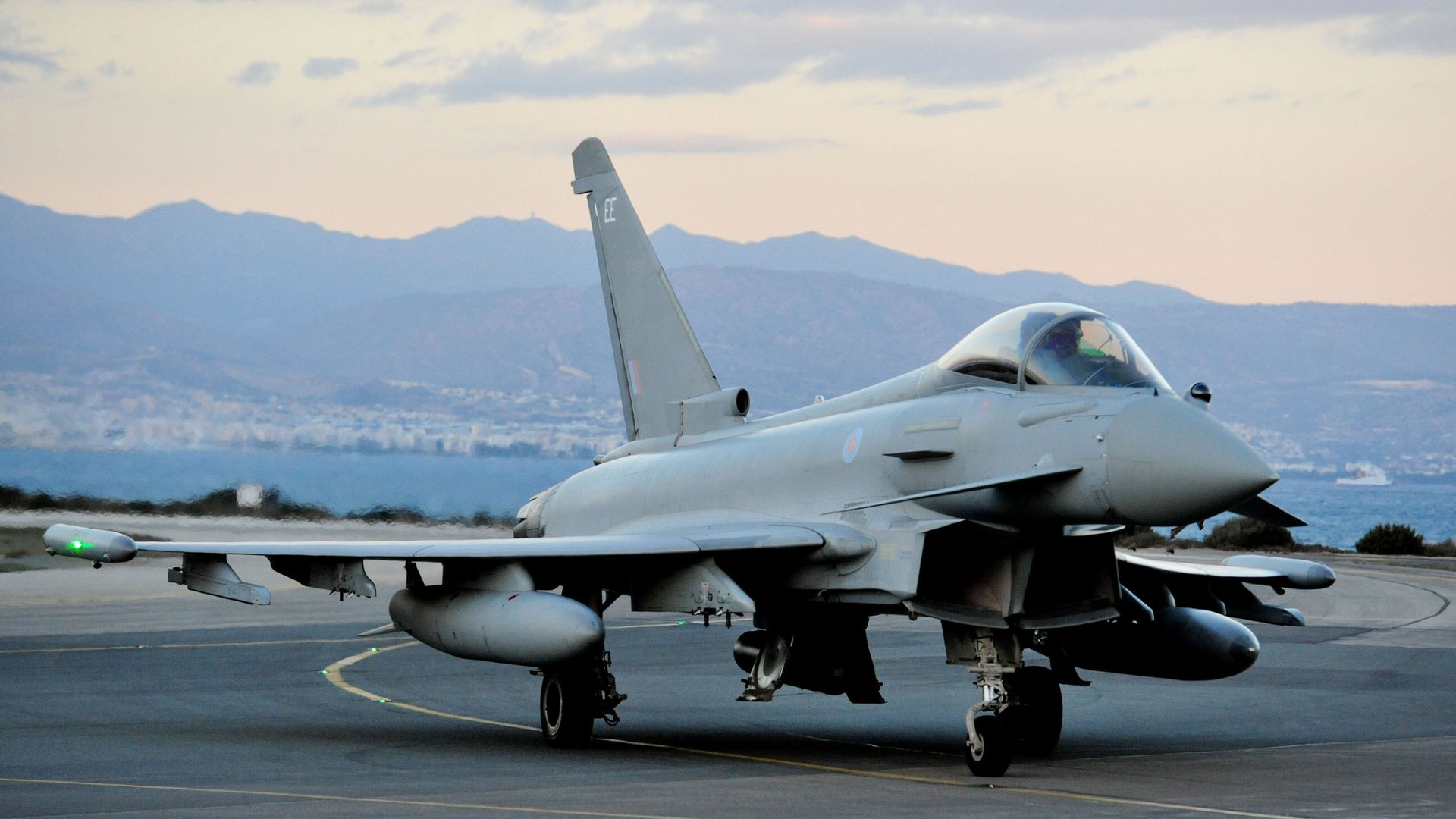
The wind across the tarmac at RAF Akrotiri doesn’t care about parliamentary procedure. It is a biting, salt-crusted gale that whips around the hangars of the British Sovereign Base Areas in Cyprus, a geography that belongs to the United Kingdom by treaty but feels like a pressurized capsule of another world. Here, the "special relationship" isn’t a phrase used in a toast at a state dinner. It is a series of logistical handshakes, radar blips, and the heavy, metallic thrum of Typhoon jets preparing for a mission that hasn't officially started yet.
For the average person sitting in a London cafe or a Manchester pub, the distance between a headline about Middle Eastern stability and the physical reality of a launchpad in the Mediterranean is vast. It is a gap filled with jargon like "operational autonomy" and "strategic ambiguity." But for Keir Starmer, that gap has become a tightrope.
The accusation is simple. Critics say the Prime Minister has performed a quiet, tectonic U-turn, granting the United States a standing "green light" to use these British bases for strikes against Iranian targets without seeking fresh permission for every sortie. It sounds like a technicality. It is actually a question of who holds the keys to the kingdom.
The Ghost of 2003
History doesn't just repeat in British politics; it haunts.
To understand why the phrase "U-turn" carries such a jagged edge, you have to look back at the shadow cast by the Iraq War. For a generation of Labour politicians, the idea of being tethered to a surging American military machine without a hand on the brake is the ultimate political nightmare. It is the ghost that keeps Downing Street awake.
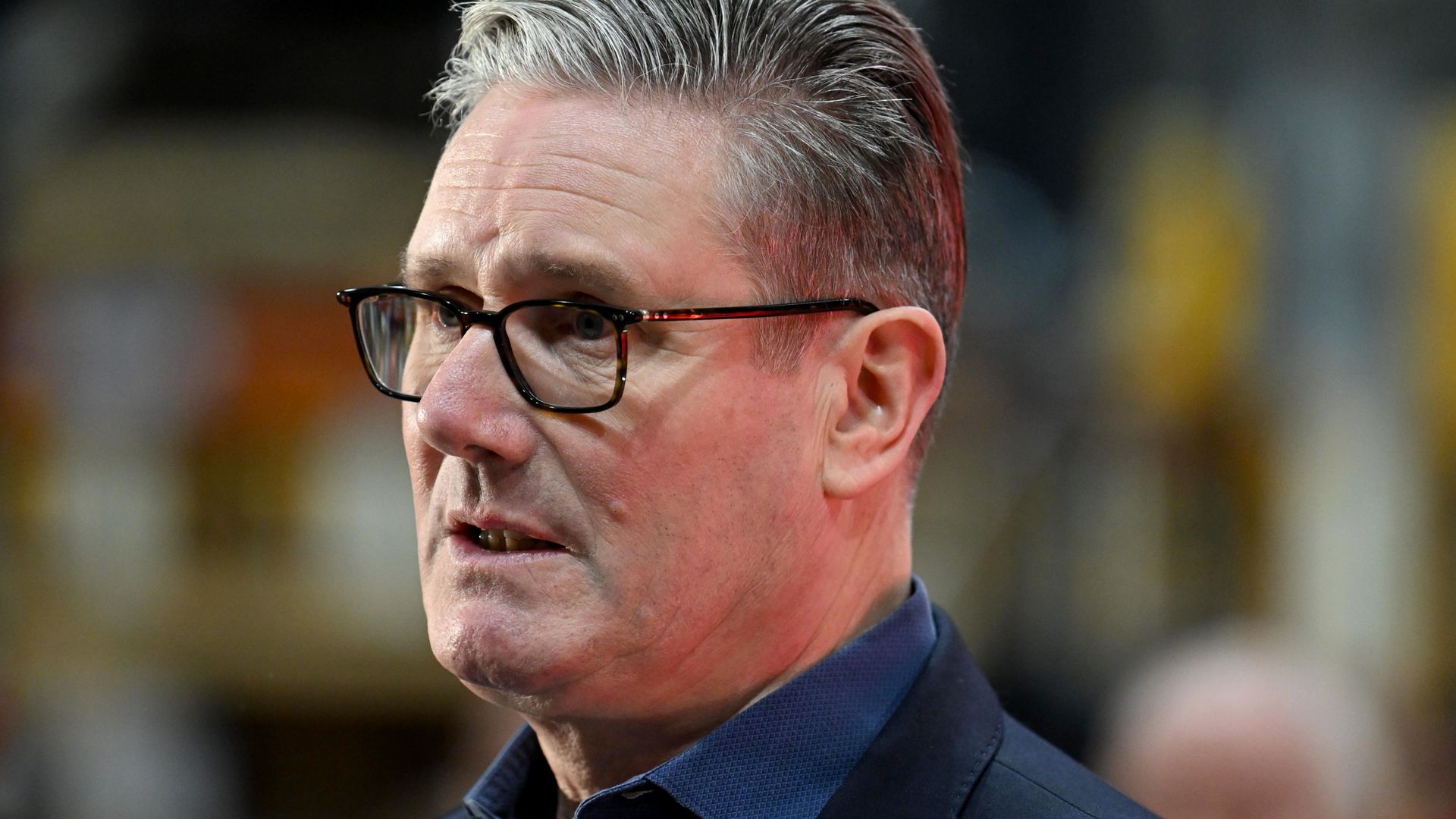
When Starmer stood before the microphones to deny these claims, he wasn't just defending a policy. He was trying to exorcise a spirit. He insisted that "no such decision" had been made and that any suggestion of a blanket approval was a "complete distortion" of the truth. But in the world of high-stakes diplomacy, what isn't said often carries more weight than what is.
Imagine a hypothetical scenario. A mid-level officer at the Pentagon receives intelligence of a mobile missile battery in western Iran preparing for a launch. The fastest way to neutralize it involves assets stationed at Akrotiri. In the old world—the one the public believes we still inhabit—that officer’s request would trigger a frantic series of calls through the Foreign Office, ending with a weary Prime Minister making a binary choice in the middle of the night.
The fear today is that the "blanket" has already been thrown over the bed.
The Weight of a Sovereignty
Sovereignty is a heavy word that usually ends up feeling quite light when the missiles start flying.
Starmer’s denial centers on a delicate linguistic distinction. He maintains that the UK remains in full control of its bases. However, the reality of modern warfare is digital, instantaneous, and deeply integrated. We are no longer in an era where a British soldier stands at a gate with a clipboard, checking the manifest of every American plane. The integration of US and UK intelligence means that often, the two nations are seeing the same target through the same digital eye at the same microsecond.
If the intelligence is shared, and the mission is joint, does "permission" become a redundant concept?
Critics argue that by tightening the logistical knot with Washington, the UK has effectively outsourced its veto. They suggest that a "standing agreement" exists—a pre-signed permission slip that allows the US to act against Iranian provocations under the umbrella of "regional defense."
Starmer calls this a lie. He points to the rigorous legal frameworks that govern the Sovereign Base Areas. He insists that British interests and British law remain the ultimate arbiters.
But consider the pressure of a crisis. When the Red Sea is a gauntlet of drone strikes and the Levant is a tinderbox, the "no" becomes a very expensive word to say to your most powerful ally. It is a word that can break alliances.
The Silent Tarmac
At the heart of this dispute is a fundamental tension in the British soul. We want to be a global power, a "force for good" that stands shoulder-to-shoulder with the giants. Yet, we are terrified of the cost of that companionship. We want the protection of the American shield, but we are embarrassed by the weight of the American sword.
The Iranian threat is not a hypothetical for the sailors in the Red Sea or the pilots over Iraq. It is a daily reality of radar locks and intercepted telemetry. For them, the debate in Westminster about "U-turns" feels like an argument about the color of a lifebelt while the ship is taking on water.
Yet, the principle matters. If a British base is used to launch a strike that triggers a wider regional conflagration, the British public are the ones who will live with the legacy of that choice. They are the ones who will see the fallout in their energy bills, their security, and their standing in the world.
Starmer knows this. He is a lawyer by trade, a man who lives in the fine print. He understands that in the eyes of the law, a "standing permission" and a "consistent alignment of interests" can look remarkably similar while being legally distinct.
The Calculus of Power
The Prime Minister’s denial is a masterclass in controlled frustration. He isn't just saying "we didn't do it." He is saying "why would we need to?"
The UK government’s position is that their policy toward Iran has been consistent: de-escalation through strength. They argue that the US doesn't need a "green light" because both nations are already driving on the same road, toward the same destination. It is a clever bit of rhetorical footwork. If you are already heading the same way, you don't need to ask for a map.
But the public’s skepticism is rooted in a hard-earned distrust. We have seen how "mission creep" turns a peacekeeping effort into a decade-long occupation. We have seen how "limited strikes" turn into "regime change."
When a journalist asks if the US has been given a free hand at Akrotiri, they aren't just asking about a runway in Cyprus. They are asking: Who is actually in charge of our destiny?
The Human Toll of Ambiguity
Think of a family in a small town in the UK, whose daughter is an engineer at the base in Cyprus. For them, these "denials" aren't about political points. They are about whether their child is a bystander or a participant in a war that hasn't been declared.
When the government uses language that is "clear as mud," it creates a vacuum. In that vacuum, fear grows. The fear that we are being dragged into a conflict by the coat-tails of an ally whose internal politics are increasingly volatile and unpredictable.
Starmer’s challenge is to prove that the British brake still works. He has to demonstrate that "operational autonomy" isn't just a phrase in a dusty memo, but a living, breathing reality.
He hasn't done that yet.
He has offered denials, but he hasn't offered transparency. He has offered assertions, but he hasn't offered the evidence of the "no." In the world of power, you are defined not by what you allow, but by what you stop. Until the Prime Minister can point to a moment where he told the Americans "not from our soil," the suspicion will remain.
The jets will continue to idle on the tarmac at Akrotiri. The pilots will continue to wait for the coordinates. And the British public will continue to look at the horizon, wondering if the flash they see is the dawn or a fire we didn't start but are now required to feed.
Power is often silent. It is the sound of a door not being opened. It is the silence of a jet engine that stays cold because a leader somewhere said the most difficult word in the English language.
No.
Whether Keir Starmer has the strength to say it—or if he has already traded that right away for a seat at a table we can't see—is the question that will define his premiership. For now, the only answer we have is the wind blowing across the Cyprus scrub, carrying the scent of jet fuel and the heavy, unspoken weight of a decision that might have already been made in a room with no windows.