The coffee in a small cafe in Tel Aviv tastes exactly like the coffee in a crowded bazaar in Tehran. Bitter. Hot. Dark enough to hide the reflection of the person drinking it. In both places, people are checking their phones with the same twitch of the thumb, scrolling through headlines that feel less like news and more like a countdown.
When Iranian Foreign Minister Abbas Araghchi stood before the cameras recently to warn that a Middle Eastern war would have "global repercussions," he wasn't just speaking to diplomats in tailored suits. He was speaking to the person at the gas pump in Ohio. He was speaking to the factory worker in Dusseldorf. He was speaking to you.
We tend to view geopolitics as a game of Risk played on a board we can fold up and put away when we’re tired. We see red lines and blue lines and imagine they are drawn in ink. They aren't. They are drawn in pulse rates and supply chains. If the current friction between Israel, Iran, and the United States catches a permanent spark, the "impact" Araghchi mentioned won't just hit the targets on a military map. It will hit the price of the bread on your table.
The Friction of Distance
Imagine a single cargo ship.
It is a massive, rusting leviathan carrying thousands of steel boxes filled with things you’ll buy next month. Under normal circumstances, it slides through the water with the quiet efficiency of global commerce. But as tensions escalate, that ship becomes a liability. Insurance premiums skyrocket. Captains are told to take the long way around—thousands of miles out of the way, burning millions of gallons of fuel.
This is how a missile launch in a desert half a world away becomes a twenty-cent hike in the price of a gallon of milk in a suburban grocery store.
The Middle East is the world’s jugular. When it constricts, the whole body feels the lightheadedness of a coming recession. Araghchi’s warning that the "impact will hit all" is a cold, mathematical reality. He is highlighting a truth that we often ignore: our modern world is built on a fragile architecture of "just-in-time" delivery and open sea lanes.
Consider a hypothetical family in a neutral country—let’s call them the Millers. They don't follow the news. They don't know the difference between a ballistic missile and a drone. But they feel the war when their heating bill doubles in October. They feel it when the tech company Mr. Miller works for announces layoffs because the global market has "tightened" due to energy instability. The war doesn't need to reach your doorstep to ruin your year.
The Calculus of Retaliation
The logic of the current standoff is a terrifying spiral. It functions like a conversation where both people are shouting, and neither can afford to be the first to lower their voice.
Israel views the threat from Iran not as a political disagreement, but as an existential deadline. For them, every advancement in Iranian drone technology or nuclear enrichment is a second-hand ticking toward midnight. Iran, conversely, views its "Axis of Resistance"—groups like Hezbollah and the Houthis—as a shield. They believe that if they don't project power outwardly, they will be crushed inwardly.
Then there is the United States.
Washington is currently performing a high-wire act without a net. It must support its closest ally, Israel, while simultaneously trying to prevent a regional fire from becoming a global inferno. The U.S. sends carrier strike groups to the region not necessarily to fight, but to loom. It is the military equivalent of a police officer resting a hand on a holster—a gesture meant to keep everyone in their seats.
But looming has its limits.
When Araghchi says that "no one will be safe," he is touching on the concept of asymmetrical warfare. In the old days, wars had front lines. Today, the front line is a fiber-optic cable. It’s a power grid. It’s a water treatment plant. If the conflict breaks out of its current cage, the retaliation could come in the form of a keyboard stroke that shuts down a hospital's billing system in London or a port’s logistics software in Singapore.
The Human Cost of the Abstract
We talk about "strikes" and "intercepts" as if they are highlights in a sports match. They aren't.
Every time an interceptor missile hits its target, several hundred thousand dollars of high-end engineering vanishes into a cloud of smoke. That money is gone. It didn't go to schools. It didn't go to cancer research. It went to ensuring that something else didn't blow up. This is the "invisible stake" of the conflict—the massive, soul-crushing redirection of human ingenuity toward the art of destruction.
In Tehran, a young woman looks at the sky and wonders if the sound she hears is thunder or a jet. In Tel Aviv, a father walks his daughter to school, mentally mapping the distance to the nearest bomb shelter. These are the characters in the story that the live updates forget to mention. They are living in a state of "permanent tomorrow." They can’t plan for a vacation next year. They can’t decide to start a business. They are waiting for the world to decide if they get to keep their lives.
The tragedy of the "global repercussions" Araghchi mentions is that they are most acutely felt by those who have the least to do with the decisions. The diplomat makes a speech; the grandmother in a village pays the price.
The Breaking Point of Diplomacy
There is a point where words stop working. We are hovering dangerously close to it.
The international community has spent decades trying to "manage" this tension. We have used sanctions, accords, back-channel deals, and shadow wars. But management is not a solution. It is just a delay.
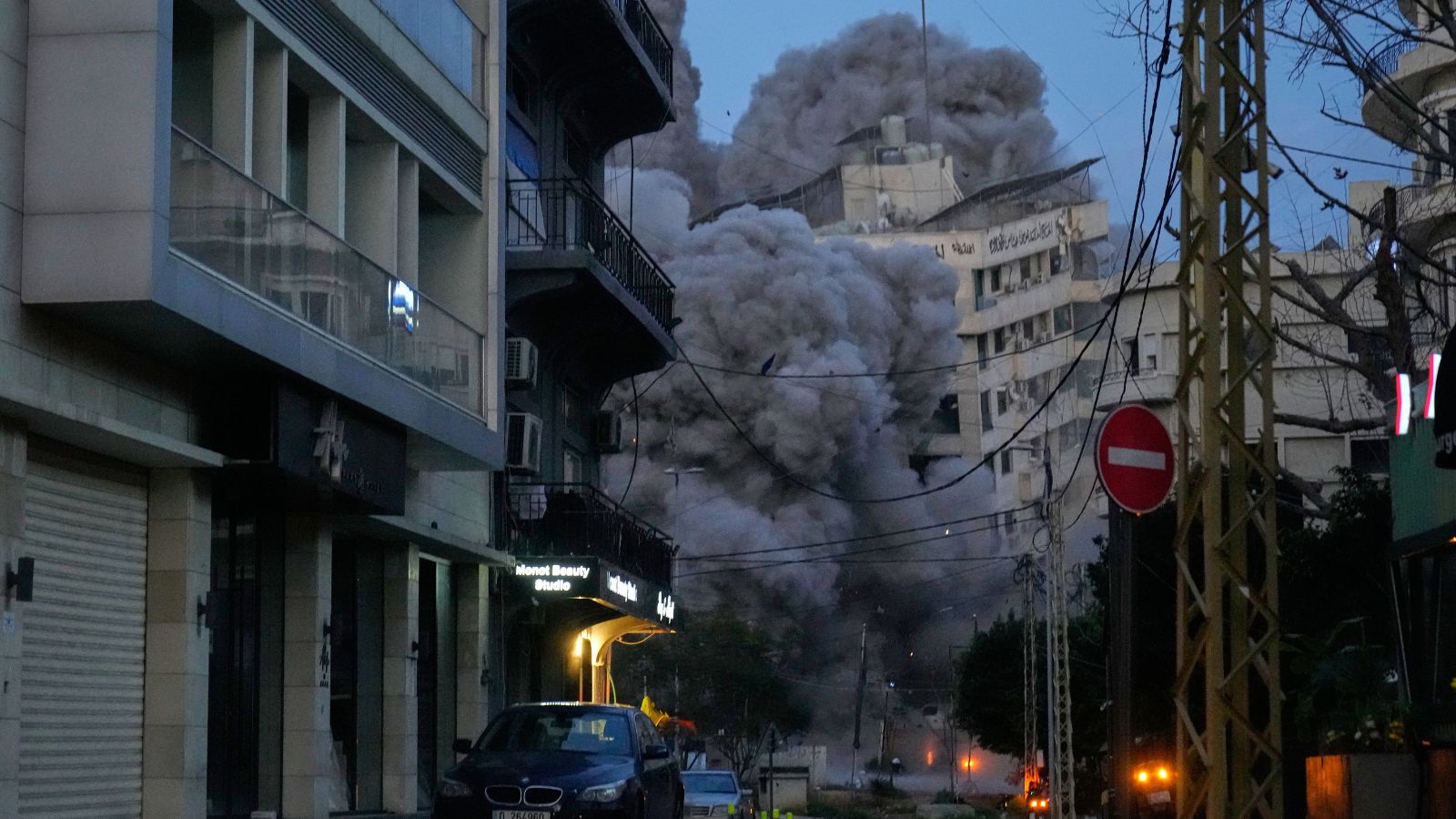
The current situation is different because the shadows are disappearing. Usually, Israel and Iran fight through intermediaries. It’s a dance of plausible deniability. But recently, the gloves have come off. Direct strikes have occurred. The veil is torn. When you move from a shadow war to a direct war, the exit ramps disappear.
If a full-scale conflict erupts, it won't be a repeat of the Gulf War or the invasion of Iraq. It will be something much more chaotic. It will be a war of drones that cost five hundred dollars destroying equipment that costs five million. It will be a war of cyber-attacks that turn off the lights in cities that don't even know why they are being targeted.
Araghchi’s warning isn't just a threat. It’s a desperate observation of the obvious.
The Weight of the Silence
What happens if the warning is ignored?
History is littered with people who thought they could control the fire they started. They thought the wind wouldn't blow the embers toward their own house. They were always wrong.
The "global" nature of this conflict is its most defining characteristic. We are too connected to be spectators. We are all strapped into the same roller coaster, and the people at the controls are arguing about which way the tracks should go.
The stakes are not just oil prices or geopolitical influence. The stake is the very idea of a stable world. If the Middle East falls into a total, multi-front war involving nuclear-capable powers and their global backers, the "post-war order" we’ve lived in since 1945 officially ends.
We are left with a choice, though it feels like we aren't the ones making it. We can demand a return to the messy, frustrating, imperfect work of diplomacy, or we can wait for the percussion of the first major blast to tell us that time has run out.
The coffee is still hot in Tel Aviv. It is still hot in Tehran. But the people drinking it are looking at the door, waiting for someone to walk in with news they aren't prepared to hear.
The silence before a storm is never truly silent. It is filled with the sound of everyone holding their breath at once.