The click of the gas nozzle is a sound every Californian knows by heart. It is the rhythmic, mechanical heartbeat of a state built on the promise of the open road. But lately, that click feels more like a mounting toll. You stand there, watching the digits on the pump spin faster than the wheels on your car, and you wonder where it ends.
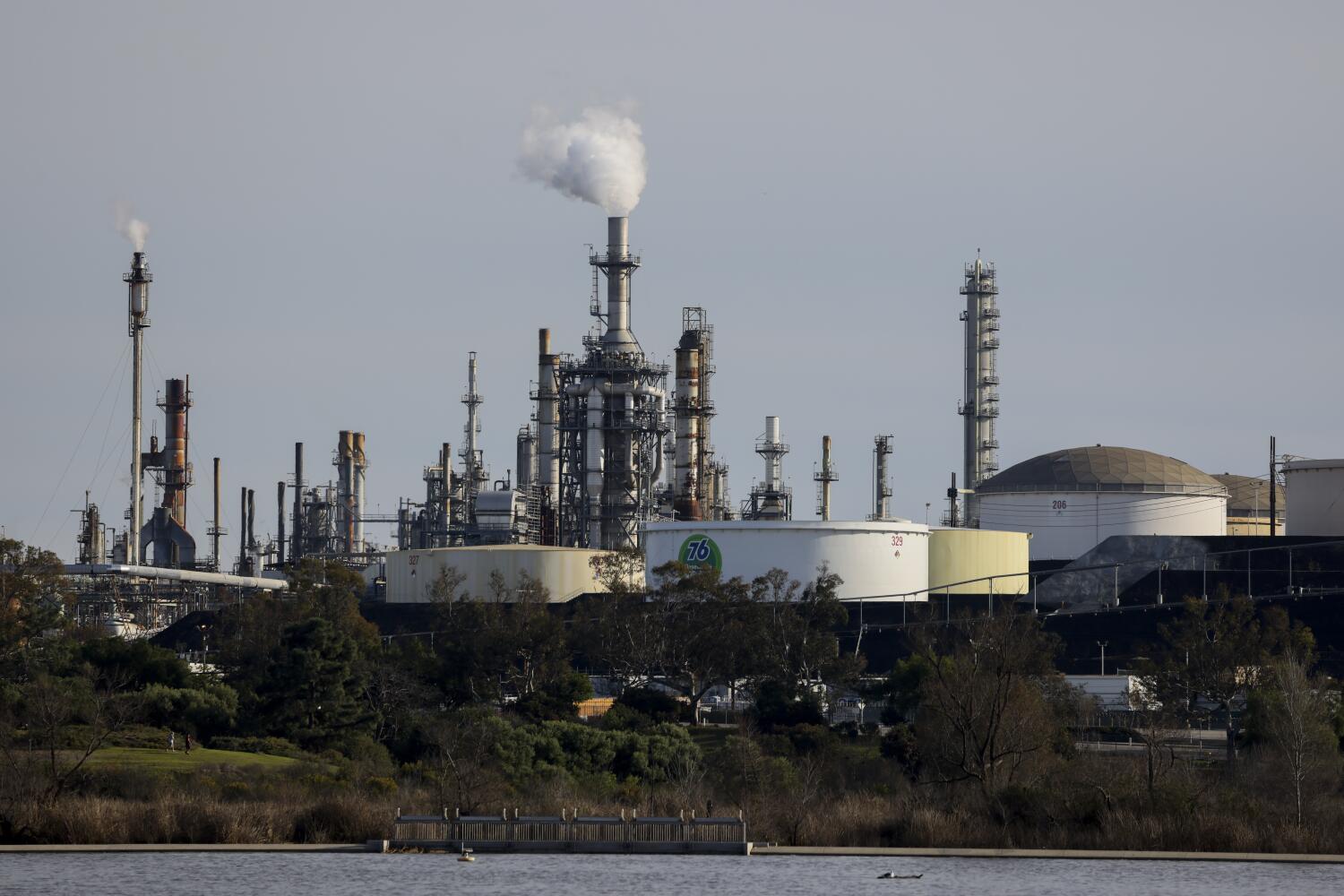
California is an island. Not a physical one, but a logistical one. Hemmed in by the Sierra Nevada to the east and the Pacific to the west, we don’t have the luxury of pipelines connecting us to the massive refineries of the Gulf Coast. We are untethered from the rest of the country’s energy grid. Every drop of oil that fuels a commute from Riverside to Irvine or a school run in Sacramento has to be refined right here, or brought in on a slow-moving tanker. Don't forget to check out our earlier coverage on this related article.
That isolation is our Achilles' heel. It’s why we pay a "mystery surcharge" that defies logic. It’s why our prices sit comfortably two dollars above the national average even on a "good" day. But there is a shadow looming over those numbers, one that originates thousands of miles away in a narrow, jagged stretch of water called the Strait of Hormuz.
The Fragile Chokehold
Consider the geography of a global crisis. The Strait of Hormuz is barely 21 miles wide at its narrowest point. Through that tiny needle’s eye passes one-fifth of the world’s liquid petroleum. If the simmering tensions between the United States and Iran boil over into an all-out kinetic conflict, that needle’s eye closes. To read more about the background of this, NPR offers an excellent summary.
When the Strait closes, the world’s energy supply doesn't just dip. It gasps for air.
Global markets hate uncertainty. They loathe it. The moment a single tanker is struck or a blockade is declared, the price of a barrel of crude oil doesn't climb; it leaps. Analysts suggest a full-scale disruption could send oil skyrocketing toward $150 or even $200 a barrel.
For the rest of the country, that’s a crisis. For California, it’s a catastrophe.
Meet Sarah and the Two-Dollar Delta
To understand the stakes, we have to look past the spreadsheets. Meet Sarah. She’s a hypothetical but very real representation of the millions of Californians living on the edge of the commute. She lives in the Inland Empire because that’s where she could afford a yard for her kids. She works in Los Angeles because that’s where the paycheck is.
Sarah’s budget is a delicate ecosystem. She knows exactly how many miles she can squeeze out of a gallon. When gas hits $5.50, she stops buying organic milk. When it hits $6.00, she cancels the streaming services. If a war in the Middle East pushes California gas toward $8.00 or $9.00—a very real possibility in a supply-shock scenario—Sarah doesn't just change her shopping habits. She loses her ability to work.
The "Two-Dollar Delta" is the gap between what Sarah pays and what a driver in Texas pays. It’s made of environmental taxes, specialized "summer blend" requirements, and the sheer cost of being a logistical island. When global prices rise, they don't rise in a vacuum. They stack on top of our already bloated baseline.
A $20 increase in the price of a barrel of oil usually translates to about a 50-cent increase at the pump. But in California, that math is often amplified. Our refineries are aging and few. If one goes offline due to a maintenance issue right as a global supply shock hits, the price spike becomes exponential. We aren't just paying for the oil; we are paying for the panic.
The Ghost of 1973
History isn't a straight line, but it does rhyme. Older Californians remember the 1970s. They remember the odd-even rationing, the lines that stretched around city blocks, and the palpable sense of helplessness as a foreign cartel dictated the terms of American life.
We like to think we are beyond that. We have electric cars now. We have solar panels. We have high-speed rail—well, some of us do. But the reality is that the vast majority of our economy still runs on internal combustion. Our food is delivered by trucks burning diesel. Our Amazon packages arrive via vans burning gasoline. Our entire supply chain is a tethered balloon, and the Middle East holds the needle.
Iran knows this. They understand that their greatest weapon isn't a nuclear warhead or a fleet of stealth jets. It’s the ability to disrupt the global economy by simply sitting in their own backyard. By threatening the flow of oil, they aren't just fighting a war with the Pentagon; they are fighting a war with Sarah’s bank account.
Why Your Battery Won’t Save You Yet
There is a common refrain in the halls of Sacramento: "This is why we must transition faster."
It’s a noble goal. But a transition is a bridge, not a jump. You cannot tell a family struggling with an $8.00 gallon of gas to simply "go buy a $45,000 EV." The infrastructure isn't there for everyone yet. The power grid is already strained during the summer months.
More importantly, the price of everything else is tied to that gallon of gas. Even if you drive a Tesla, your groceries were hauled by a truck. The plastic in your phone was made using petroleum byproducts. The asphalt you drive on is a petroleum product. When oil spikes, inflation follows like a loyal, hungry dog.
A war with Iran would trigger a localized inflationary spiral in California that could take years to unwind. We would see small businesses—the dry cleaners, the independent bakeries, the landscaping crews—shutter because their margins were erased by the cost of simply showing up to work.
The Psychology of the Pump
There is an emotional weight to the gas station. It is one of the few places where we are forced to look at a ticker of our own diminishing wealth in real-time. You stand there, hand on the handle, staring at the numbers. You think about the vacation you might have to cancel. You think about the credit card balance that won't get paid down this month.
That stress is a quiet toxin. It ripples through communities. It changes how we interact with our neighbors. It breeds a sense of resentment—against the government, against oil companies, against the world at large.
We are currently living in a period of "fragile stability." The domestic production in places like North Dakota and Texas has given us a buffer, but that buffer is thin. We are still part of a global market. We still bid against China and Europe for every barrel.
If the missiles start flying in the Persian Gulf, that fragile stability shatters.
The Cost of Silence
The most dangerous part of this looming crisis is how invisible it remains until it’s too late. We see the headlines about "increased tensions" or "diplomatic stalemates," and they feel abstract. They feel like things that happen to people in suits in windowless rooms.
But for the person sitting in traffic on the 405, these are not abstract concepts. They are the gears of a machine that is beginning to grind.
We have spent decades building a lifestyle that requires cheap, easy movement. We designed our cities around the car. We moved further away from our jobs in search of a dream we could afford. In doing so, we unwittingly handed the keys to our economic security to one of the most volatile regions on Earth.
The "Invisible Line" is the connection between a drone strike in a desert half a world away and the digital display at a Shell station in Fresno. It is a line made of physics, greed, and geography.
We watch the news and we hope for peace. Not just because of the human cost of war, which is always the primary tragedy, but because we know how thin the ice is beneath our own feet. We know that our way of life, with all its glitter and movement, is surprisingly brittle.
The next time you pull up to the pump and feel that familiar spark of irritation at the price, remember that you aren't just buying fuel. You are paying for the privilege of living on an island in a world that is increasingly on fire. You are paying for a history of choices that led us to this specific, expensive corner of the map.
The pump keeps ticking. The price keeps climbing. And somewhere, across an ocean, the tide is rising in a narrow strait that holds the world's breath in its hands.