Steel. That is all that stands between a twenty-four-year-old third officer and the crushing weight of the Arabian Sea. When you stand on the bridge of a Very Large Crude Carrier (VLCC), the world feels industrial, indestructible, and strangely silent. The engine’s hum is a heartbeat felt through the soles of your boots rather than heard with your ears. You are moving two million barrels of energy—the literal lifeblood of global cities—through a narrow corridor of blue.
Then the silence breaks.
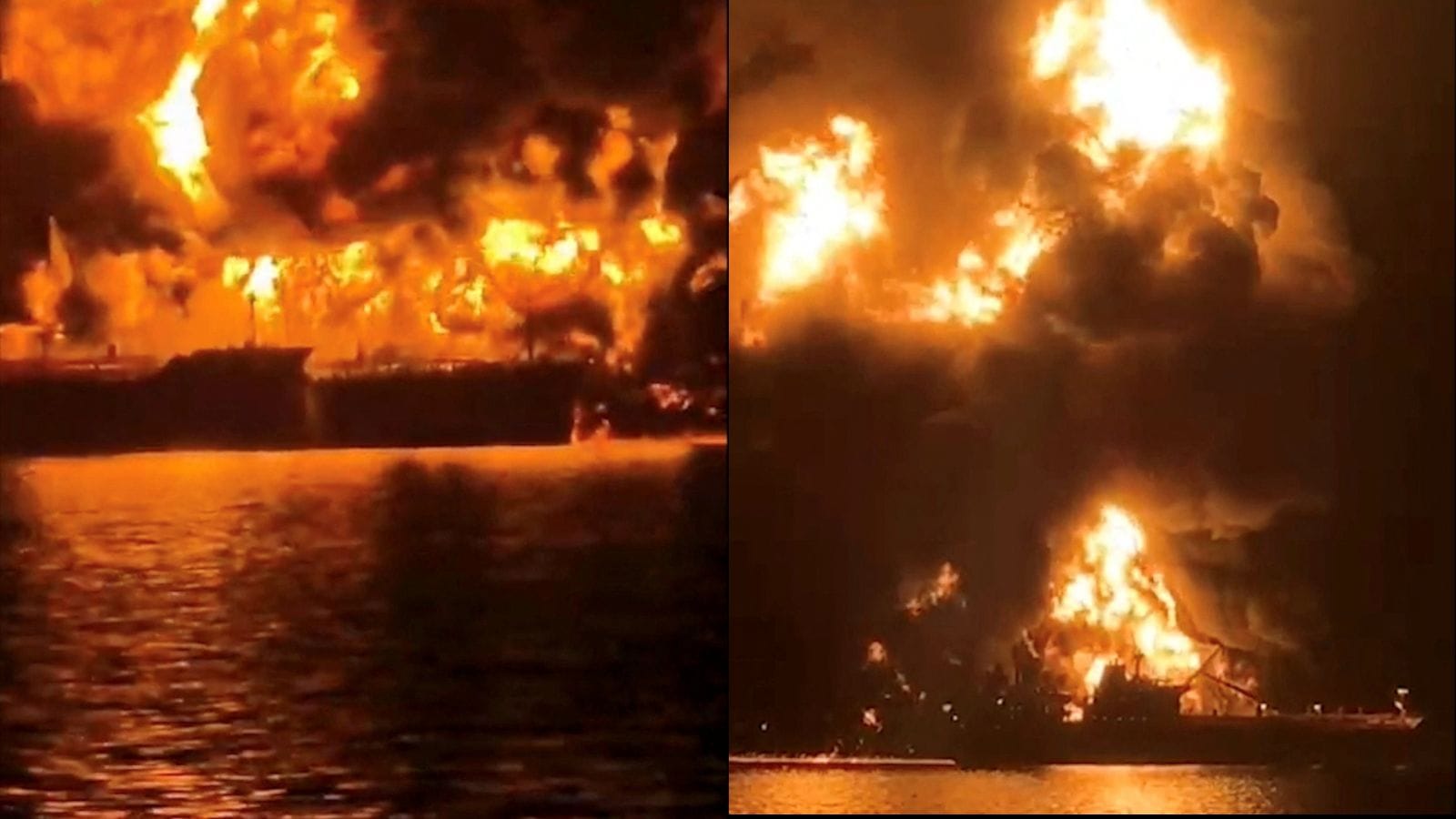
It doesn’t sound like a movie explosion. It is a dull, sickening thud that vibrates through the entire 300-meter hull. The ship shudders. In that instant, the "shipping lane" stops being a logistical coordinate on a digital chart. It becomes a bullseye.
Recent attacks on tankers in the Middle East, specifically those linked to regional tensions involving Iran, have shifted the geometry of global trade. We used to talk about these waters in terms of "barrels per day" or "insurance premiums." But speak to someone like SV Ananthraman, the head of Safesea, and the vocabulary changes. He isn't just talking about cargo. He is talking about the fundamental sanctity of the sea.
The Myth of the Neutral Zone
For centuries, the ocean was governed by an unwritten, then written, understanding: the "Mare Liberum" or the free sea. The idea was simple. No matter who is fighting on land, the merchant sailor is a neutral party. They are the delivery drivers of civilization.
When a drone or a limpet mine clings to the side of a tanker, that entire legal and moral framework dissolves. These aren't accidental crossfires. As shipping experts have noted with increasing alarm, these strikes are deliberate. They are calculated. They are designed to send a message that has nothing to do with the crew on board and everything to do with geopolitical leverage.
Consider a hypothetical captain named Elias. Elias doesn't care about the intricacies of uranium enrichment levels or the diplomatic fallout of a broken treaty in a capital city five thousand miles away. Elias cares about the "Notice to Mariners" and the fact that his hull is now a political billboard. When his ship is targeted, the "calculated" nature of the attack is what haunts the crew. It means someone, somewhere, looked at a satellite feed of a peaceful merchant vessel and decided its destruction was a valid point of order in a political debate.
The Ghost in the Supply Chain
We live in a world of terrifyingly efficient invisibility. You flip a light switch, and the bulb glows. You pump gas, and the car runs. You never see the tanker. You never see the welding seams on the hull or the sweat on the brow of the engineers in the 45°C heat of the engine room.
This invisibility is a luxury provided by the safety of the shipping lanes. But that luxury is evaporating. When Safesea’s leadership argues that shipping lanes are not "battle zones," they are pointing to a fraying thread in the fabric of global stability.
If the lanes become active combat theaters, the math of your daily life changes.
- Insurance premiums skyrocket. Underwriters at Lloyd’s of London begin to view a trip through the Gulf not as a standard transit, but as a high-stakes gamble.
- Crewing becomes a crisis. Sailors are brave, but they are not soldiers. When the risk of "deliberate" targeting becomes a baseline expectation, the talent pool for the global merchant marine shrinks.
- Energy volatility. The mere threat of a closed strait or a burning tanker adds a "fear premium" to every gallon of fuel, acting as a hidden tax on the world’s poorest populations.
The stakes are not abstract. They are caloric. They are thermal. They are the difference between a factory staying open or a city going dark.
The Anatomy of a Calculated Strike
Why "calculated"? Because a truly random act of war is chaotic. These attacks are different. They are surgical. They use just enough force to disrupt, to frighten, and to hike the cost of doing business, without necessarily triggering a full-scale naval war. It is a "gray zone" conflict where the merchant mariner is used as a pawn.
Imagine the sophistication required to intercept a moving vessel in the dark, to attach explosives, or to guide a loitering munition to a specific, vulnerable section of a ship. This isn't the work of pirates looking for a ransom. This is state-level signaling.
The shipping industry operates on razor-thin margins and precise schedules. It is a system built on trust. You trust that the lighthouse will be lit. You trust that the GPS signal is accurate. Above all, you trust that the horizon is empty of malice.
But when a tanker is hit, that trust isn't just broken for that one ship. It is poisoned for every ship following in its wake.
Beyond the Steel and Oil
The real tragedy of treating the ocean as a chessboard is the dehumanization of the industry. We see a headline about an "Iran tanker attack" and our eyes gravitate toward the oil prices. We forget the humans.
There are roughly 1.8 million seafarers currently at sea. They come from the Philippines, India, Ukraine, China, and Greece. They spend months away from their families so that the "just-in-time" economy can function. They are the most essential workers we never think about.
When we allow shipping lanes to be treated as legitimate targets, we are essentially saying that these 1.8 million lives are collateral damage in a game they never asked to play.
There is a psychological toll to sailing through a "High-Risk Area." The crew spends their watches scanning the water for small boats that move too fast. They look for drones in the clouds. They sleep in life jackets. This isn't what they signed up for. They are trained for storms, for mechanical failures, and for the heavy labor of the sea. They are not trained to be the sacrificial lambs of a regional cold war.
The Price of Silence
The global community often reacts to these attacks with a predictable cycle of "grave concern" followed by a return to apathy once the smoke clears. But the "calculated" nature of these events suggests that silence is seen as permission.
If the international maritime community—and the nations that depend on it—cannot enforce the sanctity of the shipping lanes, the very definition of a "global economy" begins to crumble. We regress to an era where trade is only possible for those with the biggest navies to escort their bread and oil.
It is a retreat from civilization.
The head of Safesea isn't just complaining about a business disruption. He is sounding a clarion call for a return to the rule of law on the high seas. He is reminding the world that the ocean is a bridge, not a barrier, and certainly not a shooting gallery.
The Horizon
Tonight, a tanker is navigating the Strait of Hormuz. The bridge is dark, save for the red and green glow of the instrument panels. The officer on watch is looking at the radar, watching the little blips of other ships, each representing hundreds of lives and millions of dollars in cargo.
He is looking for a threat he cannot see.
He knows that his ship is just a shape on a screen to someone else. He knows that his life might be the "calculation" someone makes to prove a point in a distant capital.
The steel hull feels very thin. The ocean feels very deep. And the world, if it isn't careful, is about to find out exactly how much it costs when the lights go out because we forgot that the sea was supposed to be safe.
The merchant ship remains the most vulnerable link in our global chain, a giant of industry with the heartbeat of a human, floating on the edge of someone else’s war.