The crinkle of a foil wrapper is a universal sound of relief. It is the acoustic signal that the workday has ended, the kids are finally asleep, or the afternoon slump has been successfully outmaneuvered. For many, reaching for a bar of Compliments Organic 70% Dark Chocolate isn’t just about a sugar fix; it’s a small, deliberate act of self-care. You choose organic because you care about what goes into your body. You choose the dark variety for the antioxidants. You trust the label because, in a world of complex chemical additives, that printed list of ingredients is supposed to be a sacred contract between the maker and the eater.
But for someone like Sarah—a hypothetical but very real representation of the thousands living with severe food allergies—that crinkle sounds different. It sounds like a gamble.
Sarah knows the ritual. She reads the back of the package with the intensity of a scholar deciphering an ancient text. She looks for the bolded letters. She looks for the "May Contain" warnings. Satisfied that her snack is safe, she takes a bite. Within minutes, the betrayal begins. It starts as a tingle on the lips, a slight tightening in the throat, a rising heat that has nothing to do with the room temperature. This is the reality of an undeclared allergen. It is a silent hitchhiker, a stowaway that bypasses every defense mechanism a consumer has spent years building.
The Anatomy of a Recall
Health Canada and the Canadian Food Inspection Agency (CFIA) recently signaled the alarm on a specific lot of Compliments Organic 70% Dark Chocolate. The reason? Undeclared almonds. On paper, it looks like a clerical error. In a factory, it might have been a shared conveyor belt that wasn't scrubbed long enough, or a bin of crushed nuts that sat too close to the dark chocolate vat. To a spreadsheet, it’s a logistical hiccup. To the human body, it is a biological emergency.
When we talk about food recalls, we often focus on the brand's reputation or the "inconvenience" of returning a product to Sobeys, Safeway, or Thrifty Foods. We rarely talk about the sheer terror of the "hidden." An allergy isn't just a dietary preference; it is a hair-trigger immune response. For those with a tree nut allergy, the protein in an almond is viewed by the body not as food, but as an invading pathogen. The immune system doesn't just ask the intruder to leave; it burns the whole house down to get rid of it.
This particular recall affects the 100g bars with a Best Before date of 2026 JL 01. It’s a specific window in time where the quality control failed and the "organic" promise was compromised by a physical reality.
The Fragile Chain of Trust
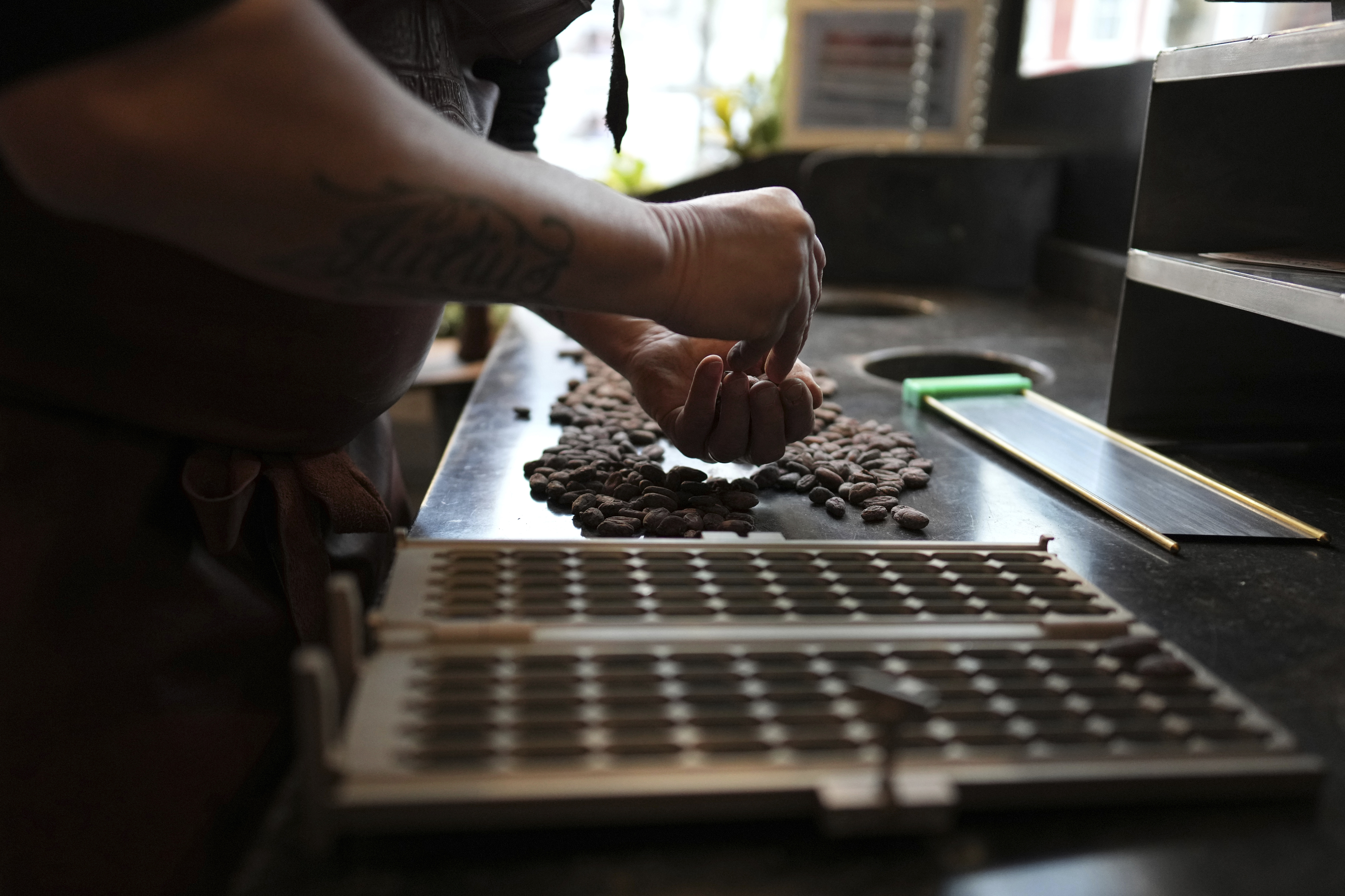
Think about the journey that chocolate bar took. It started with cacao beans harvested in distant tropical climates, moved through processing plants, traveled across borders in shipping containers, and finally sat under the humming fluorescent lights of your local grocery store. At every single stage of that journey, humans are responsible for its integrity.
We live in an age of industrial miracles, where we can eat chocolate from South America while sitting in a snowstorm in Calgary. But that miracle relies on a chain of trust that is surprisingly thin. We trust that the person cleaning the machines used the right solvent. We trust that the packaging designer didn't miss a line of text. We trust that the "Organic" seal means more than just a lack of pesticides—it means a controlled environment.
When an undeclared allergen surfaces, that chain doesn't just stretch. It snaps.
For the parent of a child with an almond allergy, the grocery store isn't a place of abundance; it’s a minefield. They become experts in industrial cross-contamination. They learn to recognize the "Big 9" allergens as if they were personal enemies. When a brand like Compliments—a staple in Canadian pantries—has to pull a product, it sends a ripple of anxiety through these households. If the "Organic" dark chocolate isn't safe, what is?
The Science of the Oversight
Why does this happen? It isn't usually malice. It’s the complexity of modern food production. A facility might produce a dozen different types of chocolate in a single shift.
Imagine a massive stainless steel vat. It holds hundreds of liters of molten dark chocolate. Before this batch, the vat might have held a "Fruit and Nut" blend. The cleaning process is rigorous, involving high-pressure steam and specific chemicals designed to break down fats and proteins. But proteins are stubborn. They cling to microscopic scratches in the steel. They hide in the gaskets of a pump.
It takes only a few parts per million to trigger anaphylaxis in a sensitive individual. We are talking about an amount of almond protein the size of a grain of salt hidden inside a 100g bar. Detecting that requires more than just a visual inspection; it requires constant, expensive testing. A recall is the sound of the system finally catching up to a mistake that has already made it to the shelf.
Beyond the Barcode
The CFIA’s role in this is often seen as bureaucratic, but it is actually the last line of defense in a world that moves too fast. When they issue a Class 1 recall—the most serious kind—they are acknowledging that the product could cause "serious health consequences or death."
That is heavy language for a chocolate bar.
But it is necessary language. It forces us to look past the branding and the gold foil and see the raw, biological stakes. For the majority of people, eating this chocolate would result in nothing more than a pleasant evening snack. For a significant minority, it would result in a frantic search for an EpiPen and a high-speed drive to the emergency room.
We often ignore these news snippets. We scroll past the recall notices because they don't apply to us. We don't have the allergy, so we don't have the problem. But the existence of the recall is a reminder of our collective vulnerability. It highlights the fact that we are all, in some way, at the mercy of the systems that feed us.
The Weight of a Label
There is a specific kind of exhaustion that comes with being a "checker." If you are the person in your family who has to vet every ingredient, you know the weight of that responsibility. You are the shield. When a label is wrong, the shield is gone.
The recall of Compliments Organic chocolate is a call to action, but not just the kind that involves checking your pantry for a specific date code. It is a call to recognize the invisible labor of safety. It is a moment to appreciate the gravity of a "clean" facility. It is a lesson in the fact that in the world of food, there is no such thing as a "small" mistake.
If you have one of these bars, the instructions are clear: throw it out or return it. Don't risk it. Don't assume that because you can't see the almond, it isn't there. The immune system doesn't care about your assumptions. It only cares about the protein.
The kitchen pantry should be a place of comfort, not a place of vigilance. We buy organic because we want to feel closer to the source, more in control of our health, and more connected to the Earth. But even in the "organic" world, the industrial realities of cross-contamination remain.
The next time you hear that foil crinkle, take a second. Look at the label. Not just for the calories or the cocoa percentage, but for the work that went into making sure that what is inside matches what is written on the outside.
Safety isn't a static state. It is a constant, shifting effort. It is a promise that was broken in a factory somewhere, and now, it is a promise that the CFIA is trying to mend through a public warning.
The bar of chocolate in your drawer might look like a simple indulgence, but it is actually a testament to a massive, invisible infrastructure. And when that infrastructure fails, the consequences are measured in more than just dollars and cents. They are measured in breaths, in heartbeats, and in the terrifying silence of a throat closing up.
Check your cupboards. Protect your circle. Respect the power of the hidden.
Would you like me to look up the specific contact information for Sobeys customer service regarding this recall?