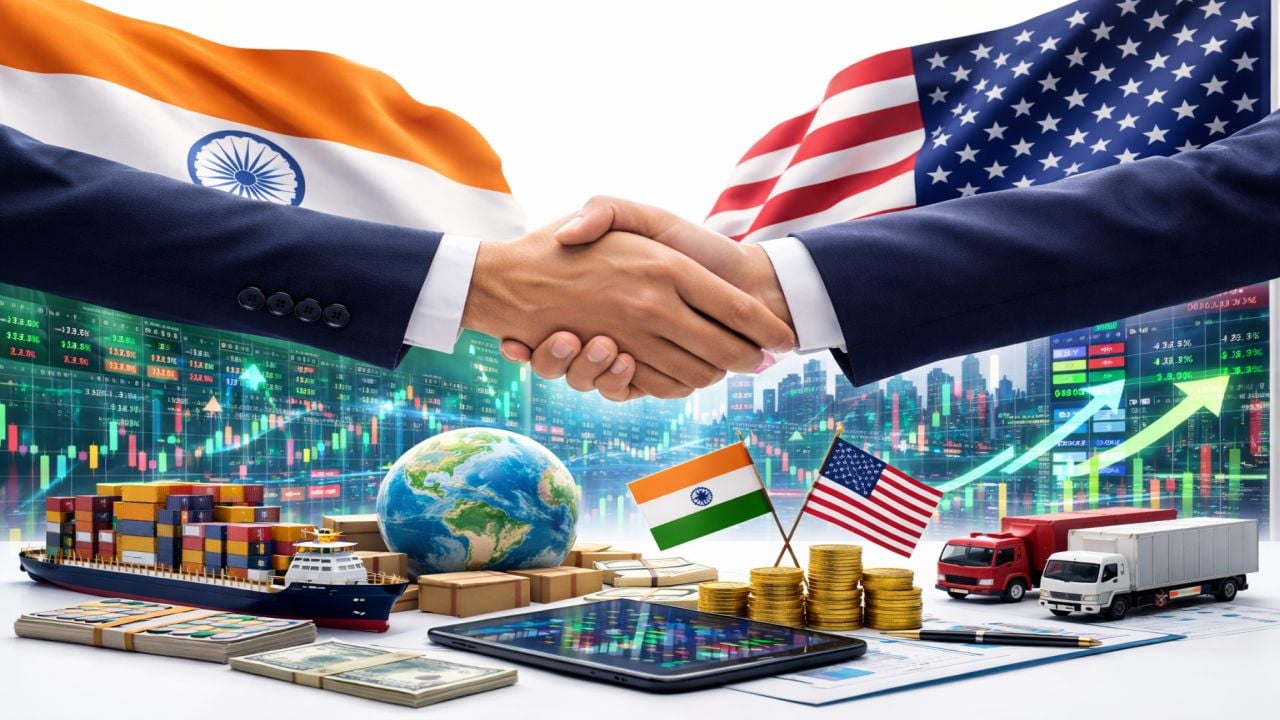
In a small, windowless office in the outskirts of Lubumbashi, a man named Patrice stares at a digital ledger that dictates the rhythm of his life. He isn't a politician. He isn't a general. He is a mid-level logistics coordinator for a mining firm, yet his daily decisions are the kinetic energy behind a global friction he can feel but never quite touch. When a shipment of cobalt is delayed, he receives three different phone calls. One comes from a European buyer concerned about "supply chain ethics." One comes from a Chinese state-backed enterprise offering to "expedite the infrastructure." The third is an American inquiry about "strategic autonomy."
Patrice is a footnote in history, but he is also the epicenter. We are told we are living through a "New Great Game," a clinical term that suggests a tidy chessboard with mahogany pieces and rules of engagement. It’s a lie. The reality is much messier, much more human, and infinitely more high-stakes than a simple game. It is a frantic, three-way scramble for the very elements that allow you to read these words.
This isn't just about who owns the mines or who builds the satellites. It is about a fundamental shift in how the world breathes. For thirty years, we lived in an era of "just-in-time" efficiency, a period where the globe felt like one giant, frictionless shopping mall. That mall is closing. In its place, we are seeing the rise of a fractured reality where the United States, China, and a fragmented but desperate Europe are sprinting to wall off their own futures.
The Architect and the Anchor
To understand the American position, you have to look past the rhetoric of the White House and into the anxiety of the Silicon Valley boardroom. Consider a hypothetical lead engineer—let’s call her Sarah—tasked with designing the next generation of high-capacity batteries. Sarah’s brilliance is irrelevant if she cannot guarantee the arrival of lithium. For decades, the U.S. outsourced the "dirty work" of processing and refining to the lowest bidder. They won the intellectual battle but surrendered the physical ground.
Now, the realization has set in: you cannot run a digital empire if you don't control the physical dust it’s built upon. The U.S. is currently attempting a massive, clunky, and expensive pivot back to industrialism. It’s a bit like a marathon runner who spent twenty years focusing only on their lung capacity, only to realize they’ve forgotten how to move their legs. The CHIPS Act and the Inflation Reduction Act aren't just policy documents; they are a $200 billion admission of vulnerability.
The American strategy is one of "friend-shoring." It’s a polite way of saying they are picking a side and building a fence. But fences are expensive. When the U.S. tells a country like Vietnam or Mexico to choose a side, they aren't just asking for a business partner. They are asking for a blood oath. The human cost here is felt in the boardroom and the factory floor alike, where the "efficiency" of the global market is being sacrificed on the altar of "security." Prices go up. Complexity skyrockets. The consumer pays the "sovereignty tax."
The Long Shadow of the Dragon
If the U.S. is playing catch-up, China is playing a different sport entirely. While the West was focused on the quarterly earnings of software giants, Beijing was quietly buying the dirt. They looked at the periodic table and saw a map of future power.
Imagine a government official in Beijing who started a thirty-year project in the late nineties. He didn't care about the immediate ROI. He cared about the year 2026. Today, that patience has manifested as a stranglehold on the processing of rare earth elements. China doesn't just have the mines; they have the kitchens where the raw ore is cooked into usable material.
$90%$
That is the approximate percentage of certain rare earth refining controlled by a single entity. It is a terrifying number when you realize that without these elements, a F-35 fighter jet is just a very expensive paperweight and a wind turbine is a lawn ornament.
But there is a human friction here, too. The "Belt and Road" isn't just a series of bridges and ports; it is a web of debt and influence that is beginning to fray. In places like Pakistan or Sri Lanka, the local worker sees the shiny new highway but feels the weight of the interest payments. The Chinese model of "infrastructure for influence" is facing its first real stress test. It’s one thing to build a port; it’s another to maintain a world order when the locals realize the "Game" wasn't designed for them to win.
The European Dilemma
Then there is Europe, the third contestant, standing like a refined aristocrat in the middle of a bar fight. Europe wants the green transition more than anyone else. They have the most ambitious climate goals, the most stringent regulations, and the most vocal citizenry. But they have almost none of the raw materials.
Europe is currently caught in a cognitive dissonance that would break a lesser continent. They want to save the planet using electric vehicles, but they don't want the environmental impact of mining in their own backyard. They want to be independent of China, but they find American protectionism equally stifling.
Think of a small business owner in Germany, someone running a family-owned engineering firm. For years, he thrived on cheap Russian gas and limitless Chinese markets. Suddenly, both pillars have crumbled. He is being told to innovate his way out of a resource desert. The "New Great Game" for Europe is a fight for relevance. If they cannot secure a "Third Way"—a path that isn't just a vassalage to Washington or a dependence on Beijing—they risk becoming a very beautiful, very expensive museum.
The Invisible Stakes
Why should you care? If you aren't Patrice in the Congo or Sarah in California, why does this matter?
Because the "Great Game" is currently being played inside your pocket. Every time you charge your phone, you are interacting with a geopolitical truce that is currently being torn up. The era of cheap, ubiquitous technology was an anomaly, a historical fluke caused by a brief moment of global cooperation.
Consider the "People Also Ask" questions that usually populate the bottom of a search page. Will electronics get more expensive? Yes. Is a trade war inevitable? We are already in one; it’s just being fought with permits instead of bullets. Who is winning? No one.
We are moving into an age of "Redundant Globalization." To ensure security, every major power is building its own separate version of the same thing. Three sets of factories. Three sets of supply chains. Three sets of standards.
This is inherently inefficient. It is a massive waste of human labor and planetary resources. We are digging three holes to find one diamond, simply because we don't trust our neighbor to share the shovel. The emotional core of this story isn't "competition"—it’s fear.
The Friction of the Future
There is a specific kind of silence that happens right before a major shift. You can hear it in the way CEOs talk about "de-risking" instead of "growth." You can see it in the frantic diplomatic tours of Central Asia and Africa. The world is being re-wired, and the process is sparking.
The real danger isn't that one side "wins." The danger is the "Middle Ground" disappears. For a country in the Global South, the New Great Game feels less like an opportunity and more like being a blade of grass while elephants fight. They are being forced to choose between American security umbrellas, Chinese infrastructure loans, or European regulatory standards.
There is no "Neutral" anymore.
Patrice, our coordinator in Lubumbashi, eventually hangs up the phone. He has three offers on his desk. One offers more money. One offers a new road for his village. One offers a vague promise of "shared values." He knows that whichever one he picks, he is tethering his children’s future to a capital city thousands of miles away that will never know his name.
The Great Game isn't a game. It’s a harvest. And for the first time in a generation, the harvesters are starting to look at each other with more hunger than they look at the crop.
The screen on your device flickers. It is a marvel of engineering, a miracle of chemistry, and a testament to a global cooperation that is currently dying. Enjoy the clarity of the display while you can; the next one might cost more than you're willing to pay, and not just in dollars.
Would you like me to analyze how specific emerging technologies, like solid-state batteries or sodium-ion cells, might disrupt the leverage these three powers currently hold over each other?