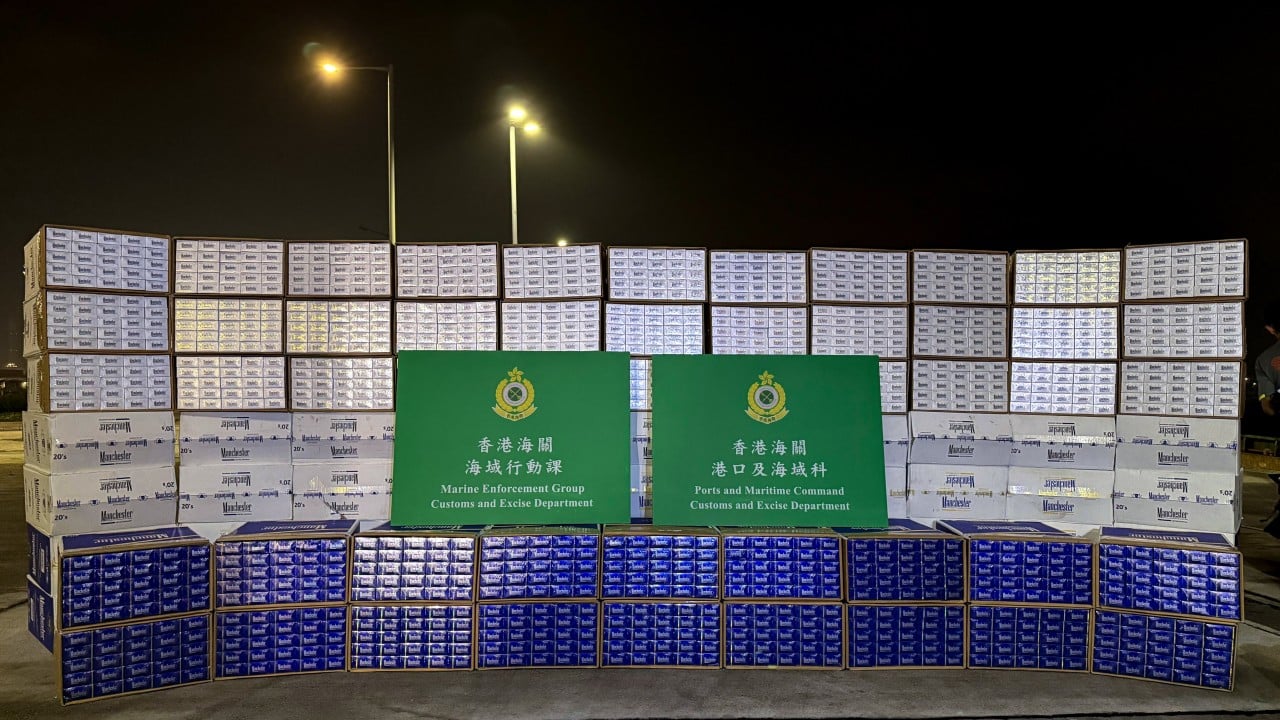
The recent seizure of HK$92 million worth of illicit cigarettes from a cargo vessel off Tsing Yi is not an isolated success for law enforcement. It is a symptom of a much larger, more corrosive shift in Asian maritime logistics. When Hong Kong Customs intercepted the vessel, they found 20 million sticks of untaxed tobacco packed into containers, leading to the arrest of four crew members. While the HK$92 million figure makes for a striking headline, it represents a mere fraction of a shadow economy that has become more sophisticated, more daring, and more integrated into the city’s legitimate trade routes than ever before.
This is no longer about small-time smugglers hiding cartons in false-bottom suitcases at the border. We are witnessing the industrialization of the tobacco black market. The scale of this operation—utilizing entire cargo ships and exploiting the high-volume chaos of one of the world’s busiest ports—suggests a level of organizational backing that transcends simple street-level crime. The sheer volume of the haul indicates that the syndicates behind these shipments view the occasional multi-million dollar loss as a routine cost of doing business. Expanding on this topic, you can also read: The Childcare Safety Myth and the Bureaucratic Death Spiral.
The Economics of the Shadow Container
The math behind tobacco smuggling is brutally simple and incredibly lucrative. Hong Kong has some of the highest tobacco taxes in the region. Following recent tax hikes, the price of a legal pack of cigarettes has climbed significantly, creating a price gap that organized crime is all too happy to fill. When a legal pack costs upwards of HK$100 and a "cheap white" or illicit alternative sells for a third of that, the market demand becomes an unstoppable force.
Smugglers are no longer just moving brand-name fakes. They are increasingly moving "cheap whites"—brands manufactured legally in one jurisdiction (often in Southeast Asia or the Middle East) specifically for the purpose of being smuggled into high-tax markets. These cigarettes have no legitimate market in their country of origin. They exist solely to be moved through the grey channels of international shipping. Analysts at Harvard Business Review have shared their thoughts on this situation.
By using a cargo vessel, the syndicate attempted to hide in plain sight. Hong Kong processes tens of thousands of containers every day. The logistics of checking every single one are impossible. Smugglers rely on "cover loads"—legitimate goods like furniture, plastic scrap, or household items—to mask the tobacco. In this specific case, the vessel’s movements likely raised red flags through data analysis and maritime intelligence rather than a lucky random inspection.
The Tsing Yi Intersection
Tsing Yi serves as a critical node in Hong Kong's logistics heart. It is where the global supply chain meets local distribution. By attempting to offload HK$92 million worth of product here, the smugglers were looking to bypass the more heavily scrutinized primary container terminals. The use of a dedicated vessel, rather than just a few containers on a commercial giant, indicates a high-stakes play. It suggests the syndicate owned or chartered the entire bottom, giving them total control over the manifest—or at least what they thought was control.
The four individuals arrested—ranging from ages 23 to 55—are almost certainly "disposable" assets. In the hierarchy of maritime smuggling, the crew of the vessel rarely knows the identity of the financiers. They are the frontline workers of the black market, paid to look the other way or follow specific coordinates. The real architects are sitting in boardrooms or secure compounds hundreds of miles away, watching the seizure on the news as a calculated write-off.
The Shell Game of Registry and Routing
One of the most difficult aspects of tracking these illicit shipments is the "flags of convenience" system. Many vessels involved in the regional tobacco trade are registered in countries with lax oversight. They change names, owners, and digital signatures (AIS) frequently. To a maritime analyst, these ships often appear as "dark vessels," turning off their transponders when approaching sensitive areas or performing mid-sea transfers.
Middle-of-the-ocean transfers are particularly problematic. A large mothership will wait in international waters, transferring its cargo to smaller, faster boats or less suspicious local vessels that can blend into the coastal traffic of the Pearl River Delta. This "ship-to-ship" transfer method dilutes the trail of evidence and makes it nearly impossible to prove where the cigarettes originated.
Why Border Force Victories Feel Like Treading Water
While the HK$92 million seizure is a win for the Customs and Excise Department, it highlights a grim reality: the supply is meeting a desperate demand. Every time a major shipment is intercepted, the street price of illicit cigarettes in Tsim Sha Tsui or Mong Kok barely flinches. This suggests that the pipeline is so full that even a 20-million-stick seizure doesn't create a supply shock.
The tobacco industry argues that high taxes are the primary driver of this criminality. Public health advocates counter that high prices are the only effective way to reduce smoking rates. Hong Kong is caught in the middle. As the government increases the tobacco duty to hit health targets, it inadvertently increases the profit margin for the syndicates. The "risk-to-reward" ratio for smuggling becomes so lopsided that even the threat of heavy prison sentences and massive fines isn't enough to deter the trade.
The Sophistication of Local Distribution
Once the cigarettes leave the vessel and hit the docks, the distribution network takes over. This isn't just about "snakeheads" or triads anymore. The distribution has gone digital. Much of the illicit trade in Hong Kong is now handled through encrypted messaging apps and private social media groups. Orders are placed via Telegram, payments are made through untraceable digital wallets or cash-on-delivery, and "dead drops" are used to ensure the seller and buyer never meet.
This fragmentation makes it incredibly difficult for police to dismantle the entire chain. You can catch the delivery driver, and you can catch the vessel crew, but the digital infrastructure remains intact.
The Hidden Cost to the Public Purse
Beyond the health implications, the fiscal impact is staggering. When HK$92 million worth of cigarettes is seized, it represents tens of millions of dollars in lost tax revenue. If we assume that for every shipment caught, several more make it through, the annual loss to the Hong Kong treasury likely runs into the billions. This is money that would otherwise fund healthcare, infrastructure, and education.
Furthermore, the presence of these syndicates brings a secondary layer of crime. The profits from tobacco smuggling are often used to fund more "high-risk" activities, including human trafficking and narcotics. Tobacco is often seen as a "gateway" crime for syndicates because the public perception of the offense is lower than that of drug smuggling, yet the profit margins are comparable.
The Failure of Regional Cooperation
The root of the problem lies in the lack of a unified tobacco tax policy across Asia. As long as there is a massive price disparity between Hong Kong, Vietnam, the Philippines, and mainland China, the incentive to smuggle will exist. The vessel seized in this operation didn't just appear from thin air; it moved through multiple jurisdictions, likely passing through several ports where the cargo was either ignored or misdeclared.
Until there is a real-time, shared database of high-risk cargo movements and a crackdown on the manufacturing plants that produce "cheap whites" specifically for export to the black market, the Hong Kong Customs and Excise Department will continue to play a game of whack-a-mole. They are fighting an industrial-scale enemy with tools designed for a previous era of smuggling.
The four men currently in custody are the only ones paying the immediate price for this HK$92 million gamble. The vessel itself may be impounded, but the machinery of the illicit tobacco trade is already prepping the next shipment. To truly break the cycle, the focus must shift from the end of the pipe—the arrival in Hong Kong—to the source of the flow. We need to look at the shipping registries, the "white label" manufacturers in free trade zones, and the financial corridors that allow millions of dollars to be laundered through legitimate businesses.
The HK$92 million seizure isn't the end of a story; it's a window into a massive, hidden industry that is outgrowing the city's ability to contain it. Authorities must now decide if they will continue chasing containers or if they will finally start chasing the money that buys the ships.