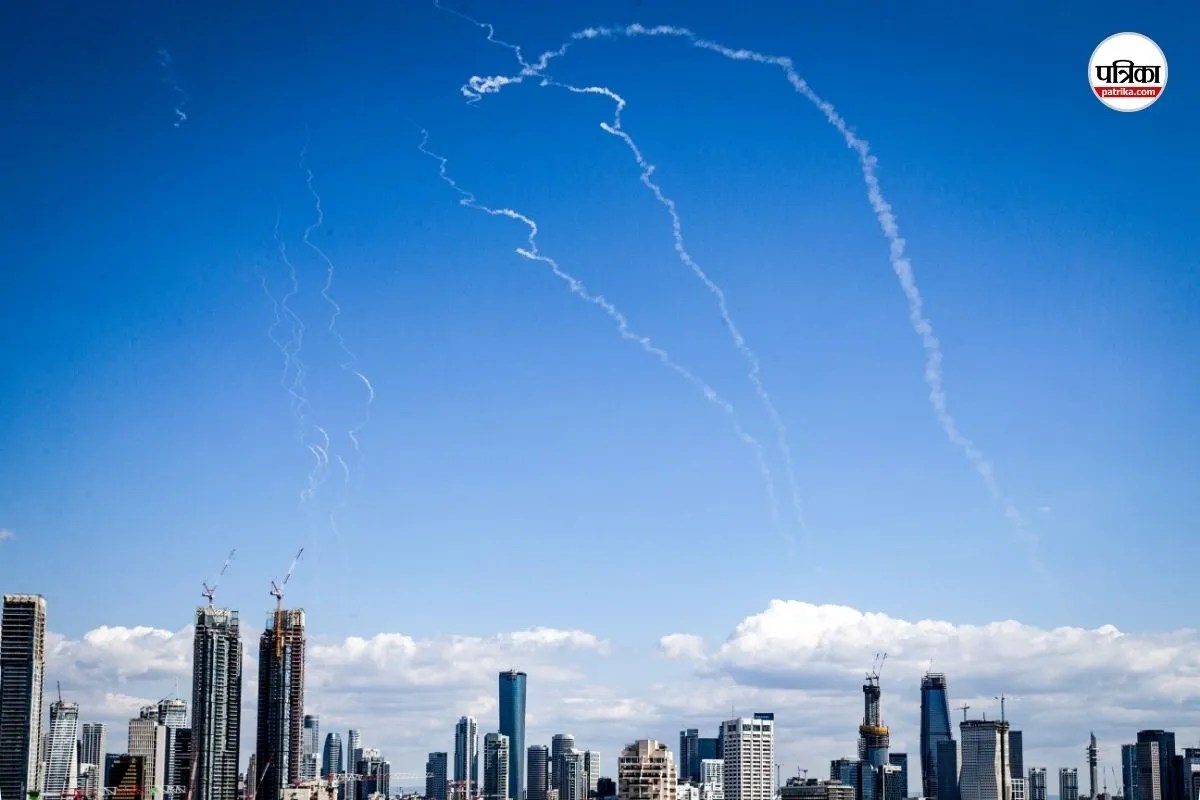
The shadow war between Israel and Iran has finally stepped into the light, and the question of how long it lasts is being answered by the roar of ballistic missiles rather than the whispers of diplomats. For decades, the two nations operated under a "gray zone" doctrine, a calculated dance of proxy hits and cyber sabotage designed to avoid a direct, catastrophic confrontation. That era ended in April 2024. Now, the timeline for this conflict isn't measured in weeks or months, but in the depletion of missile stockpiles and the shrinking patience of the American electorate.
The primary drivers of this war’s duration are not found in public rhetoric from Washington or Jerusalem. Instead, the conflict is being dictated by the speed of Iranian nuclear enrichment and the tactical necessity of dismantling Hezbollah’s remaining arsenal. Israel views the current window as a historic opportunity to reset the regional balance of power, while Tehran is fighting to preserve its "Ring of Fire" strategy. As long as Iran believes its survival depends on its proxies, and Israel believes its survival depends on their destruction, there is no off-ramp.
The Strategy of Permanent Friction
The term "war" implies a beginning and an end, but for the military establishments in Tel Aviv and Tehran, this is a state of being. The Israeli Defense Forces (IDF) have shifted from "mowing the grass"—periodic strikes to keep militants at bay—to a strategy of structural decapitation. This shift means the war won't stop until the command structures of the Islamic Revolutionary Guard Corps (IRGC) and its regional affiliates are rendered non-functional.
In Washington, the Biden administration—and any subsequent administration—faces a brutal reality. They want to pivot to Asia, yet the gravity of the Middle East keeps pulling them back. The U.S. provides the defensive shield, specifically the Aegis combat systems and THAAD batteries, which allow Israel to strike without fearing immediate total annihilation. However, this support is not an open-ended credit line. There is a quiet, frantic effort in the Pentagon to assess how many interceptors can be burned through before U.S. domestic readiness is compromised.
Iran plays a different game. They are masters of strategic patience. They understand that they cannot win a conventional head-to-head fight against the combined might of the U.S. and Israel. Their goal is to make the cost of victory so high—through global oil price shocks and the threat of regional instability—that the West forces Israel to blink. They aren't looking for a treaty; they are looking for a stalemate they can survive.
The Nuclear Threshold and the Red Line
Every move on the current chessboard is a distraction from the real prize: Iran’s nuclear facilities. Intelligence reports suggest that Iran’s "breakout time"—the period needed to produce enough weapons-grade uranium for a single bomb—is now measured in days. This is the ultimate ticking clock.
- The Fordow Factor: Deeply buried within a mountain, this facility is nearly immune to standard airstrikes. If Israel determines that Iran is moving its most advanced centrifuges or hardening the site further, they will strike regardless of what the White House says.
- The Deterrence Gap: For years, Iran relied on Hezbollah’s 150,000 rockets as a "suicide vest" to prevent an Israeli hit on its nuclear program. With Hezbollah currently reeling from the loss of its leadership and communication networks, Iran’s primary deterrent is gone.
- The Calculated Risk: Tehran may decide that the only way to regain its footing is to actually cross the nuclear finish line. This would trigger an immediate, massive regional war that would dwarf the current skirmishes.
The Biden administration has repeatedly told Israel that a strike on nuclear or oil facilities is a step too far. But Israeli Prime Minister Benjamin Netanyahu has spent a career arguing that a nuclear-armed Iran is an existential threat that overrides any diplomatic request. This fundamental disagreement on the "red line" is why the war remains unpredictable. If Israel decides to take the shot, the timeline for the conflict moves from a series of strikes to a total regional conflagration.
The Internal Pressures Shaping the Frontlines
We often talk about these nations as monoliths, but internal politics are the hidden gears of this war. In Israel, the government is under immense pressure from the families of hostages and the 60,000 displaced citizens from the northern border. They cannot go home until Hezbollah is pushed back beyond the Litani River. For the Israeli cabinet, the war ends when the north is safe. That is a concrete military objective that requires more than just high-tech assassinations; it requires ground control.
In Iran, the Supreme Leader Ali Khamenei is balancing a fragile economy against the need to look strong. The "Axis of Resistance" is Iran's primary export. If they allow Israel to dismantle Hamas and Hezbollah without a significant response, the IRGC loses its grip on internal power. They risk looking weak to their own hardliners and to the various militias they fund across Iraq, Syria, and Yemen.
Proxy Exhaustion and the Logistics of Longevity
| Entity | Primary Objective | Current Status |
|---|---|---|
| IDF | Neutralize IRGC influence | High intensity, high resource burn |
| Hezbollah | Survival and harassment | Degraded leadership, massive rocket inventory |
| IRGC | Regime preservation | Indirect participation, strategic retreat |
| USA | Regional containment | Defensively active, diplomatically strained |
The table above illustrates a conflict with no shared end-goal. When two sides have objectives that are diametrically opposed, the war only stops when one side physically cannot continue. We are seeing a shift toward a war of attrition. Iran can manufacture thousands of low-cost Shahed drones for the price of a single Israeli interceptor missile. This economic asymmetry is one of Iran's strongest weapons. They are betting they can outspend the West’s willingness to defend the Levant.
The Role of Global Power Shifts
Russia and China are no longer passive observers. Moscow, increasingly dependent on Iranian drones for its campaign in Ukraine, has every incentive to see the U.S. distracted and depleted in the Middle East. Any intelligence or electronic warfare support Russia provides to Tehran extends the war’s duration.
China, meanwhile, buys the vast majority of Iran’s sanctioned oil. As long as the Chinese "tea houses" (independent refineries) keep the hard currency flowing into Tehran, the Iranian economy can withstand the cost of a long-term conflict. This global alignment means that sanctions are no longer the "war-stopper" they were ten years ago. The financial oxygen keeping the Iranian war machine alive is coming from the East, making Western diplomatic pressure largely toothless.
The False Hope of De-escalation
Every time a diplomat mentions a "ceasefire," the reality on the ground moves in the opposite direction. True de-escalation requires a return to the status quo, but the status quo was what allowed October 7 to happen. Israel has signaled through its actions that it will no longer accept a reality where it is surrounded by Iranian-funded armies.
This is not a war over territory or borders in the traditional sense. It is a war over the fundamental architecture of the Middle East. If Israel succeeds in severing the link between Tehran and its Mediterranean proxies, the region enters a new era. If Iran manages to survive this onslaught and complete its nuclear cycle, the power balance flips permanently.
The conflict is currently in a phase of "escalation dominance." Each side is trying to prove it can climb the ladder higher than the other. Israel’s intelligence coups—the pager explosions, the precision hits in Beirut—were designed to show Iran that nowhere is safe. Iran’s response, a massive volley of nearly 200 ballistic missiles, was a demonstration that it can pierce the world’s most sophisticated air defense net.
When both sides believe they have the upper hand, nobody negotiates. The war will continue as long as both leaderships believe that the cost of stopping is greater than the cost of fighting. For Israel, stopping now means leaving a wounded but vengeful Hezbollah on its doorstep. For Iran, stopping now means admitting their decades-long investment in regional proxies was a failure.
The logistics of this conflict are also reaching a critical juncture. The U.S. has moved significant naval assets into the region, including carrier strike groups and submarine forces. This presence is meant to be a deterrent, but it also creates a target-rich environment for Iranian-backed militias in Iraq and Yemen. One lucky hit on a U.S. destroyer would change the timeline instantly, forcing a direct American entry into the combat space that would transform a regional spat into a global crisis.
We are watching a slow-motion collision. The "war" isn't a single event but a series of accelerating pulses. Each pulse—a missile barrage, a targeted killing, a cyber attack on an electrical grid—shortens the distance to the next. The buffer zones are gone, the proxies are being bypassed, and the two primary actors are finally staring each other down.
The answer to "how long" is found in the bunkers of Natanz and the war rooms of the Kirya. It ends when one side no longer has the capacity to threaten the other's existence. Given the current technological and ideological trajectories, that resolution is not on the horizon. It is over the horizon, buried under layers of reinforced concrete and years of accumulated grievances.
The reality is that we have entered a period of "long war" that will likely define the next decade of global security. Any talk of a quick fix or a diplomatic "grand bargain" ignores the fundamental shift that occurred when the missiles first flew directly from Iranian soil to Israel. The taboo is broken, and in the Middle East, once a line is crossed, it usually stays crossed.
The next time a siren wails in Tel Aviv or an explosion rocks a facility in Isfahan, it won't be an outlier. It will be the rhythm of a new, permanent conflict. The world is no longer waiting for a war to start; it is waiting to see how much of the old order survives the one that is already here.