A single rust-streaked tanker sits low in the water, laboring through the narrowest ribbon of the Strait of Hormuz. On deck, a merchant sailor watches the horizon, perhaps thinking of home or the sheer, staggering weight of the two million barrels of crude oil beneath his feet. He is a microscopic speck in a grander design. He doesn't see the satellites tracking his wake or the frantic digital pulses moving between Washington and Beijing that effectively decide his fate. To him, the water is just blue. To the rest of the world, that water is the carotid artery of the global economy.
If that artery constricts, the world pales.
We often talk about geopolitics as a series of chess moves played by stony-faced men in climate-controlled rooms. We view trade deals as PDF attachments and summits as photo opportunities. But right now, a specific kind of atmospheric pressure is building. It is the weight of a presidency that views every alliance as a transaction and every crisis as a lever. Donald Trump has signaled that the security of the Persian Gulf—the very path our lone sailor takes—is no longer a courtesy extended by the United States. It is a bargaining chip. And China, the world's most voracious consumer of energy, is the one being asked to pay the tab.
The Geography of Anxiety
Twenty-one miles. That is the width of the Strait at its narrowest point. It is a physical constraint that mocks the infinite nature of digital commerce. Nearly a third of the world’s liquefied natural gas and a massive portion of its oil must pass through this funnel.
China watches this stretch of water with a devotion that borders on obsession. Imagine a factory that produces everything you own, from the phone in your pocket to the screws in your drywall. Now imagine that factory is powered by a single, fraying extension cord that runs through a neighbor's yard—a neighbor who isn't particularly fond of you. For Beijing, the Middle East is that power source, and the Strait of Hormuz is the exposed wire.
The tension isn't just about ships and oil. It is about the fundamental shift in how global power is brokered. For decades, the United States acted as the unpaid security guard of the world's sea lanes. The logic was simple: stable oil prices benefited everyone, including America. But the script has been flipped. The U.S. is now a net exporter of energy. It doesn't need the Strait the way it used to. This creates a terrifying vacuum for those who do.
The High Stakes Table
Consider the hypothetical, yet highly probable, scene in a high-level briefing room in Beijing. Analysts are staring at heat maps of energy shipments. They know that over 75% of the oil passing through Hormuz is destined for Asian markets. They see the American carrier groups and they see the Iranian fast-boats. They also see the tweets and the official statements coming from the White House.
The message from Washington is no longer "We will keep the peace." It has become "Why are we protecting your oil for free?"
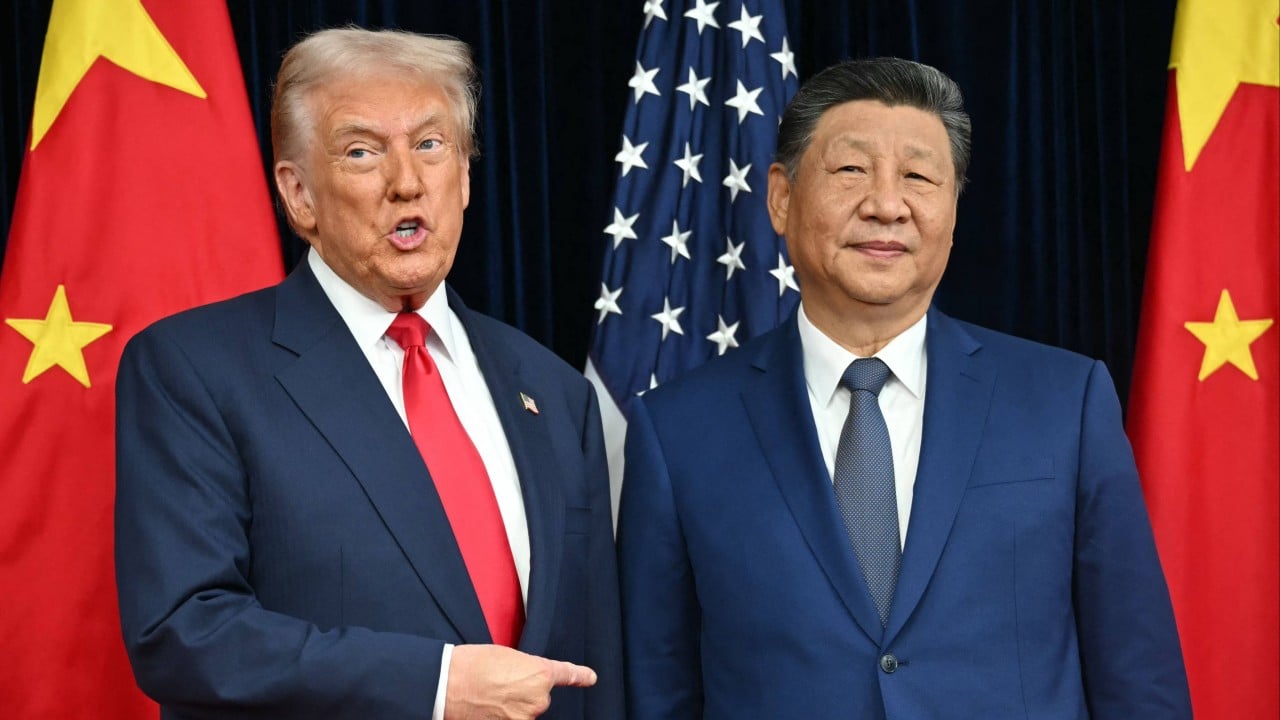
This is the "high-stakes summit" mentioned in the headlines, but the summit is merely the stage. The real drama is the leverage. By tying the security of the Gulf to broader trade negotiations, the Trump administration is performing a kind of geopolitical alchemy. They are turning a security crisis into a financial concession.
It is a brutal, effective logic. If China wants the energy flow to remain uninterrupted, they are being told they must bring something to the table—perhaps on trade, perhaps on currency, or perhaps on their own territorial ambitions in the South China Sea.
The Human Cost of a Centered World
We feel this in the grocery store. When a tanker is harassed or a drone is downed in the Gulf, the ripples move faster than the water. A logistics manager in Ohio sees the fuel surcharge on his shipping fleet spike. A family in Shanghai realizes their monthly utility bill has just devoured the money set aside for a new bicycle.
The complexity of these "summit ties" can be exhausting to track, yet the core is simple: vulnerability.
China’s "Belt and Road Initiative" was supposed to be the solution to this. It was an attempt to build overland routes, to bypass the sea, to create a world where Beijing didn't have to hold its breath every time a friction point flared up in the Middle East. But you cannot build pipelines fast enough to replace the sheer volume of the sea. The ocean remains the master of trade.
The Sound of a Closing Door
There is a specific kind of silence that happens right before a storm. In the diplomatic world, that silence is the absence of the "standard" assurances. Usually, when things get tense in the Middle East, the U.S. State Department issues a predictable cadence of calls for stability.
Now, there is a different sound: the sound of a door being held ajar, with a price tag hanging from the handle.
The U.S. is betting that China’s need for stability outweighs its pride. It is a gamble on the fact that Beijing cannot afford a shock to its manufacturing heart. If the lights go out in the factories of Guangdong because a tanker was seized in the Strait, the social contract in China begins to fray. The government promises prosperity in exchange for order. Without the energy to fuel that prosperity, the order becomes fragile.
This isn't just "pressure." It is a fundamental restructuring of the global hierarchy. We are moving away from a world of shared interests and toward a world of bilateral ransoms. In this new reality, the "invisible stakes" are the very rules we thought governed the world. We used to believe that certain things—like the freedom of the seas—were universal constants. We are learning they are actually variables.
The Sailor and the Satellite
The sailor on that tanker doesn't know that his position on the map is currently being used as a comma in a trade sentence. He only knows the vibration of the engine and the heat of the sun. He is the physical reality of a global system that is currently being stress-tested to its absolute limit.
If the summit fails, if the "ties" become nooses, the sailor finds himself in a graveyard of intentions. The ships might stop moving. The "cord" might be cut.
We watch the news for the results of the meetings, for the handshakes, and for the joint statements that say very little. But the real story is written in the logs of the tankers. It is written in the fluctuating price of a gallon of gas in a rural town and the desperate search for new energy partners in the halls of the Great Hall of the People.
The Strait of Hormuz is not just a waterway. It is a mirror. It reflects the reality that in a world of "America First" and "China Reborn," the space between them is where the rest of us live. It is a narrow, dangerous passage where the margin for error is shrinking by the day.
The ship moves forward, heavy and slow, toward a horizon that looks the same as it did yesterday, even as the world it feeds begins to change its shape entirely.