The sun hasn't quite cleared the horizon in Secaucus, New Jersey, but Elias is already staring at the glowing numbers of a gas station sign. They changed overnight. Again. To Elias, who drives a delivery van fourteen hours a day, those numbers aren't just market data. They are the difference between buying his daughter the "good" soccer cleats or telling her she has to make the old ones last another season.
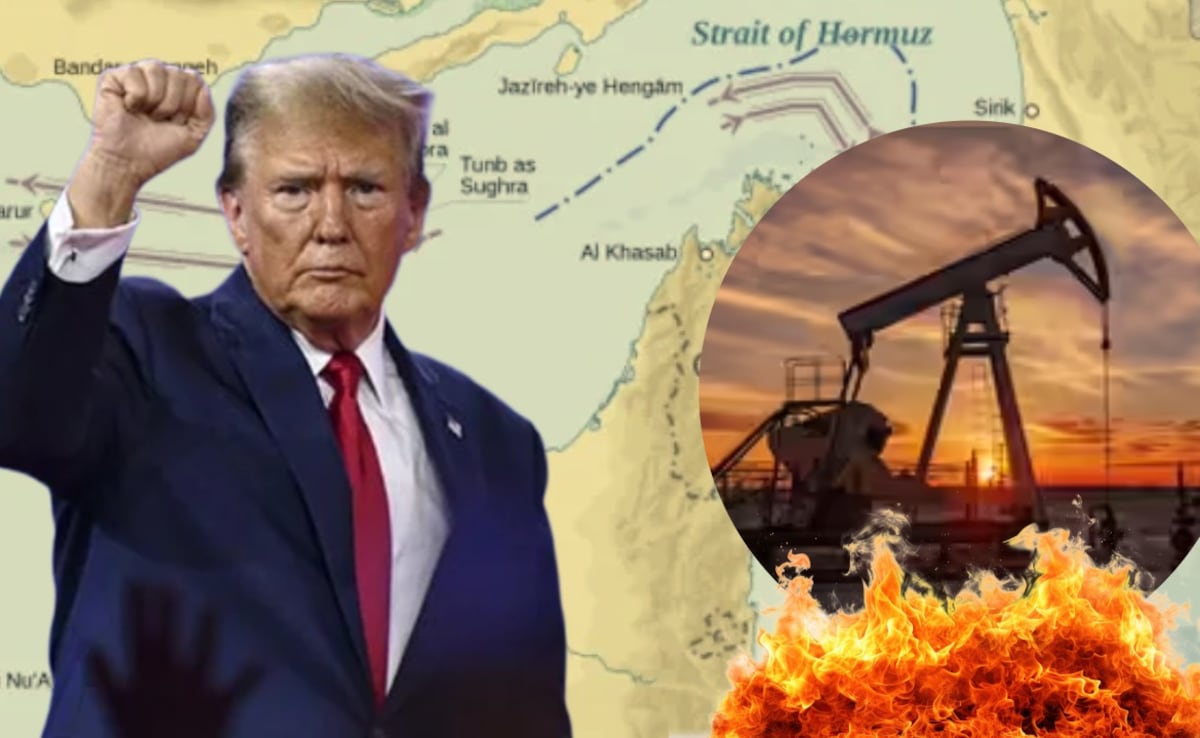
He doesn't know where the Strait of Hormuz is. He couldn't point to it on a map if his life depended on it. Yet, his bank account is tethered to a narrow, jagged strip of blue water thousands of miles away, where the Persian Gulf meets the open sea.
It is a geographical throat. And right now, it feels like it’s closing.
The Geopolitics of a Gallon
The math of the modern world is brutal. About twenty percent of the world’s total petroleum consumption passes through that single waterway. Think about every five cars you see on the highway; statistically, one of them is running on fuel that squeezed through a gap only twenty-one miles wide.
On one side of that gap sits Iran.
For decades, the threat has been the same: a "shutdown" of the Strait. It’s a geopolitical chess move that doesn't require a single shot to be fired to cause a panic. When tensions flare between Washington and Tehran, the friction generates heat at your local pump. It isn’t just about the physical oil being blocked; it’s about the fear of it being blocked.
Traders in glass-walled offices in London and Singapore watch satellite feeds of Iranian fast boats patrolling those waters. They see a drill, a naval maneuver, or a pointed speech from a cleric, and they hit "buy." The price of a barrel of Brent Crude jumps. Two weeks later, Elias feels that jump in his marrow as he clicks the nozzle at the pump and watches the digital display spin like a frantic clock.
The Physics of the Chokepoint
To understand why this place matters more than almost any other patch of ocean, you have to look at the sheer density of the traffic. It isn’t a wide-open sea. Because of shallow waters and jagged coastlines, the actual shipping lanes—the "roads" the massive tankers must stay in—are only two miles wide in each direction. They are separated by a two-mile buffer zone.
Imagine a twelve-lane highway suddenly narrowing down to a single, gravel driveway. Now imagine that driveway is controlled by a homeowner who is currently in a heated legal battle with your boss.
That is the Strait.
If a single supertanker were to be disabled in that lane, or if the area were littered with sea mines, the insurance companies would immediately ground the fleet. No captain is going to sail a billion-dollar cargo into a literal minefield. The flow wouldn't just slow down; it would stop.
The global economy is a "just-in-time" machine. We don't have massive reserves sitting in every town. We rely on the constant, rhythmic pulse of these steel giants moving across the water. When that pulse skips a beat, the system goes into cardiac arrest.
The Human Cost of High-Stakes Poker
We often talk about "energy independence" as if it’s a shield that protects us from these faraway tremors. It’s a comforting thought. We produce more oil in the United States now than almost any time in history. But oil is a global commodity. Even if every drop of gas in Elias’s van came from a well in Texas, the price is still set by the global market.
If the Strait of Hormuz closes, the world loses 20 million barrels of oil a day. The remaining oil on the planet becomes a frantic prize. European and Asian buyers, suddenly cut off from their usual Middle Eastern supply, will pay anything to get their hands on what’s left.
Prices skyrocket everywhere. Texas oil becomes gold. And Elias? He’s still paying the gold price.
This isn’t just about the cost of driving. It’s the hidden tax on everything that moves. The plastic in your toothbrush. The fertilizer for the corn in your cereal. The jet fuel for the plane carrying your Amazon package. When Iran rattles the saber in the Gulf, they are effectively reaching into the pocket of a grandmother in Ohio and taking five dollars.
The Ghost of 1979
There is a collective trauma in the American psyche regarding oil. Those of us old enough remember the lines. The odd-even days. The feeling of a superpower being brought to its knees by a shortage of liquid.
The current tension isn't just a repeat of history; it’s a more complex, digitized version of it. Iran knows they don't actually have to close the Strait to win. They just have to make it look like they might. By maintaining a "grip" on the throat of the world, they gain a seat at a table where they might not otherwise be invited.
It is a form of economic siege warfare.
But for the people living through it, the "why" matters less than the "how much." We see the headlines about sanctions, nuclear deals, and regional hegemony. We hear the analysts talk about "projecting power" and "asymmetric naval capabilities."
It sounds like a game. It sounds like a movie.
But for the small business owner trying to keep her fleet of three plumbing vans on the road, it’s a crisis of survival. She looks at her ledger and realizes that if gas goes up another fifty cents, she has to lay off her youngest apprentice. That’s a real person. A kid named Marcus who just bought his first used car and is trying to build a life.
The Fragile Reality
We like to believe we are in control of our destinies. We vote, we work hard, we save. But our daily lives are built upon a foundation of cheap, reliable energy that is guarded by a handful of young sailors on destroyers in a humid, hostile corner of the world.
The fragility is the point.
The "Oil Wars" aren't just fought with missiles. They are fought with the stress levels of commuters sitting in traffic, watching their fuel gauges drop. They are fought in the grocery store aisles where the price of milk has ticked up because the trucking company had to add a fuel surcharge.
It is a slow, grinding bleed.
The grip on the Strait is a reminder that the world is much smaller than we care to admit. We are all connected by a thin ribbon of blue water. When someone squeezes that ribbon, the pressure is felt in every kitchen, every boardroom, and every gas station from Maine to California.
Elias finally finishes filling his tank. The total is $112. He sighs, a heavy, rhythmic sound that carries the weight of a thousand similar sighs across the country. He climbs back into the driver’s seat, adjusts his mirrors, and pulls out into the pre-dawn traffic. He has to work harder today just to end up in the same place he was yesterday.
Somewhere, thousands of miles away, a patrol boat cuts through the salt spray of the Persian Gulf, its presence alone setting the price of his sweat.