The tea in the glass is always darker than it looks. In the small, dimly lit cafes of Tehran, the steam rises from small cups, carrying the scent of cardamom and the hushed weight of a thousand secrets. People don't talk loudly here. They don't have to. The air itself feels heavy with the friction of two worlds rubbing against each other, miles away and decades deep.
When analysts like Waiel Awwad speak of "creating chaos," they aren't talking about a sudden explosion in a vacuum. They are describing the slow, deliberate cracking of a foundation. To understand the tension between Israel, Iran, and the United States, you have to stop looking at the maps and start looking at the hands moving the pieces. This isn't just a conflict of borders. It is a conflict of existence, played out through digital signals, proxy whispers, and the terrifying precision of modern ballistics.
The Ghost in the Machine
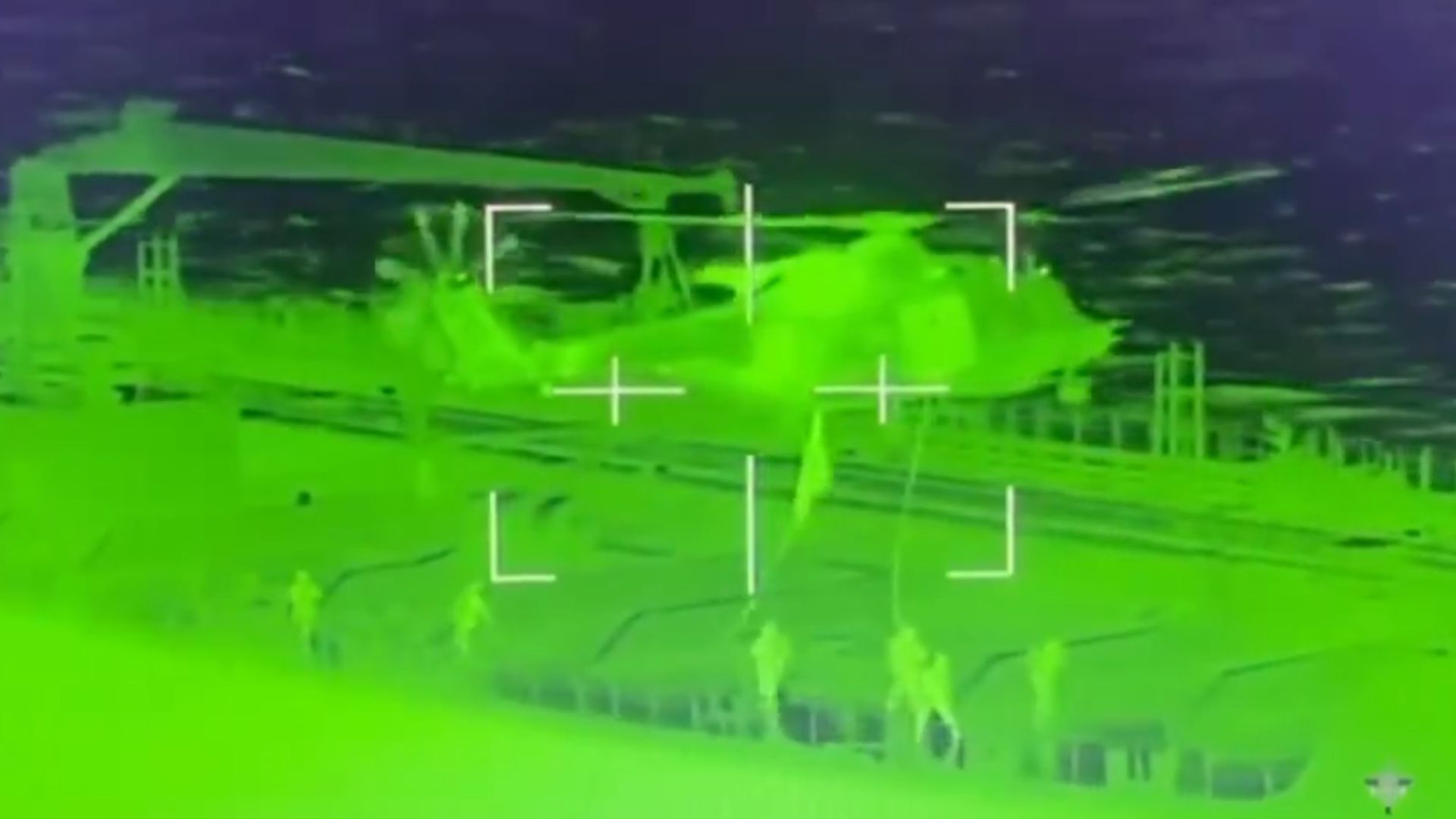
Consider a hypothetical engineer named Arash. He works for a power grid facility in central Iran. He is not a politician. He is a father who worries about his daughter’s math grades and the rising cost of bread. One afternoon, his monitors flicker. A sequence of code, written six thousand miles away, begins to systematically shut down the cooling pumps. There is no smell of smoke. There is no sound of marching boots. There is only the sudden, eerie silence of a machine dying.
This is the front line.
The strategy often attributed to Western intelligence and Israeli strategy isn't always about a direct regime change through traditional warfare. That's too messy. Too loud. Instead, the goal is often described as "managed instability." If you can make the lights go out, the bank accounts freeze, and the internet lag, you create a friction between a people and their government that no amount of propaganda can smooth over.
The "chaos" Awwad refers to is a psychological state as much as a physical one. When a nation feels like the ground is shifting beneath its feet, it reacts. Sometimes it lashes out. Sometimes it turns inward. Israel views Iran’s nuclear ambitions not as a strategic hurdle, but as an existential countdown. For Iran, the presence of American influence and Israeli intelligence within their borders is a poison they have been trying to sweat out since 1979.
The Language of the Long Game
We often hear terms like "asymmetric warfare" and "strategic depth." These are bloodless words for very bloody realities.
Imagine two boxers in a ring. One is a heavyweight with massive reach—the United States and its allies. The other is a middleweight who knows how to move, how to clinche, and how to make the referee look the other way—that’s the proxy network. Iran doesn't need to match the U.S. Navy ship for ship. It only needs to ensure that the cost of entry into the Persian Gulf is higher than the world is willing to pay.
- The Proxy Shield: By supporting groups in Lebanon, Yemen, and Iraq, Iran creates a buffer. It moves the battlefield away from its own soil.
- The Intelligence Sieve: Israel’s Mossad has demonstrated a terrifying ability to operate inside Iran, from the assassination of scientists to the theft of entire nuclear archives. This creates a culture of paranoia within the Iranian leadership. Who can be trusted?
The "chaos" isn't an accident. It’s the product.
The Human Cost of High Stakes
It is easy to get lost in the "who hit who" of international headlines. Israel strikes a consulate; Iran launches a swarm of drones; the U.S. moves a carrier strike group. It feels like a choreographed dance of giants. But beneath the metal and the fire, there is the exhaustion of the ordinary.
Economic sanctions are often described as a "surgical" tool to pressure a government. In reality, sanctions are a blunt instrument that falls heaviest on the kitchen table. When the rial loses half its value in a month, it isn't the generals who suffer. It is the mother trying to buy medicine for a feverish child. It is the student who realizes their degree might never lead to a job.
This is the "regime change" strategy from the ground up. The theory is that if the domestic pressure becomes high enough, the vessel will eventually burst. But history is a fickle teacher. Often, external pressure doesn't shatter a regime; it hardens it. It gives the leadership a common enemy to point to, a way to frame every internal failure as a foreign sabotage.
The Silicon Veil
Technology has changed the nature of this shadow war. It used to be that you needed a spy in a trench coat to steal a secret. Now, you need a bored teenager with a high-end laptop and a vulnerability in a software update.
The digital battlefield is where the "chaos" is most effective because it is deniable. If a refinery catches fire, was it a faulty valve? A disgruntled employee? Or a line of code sent from a basement in Tel Aviv? This ambiguity is the ultimate weapon. It keeps the enemy guessing. It forces them to spend billions on defense against ghosts.
But ghosts can’t be bargained with.
The danger of the current trajectory is the loss of the "off-ramp." In the Cold War, there were red phones and clear boundaries. Today, the signals are mixed. Awwad’s assessment of American aims suggests a belief that the U.S. isn't looking for a deal, but for a collapse. If that is the perception in Tehran, then the motivation to negotiate vanishes. If you believe your house is being marked for demolition, you don't bother painting the shutters. You barricade the door.
The Sound of the Next Step
There is a specific sound a drone makes. It’s a low, persistent hum, like a lawnmower in the sky that never quite passes. For many in the Middle East, that hum is the soundtrack of the 21st century. It represents a war that is always happening, even when it isn't declared.
We are living through a period where the old rules of "state vs. state" are being rewritten in real-time. The goal of changing a government through external pressure and internal discord is a gamble of the highest order. Chaos is easy to start. It is notoriously difficult to direct. Once the glass breaks, it doesn't matter who threw the stone; everyone in the room is standing on the shards.
The stakes are invisible until they aren't. They are hidden in the price of oil, the encryption of an app, and the quiet conversations in those Tehran cafes. The world watches the headlines, waiting for the big explosion, failing to realize that the most significant changes are usually the ones that happen in the dark, one cracked foundation at a time.
The glass is darker than it looks. And it is much, much more fragile.
Would you like me to analyze the historical parallels between current Iran-Israel tensions and the 1953 Iranian coup to see how past interventions shape today's "chaos" strategy?