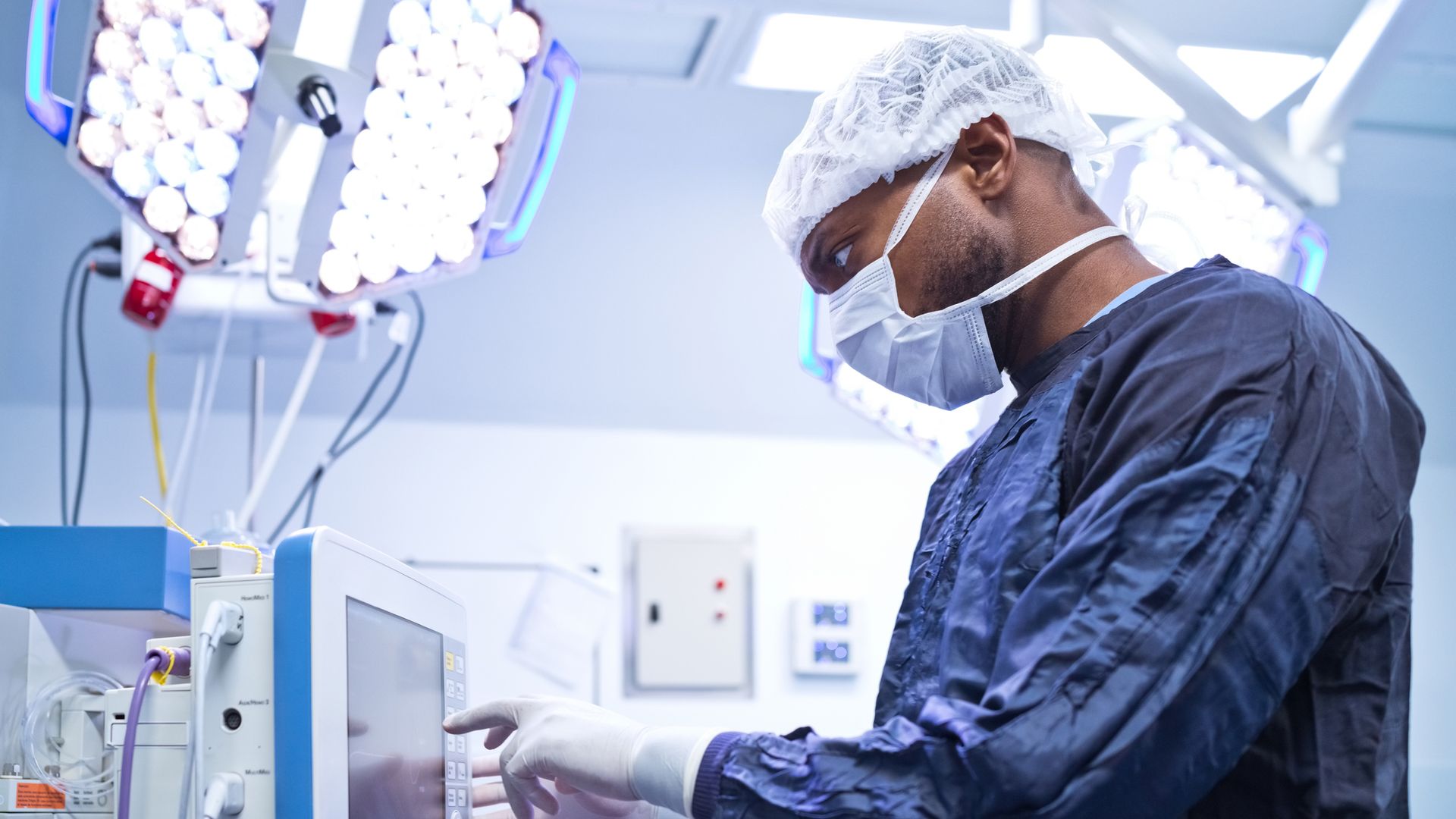
The air inside a nuclear power plant in Normandy carries a specific weight. It is filtered, regulated, and monitored with a precision that borders on the obsessive. In this world of heavy water and containment domes, safety is not a suggestion; it is a religion. Every valve, every weld, and every Geiger counter reading is a testament to human control over the chaotic forces of the atom. Yet, for one worker at the Penly plant, the most lethal threat didn't come from a hairline fracture in a cooling pipe or a spike in radiation levels.
It came from a breath. A microscopic traveler. A stowaway that ignored every security checkpoint and lead-lined door.
While the world watches the visible borders of nations, a biological drama is unfolding across the English Channel. It is a story of how a localized outbreak in the United Kingdom managed to cast a shadow over the French coastline, claiming the life of a man who spent his days managing the most complex machinery on earth, only to be toppled by a single-celled organism older than humanity itself.
The Siege of the Meninges
To understand what happened in Normandy, we have to understand the terrifying speed of Neisseria meningitidis. Imagine the brain and the spinal cord as the inner sanctum of a fortress. They are wrapped in three protective layers—the meninges. These membranes are the final line of defense, cushioned by clear, life-sustaining fluid.
When the bacteria breach this sanctum, they don't just sit there. They explode.
The immune system, sensing the ultimate violation, panics. It floods the area with white blood cells and inflammatory chemicals. In a desperate attempt to kill the invader, the body begins to strangle itself. The pressure inside the skull rises. The very fluid meant to protect the brain becomes a toxic sludge. This is meningitis. It is a race where the finish line is often crossed before the patient even realizes they are in a contest.
The worker in Penly likely began his day with nothing more than a nagging malaise. Perhaps a stiff neck he attributed to a long shift. Maybe a headache that felt like the fluorescent lights were a bit too bright. Within hours, the body’s internal chemistry becomes a battlefield. In the UK, health officials have been tracking an "unprecedented" surge in these cases, a spike that has left epidemiologists scratching their heads and grieving families searching for answers. The Channel is twenty-one miles of cold water, but for a pathogen, it is a bridge.
The Geography of a Ghost
Disease does not care about passports. It does not recognize the sovereignty of the Republic or the Crown. We often talk about outbreaks in terms of data points—clusters, vectors, and R-numbers—but the reality is found in the communal breakrooms and the shared ventilation of our lives.
The UK outbreak has been described as a "group B" strain, a particularly stubborn variant that has historically been difficult to pin down with a single, universal vaccine. While the "C" strain was largely beaten back by aggressive immunization campaigns in the early 2000s, Group B remained the ghost in the machine. It lingers in the back of the throat of healthy carriers. You could be sitting next to a carrier on a train from London to Paris, sharing nothing more than the same air for two hours. They remain perfectly fine. You, however, might be the one whose immune system doesn't recognize the threat until the siege has already begun.
Consider the irony of the setting. A nuclear facility is designed to keep things in. It is a fortress of containment. But human beings are porous. We leak. We breathe. We touch. We move through the world as walking ecosystems, carrying trillions of passengers. When the Normandy worker fell ill, the shock wasn't just that a young, seemingly healthy man was gone. It was the realization that our most advanced industrial safeguards are useless against the primitive.
The Ticking Clock and the Crimson Rash
Time functions differently during a meningitis infection. In most illnesses, you measure recovery in days or weeks. With invasive meningococcal disease, you measure survival in minutes.
Medical professionals often look for the "glass test" sign—a rash that doesn't fade when pressed under a tumbler. But waiting for the rash is like waiting for the smoke to clear before calling the fire department. By the time those purple-red spots appear, the bacteria have often already entered the bloodstream, a condition called septicemia.
The bacteria release toxins that shred the lining of the blood vessels. Blood begins to leak into the skin and organs. The heart struggles to pump through a system that is suddenly full of holes. Blood pressure collapses. This is the "cascade," a physiological freefall that even the best intensive care units struggle to arrest.
In the wake of the death in Normandy, the French health authorities did what they always do: they began the "ring of protection." They identified every person who had close contact with the worker. They handed out antibiotics—rifampicin or ciprofloxacin—to kill any lingering bacteria in the throats of the living. It is a frantic, necessary effort to burn the bridge behind the fire.
Why Now?
The question haunting the UK and now France is why this is happening with such sudden ferocity. For two years, the world lived in a state of hyper-hygiene. We masked, we distanced, and we scrubbed our hands until they were raw. During that time, meningitis cases plummeted. The bacteria had nowhere to go.
But our immune systems are like muscles; they require a certain amount of "exercise" to stay sharp. There is a growing concern among researchers that the hiatus in normal social interaction created an "immunity debt." We emerged into a world where our communal defenses were lowered, and the bacteria, having waited in the shadows, found a population that was biologically out of practice.
The "unprecedented" nature of the UK outbreak suggests a shift in the way the bacteria is moving through the population. It is no longer just a disease of dormitories and military barracks. It is appearing in workplaces. It is crossing borders. It is finding the cracks in the armor of the modern workforce.
The Weight of the Aftermath
When a worker dies in a nuclear plant, the sirens usually signal a mechanical failure. This time, the silence was louder. The Penly plant continues to hum, its reactors generating the electricity that lights the homes of millions. The heavy doors still swing shut with a pressurized thud. The guards still check badges.
But the employees there now look at one another differently. Every cough in the locker room, every sneeze in the cafeteria, carries a new weight. They are reminded that they are not just operators of a machine; they are biological entities, fragile and interconnected.
The death of a colleague to a preventable, albeit lightning-fast, disease creates a specific kind of trauma. It shatters the illusion of safety that high-tech environments provide. You can survive the radiation, the heat, and the pressure, only to be taken down by a microscopic hitchhiker from across the sea.
The UK's struggle with this outbreak is no longer a "British problem." It is a testament to the fact that in a globalized world, there is no such thing as an isolated incident. Normandy and the UK are separated by the sea, but they are joined by the air we share. We live in a world where the most significant threats are the ones we cannot see, and our best defense isn't a wall or a filter, but a collective vigilance.
The tragedy in Normandy serves as a cold, sharp reminder: we are only as safe as the person standing next to us.
The man in the nuclear plant spent his life mastering the invisible energy of the atom. In the end, he was claimed by an invisible force of a different kind—one that reminds us that despite all our steel and concrete, we remain profoundly, dangerously human.
Would you like me to look into the specific symptoms of the B-strain of meningitis or provide a guide on the current vaccination schedules recommended for adults in high-risk environments?