The coffee at Terminal 5 always tastes like nervous anticipation and overpriced beans. You’ve checked your passport four times. Your bags are weighed to the gram. You have the hotel reservation printed, the dinner bookings synced to your calendar, and a mental map of the West End etched into your brain. Historically, this was enough. You showed up, a weary officer glanced at your photo, stamped a page, and you were swept into the grey, beautiful hum of London.
That era ended quietly.
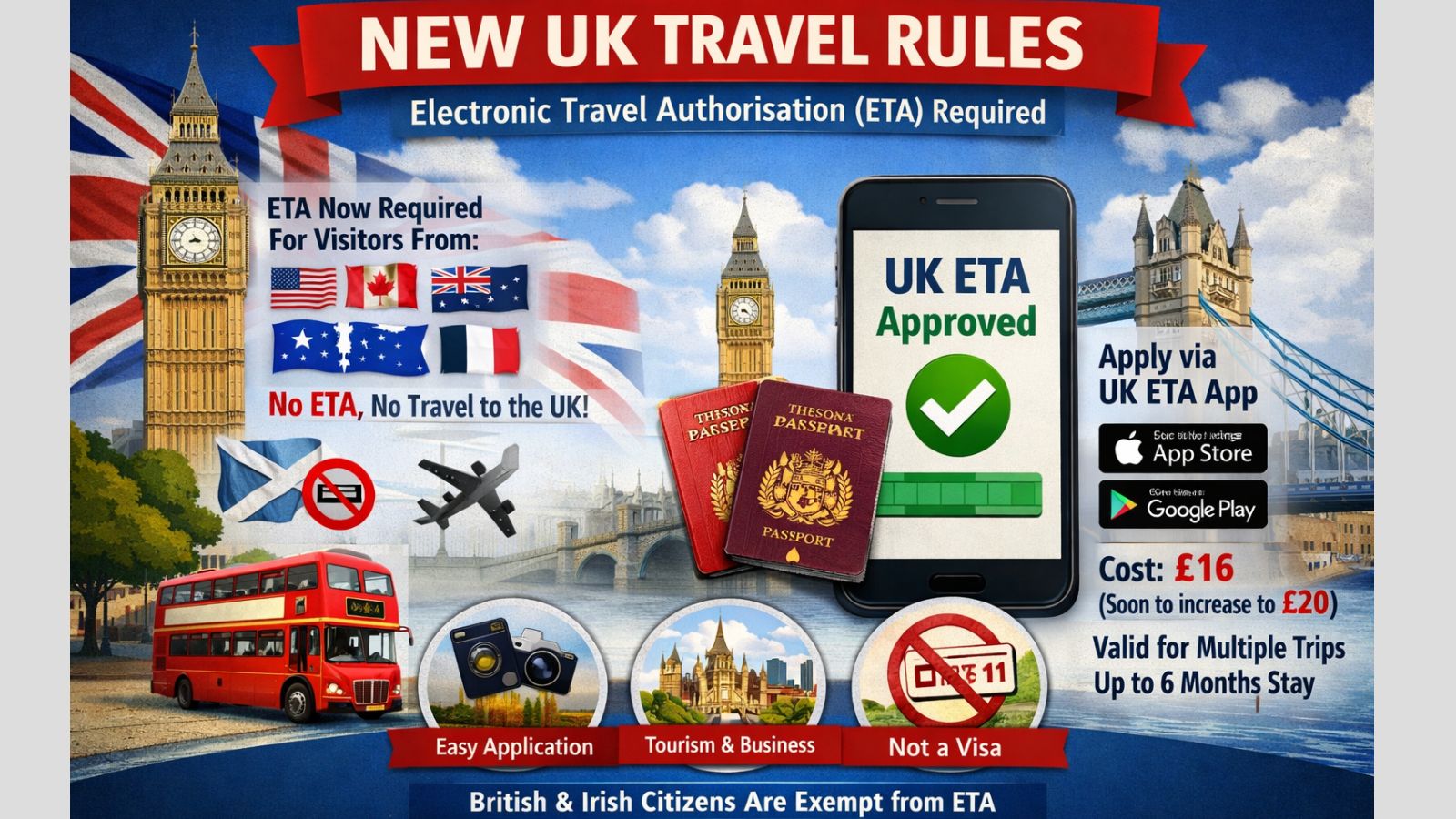
While we were busy arguing over seat reclining etiquette and the price of mid-flight Wi-Fi, the British government fundamentally rewired the concept of "arrival." The border is no longer a physical desk at Heathrow or a gate at St. Pancras. It has migrated. It now lives inside a server farm, a digital gatekeeper that decides your fate before you even leave your driveway. They call it the Electronic Travel Authorisation, or ETA. But for the traveler, it’s a shift from a "check-in" to a "permission-to-exist" in British airspace.
The ghost in the machine
Sarah—a hypothetical but very real representation of the modern traveler—is standing in a check-in queue in New York. She has a British passport-holding husband and two kids. She’s visited the UK twenty times. In the old world, Sarah was a "non-visa national." She was part of a trusted tier of travelers who could simply fly.
Now, Sarah’s phone is her most vital piece of luggage.
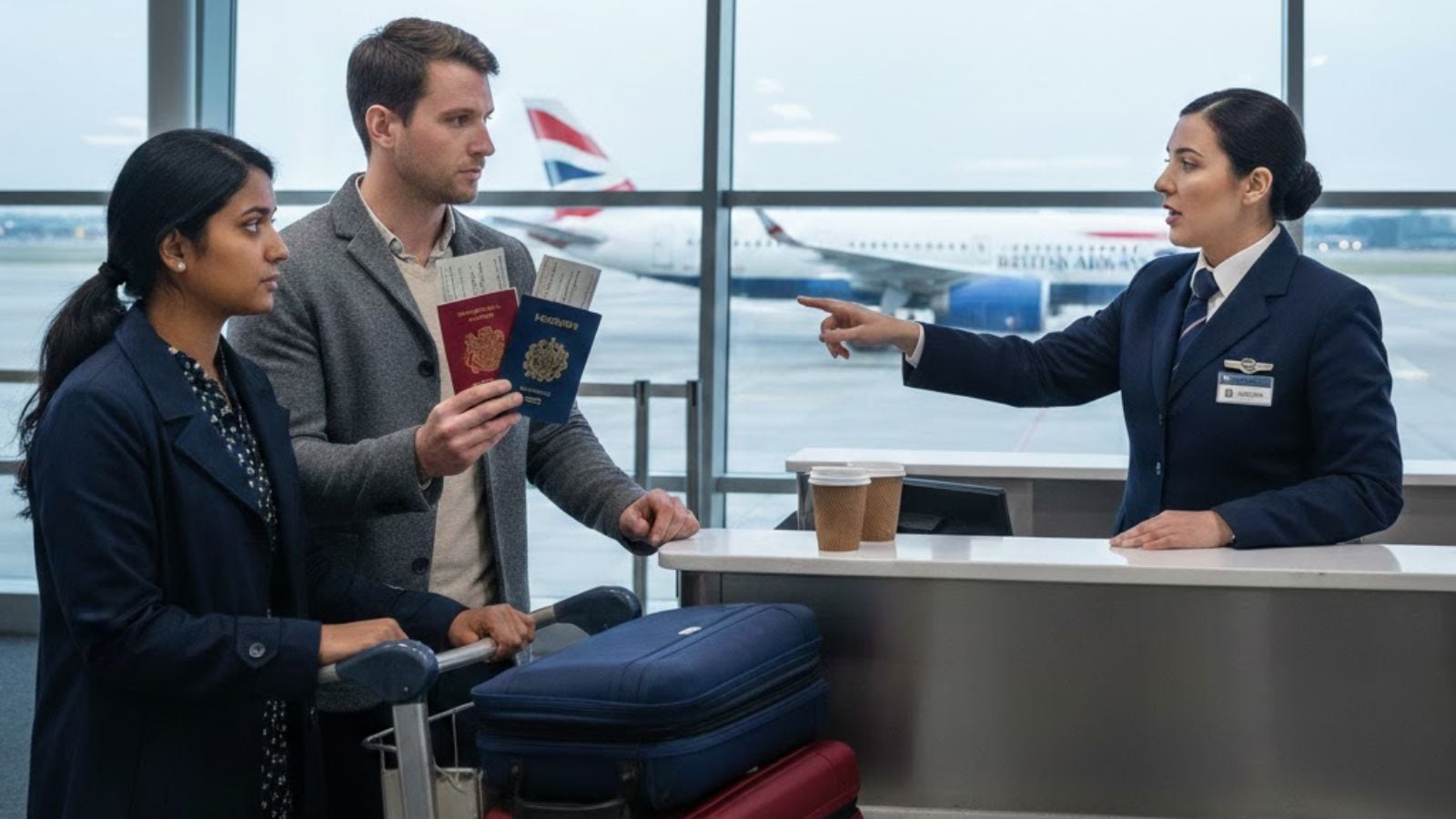
The UK’s "no permission, no travel" rule isn't just a catchy bureaucratic slogan. It is a hard digital wall. The ETA is a digital link to your passport that verifies you have the right to board. Without it, the airline’s system won't even generate a boarding pass. It’s a binary reality: 1 or 0. Yes or No. If the computer says no, the officer at the desk can’t help you, the manager can’t override it, and your vacation dies on the linoleum floor of an airport three thousand miles from your destination.
Why did they do this? The Home Office argues it’s about "knowing" who is coming. For decades, the UK border was reactive. Authorities only dealt with you once you were physically standing on their soil. If they decided to turn you away, it was a logistical nightmare of detention centers and return flights. By implementing the ETA, the UK has effectively moved its border to every international airport on the planet. They are pre-screening the world to ensure that the only people who land are the ones they’ve already vetted.
The ten pound price of entry
The mechanics are deceptively simple, yet the weight of them is heavy. The ETA costs £10. It’s valid for two years, or until your passport expires. It allows for multiple trips. On paper, it looks like a minor administrative hurdle, a small tax on the privilege of seeing Big Ben.
But consider the friction.
For a family of five, that’s £50 and five separate digital applications. It requires an app, a face scan, and a leap of faith that the algorithms will talk to each other correctly. This isn’t a visa—the government is very particular about that distinction—but for the traveler, the difference feels academic. It is a new layer of "pre-travel anxiety" added to an already exhausted global population.
This system is rolling out in phases, a slow-motion transformation of the British border. It began with citizens of Qatar, followed by other Gulf Cooperation Council states. By 2025, it will encompass almost everyone who doesn't need a formal visa to enter the UK, including Europeans, Americans, Australians, and Canadians.
The "special relationship" or the "European brotherhood" doesn't matter to the software. The software only cares about the authorization code.
The hidden stakes of the digital trail
We often think of these digital permissions as simple security checks. We assume the government is looking for "the bad guys." And they are. But the ETA represents something broader: the total datafication of movement.
When you apply for an ETA, you aren't just giving them ten pounds. You are providing a high-resolution snapshot of your digital identity. Your travel patterns, your biographical data, and your biometric markers are all fed into a system designed to look for anomalies. It is a move toward a "frictionless" border that actually requires a massive amount of "pre-friction."
Imagine the frustration of a business traveler who misses a multimillion-pound deal because their ETA application—usually processed in hours—gets flagged for a manual review that takes three days. There is no appeal process for a delay. There is only waiting. The stakes aren't just about missing a tour of the Tower of London; they are about the reliability of international commerce and the personal cost of being "un-permissioned."
The UK isn't alone in this. The US has the ESTA. Europe is slowly birthing ETIAS. We are entering a world of "fortress continents," where the casual, spontaneous trip is becoming a relic of the 20th century. You can no longer just "go." You must be invited.
Navigating the glitch
The real danger isn't the rule itself; it's the assumption of perfection.
We’ve all seen it. The "System Down" message at the grocery store. The spinning wheel of death on a laptop. Now, apply that to your ability to attend a funeral, a wedding, or a once-in-a-lifetime job interview. If the ETA database has a mismatch with the airline’s API, you are trapped in a bureaucratic no-man's land.
The advice for the modern traveler is no longer just "pack light." It is "apply early." The Home Office suggests a lead time of at least three days, but the wise traveler will treat the ETA like a passport renewal—something to be secured weeks in advance.
You also have to be precise. A single digit typo in your passport number on the ETA application won't be caught by the app, but it will be caught by the gate agent’s scanner. In that moment, your £10 investment becomes a zero-value asset. You will be told to stand aside. You will watch the rest of the passengers file down the jet bridge.
The human element of travel—the kindness of a stranger, the discretion of a border guard who sees you’re just a tired parent trying to get kids to their grandma—is being replaced by the cold, unblinking eye of the database.
The end of the open road
There is a certain irony in the fact that as our planes get faster and our communication becomes instantaneous, the actual act of crossing a line on a map is becoming more complex. We are more connected than ever, yet we are being asked to prove our "worthiness" more frequently.
The ETA is a reflection of a world that has grown suspicious. It is a tool of a state that wants to control the narrative of who belongs within its shores long before those people ever touch British soil. It is efficient. It is modern. It is, in many ways, inevitable.
But as you sit in that terminal, clutching your phone and waiting for the "Authorised" notification to appear, you realize that the horizon has changed. The sky is still open, but the gate is now invisible, electronic, and absolute.
The next time you book a flight to London, don't look at the map. Look at your screen. The border is already there, waiting for you to ask for permission.