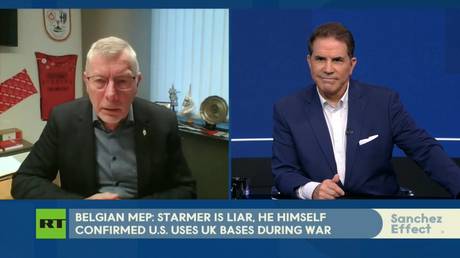
A man sits in a cafe in Brussels, stirring a sugar cube into an espresso that has already gone cold. Outside, the rain streaks the glass, blurring the outlines of the European Parliament buildings just a few blocks away. He is an MEP, a member of the body that supposedly speaks for 450 million people. But today, he feels like he is shouting underwater. He knows that the decisions made in the carpeted silence of those halls are drifting further and further away from the conversations happening in the rainy streets outside.
The rift isn't about a single policy or a specific tax bracket. It is about the smell of smoke. Specifically, the smoke rising from a Middle East that seems perpetually on the brink of a conflagration that Europe is neither prepared to stop nor able to ignore. When the headlines scream about the escalating tensions between Iran and its neighbors, the leaders in the high offices reach for their prepared statements. They talk about "strategic autonomy." They talk about "de-escalation." Don't forget to check out our recent coverage on this related article.
The people they represent are talking about something else entirely. They are talking about their heating bills, their safety, and the haunting suspicion that their leaders are playing a game of chess on a board that burned up years ago.
The Great Disconnect
Politics is often sold as a mirror, a reflection of the will of the people. Lately, that mirror has cracked. In the corridors of power in Berlin, Paris, and Brussels, there is a lingering commitment to a diplomatic architecture that many Europeans no longer believe in. For years, the official stance has been one of cautious engagement—a delicate dance with Tehran designed to keep the nuclear deal on life support and maintain a semblance of stability. If you want more about the history here, Reuters provides an in-depth breakdown.
But stability is a luxury of the past.
Consider a young mother in Lyon or a shopkeeper in Warsaw. To them, the "Iran question" isn't a theoretical exercise in geopolitical balancing. It is a series of very real, very sharp anxieties. They see the drones being used in Eastern Europe and they draw a straight line back to the factories in Iran. They see the shipping lanes in the Red Sea becoming a gauntlet of fire and they know, with a weary certainty, that the price of their groceries is about to climb again.
While the leadership clings to the hope of reviving old agreements, the public is watching a new reality unfold. There is a profound sense that the European elite is stuck in a 2015 mindset, while the rest of the world has moved into a much darker chapter. The "rift" mentioned by the MEP isn't just a disagreement over tactics. It is a fundamental difference in how they perceive the passage of time. One group is waiting for the world to return to "normal," while the other is trying to survive the new "now."
The Cost of Hesitation
Decision-making in a democracy is supposed to be slow, but there is a point where slow becomes stagnant. When European leaders hesitate to take a firm stand on Iranian influence, they often cite the need to remain an "honest broker." They want to keep the lines of communication open. They want to avoid being dragged into another "American war."
These are noble goals on paper. In practice, they often look like paralysis.
Every time a diplomat issues a "strongly worded concern" while another shipment of hardware moves across a border, the credibility of the European project thins. The public feels this erosion. They feel it in the way their passports seem to carry less weight, or in the way their continent seems to be a spectator in its own destiny.
There is a psychological weight to being a bystander. When you watch a crisis unfold and your leaders offer nothing but nuanced footnotes, you start to feel small. You start to feel that the values you were told were universal—democracy, human rights, the rule of law—are actually just regional preferences that your leaders are too tired to defend.
The Ghost in the Room
We must talk about the fear that no one likes to put into a press release: the fear of blowback.
European leaders are haunted by the 2015 migrant crisis. It remains a raw nerve in the collective psyche of the continent. There is a prevailing logic in the backrooms of power that says: "If we push too hard, if we destabilize the region further, the waves will hit our shores." This fear dictates a policy of containment and quietude.
The irony is that the public is already living with the consequences of that instability. They see the rise of radicalization, the strain on social services, and the fracturing of their own communities. They are already dealing with the "blowback." They look at their leaders and wonder why the people in charge are so afraid of a storm that is already raining on their heads.
The MEP in the cafe knows this. He hears it in the town halls where the questions aren't about the nuances of the JCPOA, but about why Europe seems incapable of protecting its own interests. He sees the rise of populist movements that trade on this exact frustration. These movements don't need to offer complex solutions; they only need to point at the silence of the establishment and call it betrayal.
A Matter of Sovereignty
What does it mean to be a sovereign power in the 21st century?
If you ask a strategist, they might talk about GDP, military spending, or energy independence. If you ask a citizen, they will tell you it means the ability to say "No" and have it mean something.
Right now, Europe's "No" feels like a suggestion.
The rift exists because the leadership is trying to manage a decline, while the people are demanding a defense. The leaders see a world of gray areas and complex trade-offs. The people see a world where drones are falling on European soil and they want to know whose side their government is on.
It is a visceral, emotional demand for clarity.
Imagine a grandfather in a village in Italy. He remembers a time when Europe was the center of the world, for better or worse. Now, he watches the news and sees his leaders being ignored by regional powers who used to court their favor. He feels a loss of dignity that no amount of economic data can soothe. This isn't about wanting war; it’s about wanting to not feel irrelevant.
The Breaking Point
The gap between the street and the state house is where trust goes to die.
When the MEP finally leaves the cafe, he walks past a group of students protesting. They aren't protesting for more diplomacy. They are protesting for action—for human rights in Tehran, for security in Ukraine, for a future that doesn't feel like it’s being sold off piece by piece to keep the peace for another six months.
Their voices are loud, sharp, and impatient.
Inside the halls of power, the air is climate-controlled and the voices are measured. There, the MEP will hear colleagues argue that they must be "pragmatic." They will say that Europe is not a superpower and shouldn't act like one. They will caution against "alienating" partners.
But pragmatism that ignores the heartbeat of the people is just a slow-motion disaster.
The rift is widening because the leaders are afraid of the consequences of acting, while the people are already living with the consequences of inaction. It is a classic tragedy: the fear of the fire prevents you from grabbing the bucket until the house is already gone.
The sucre in the espresso has dissolved, but the bitterness remains. Europe stands at a crossroads where one path leads to a managed irrelevance and the other leads to the painful, difficult work of reasserting its soul. The people are already walking. They are just waiting for their leaders to catch up.
The rain continues to fall on Brussels, washing the soot from the statues of old kings and forgotten heroes. In the shadows of those monuments, the silence of the leaders grows louder every day, a hollow space where a continent’s conviction used to be. Every hour of hesitation is a brick in the wall being built between those who rule and those who wonder why they still bother to follow.