The Ghost in the Machine
Take a look at the spoon resting against your ceramic mug. Consider the coffee beans that traveled from a volcanic slope in Ethiopia to a roaster in Berlin before landing in your kitchen in Chicago. We rarely think about the friction required to move an object across a border. We assume the world works because it has always worked. We treat global trade like oxygen: invisible, ubiquitous, and only noticeable when it starts to run out.
But the oxygen is getting thin.
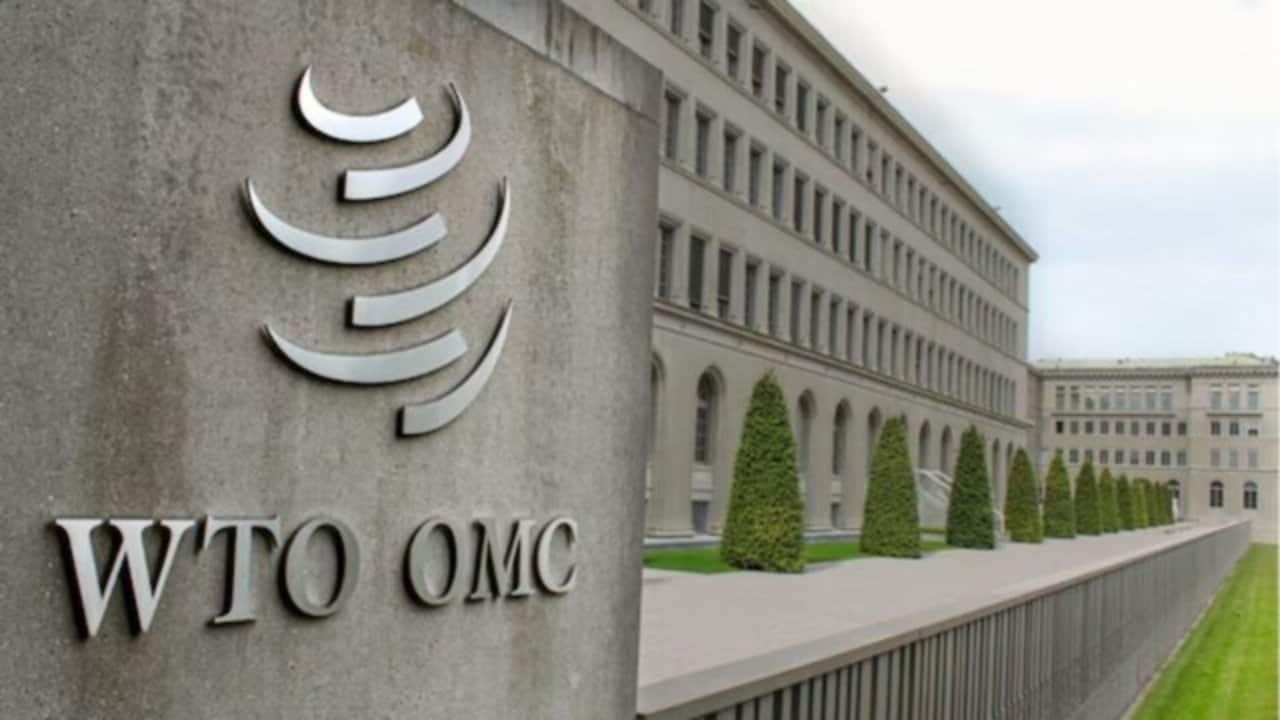
In the hallways of Geneva, there is a building that looks more like a grand old sanatorium than a command center for the global economy. This is the headquarters of the World Trade Organization (WTO). For decades, it has been the quiet arbiter of how nations play together. It is the reason a dispute over airplane subsidies doesn't escalate into a naval blockade. It is the reason your electronics don't cost five times their current price.
Recently, Ngozi Okonjo-Iweala, the Director-General of the WTO, sat before a room of delegates with a message that felt less like a status update and more like a final warning. She called the upcoming March Ministerial a potential "turning point." In the coded language of high-level diplomacy, "turning point" usually means "the cliff is right there."
The system is breaking. It isn't breaking because of a single villain or a sudden war, though those don't help. It is breaking because the rules we wrote in 1995 weren't designed for a world where data is more valuable than oil, where climate change dictates supply chains, and where fish are disappearing from the oceans faster than we can agree on who owns them.
The Fisherman and the Spreadsheet
To understand what is actually at stake in these dry, fluorescent-lit meeting rooms, you have to leave Geneva. You have to go to a small coastal village in Senegal or a pier in the Philippines.
Imagine a man named Amadou. He has fished the same waters for thirty years. He doesn't care about "multilateralism" or "dispute settlement body reform." He cares about the fact that his nets are coming up lighter every season. He is competing against massive, industrial trawlers from halfway across the globe—ships that are only profitable because their home governments pour billions of dollars into fuel subsidies.
These subsidies are the definition of "distorted trade." They allow big players to cheat the laws of economics, overfishing waters until the ecosystem collapses, leaving people like Amadou with nothing but a boat and a horizon of empty water.
The WTO has been trying to fix this for over twenty years. Twenty years of debating commas. Twenty years of "procedural delays."
At the March Ministerial, the goal isn't just to talk about trade; it’s to decide if the world can still agree on anything at all. If they can finalize the agreement to ban these harmful fishing subsidies, it’s a win for Amadou. If they fail, it isn't just a "missed opportunity." It is a signal to every nation that the rules are dead, and the era of "every country for itself" has officially begun.
The Broken Gavel
There is a specific part of the WTO that sounds incredibly boring but is actually the most dramatic thing in international law: the Appellate Body.
Think of it as the Supreme Court of World Trade. If Country A thinks Country B is being unfair, they go to court. For years, this worked. But then, the United States—under multiple administrations—started pulling the plugs. They argued the court was overstepping, making up its own rules, and ignoring national sovereignty.
By refusing to appoint new judges, the U.S. effectively paralyzed the court. Imagine a city where the police can still write tickets, but the courthouse is boarded up. You can complain all you want, but there is no judge to hear the case.
This is the current state of global trade. We have the rules, but we have no way to enforce them.
When Dr. Okonjo-Iweala talks about a turning point, she is talking about the desperate need to fix this "gavel." Without a functioning dispute system, trade disputes don't get settled with legal briefs; they get settled with retaliatory tariffs. One country raises taxes on steel; the other country responds by taxing cheese and wine.
Suddenly, the restaurant owner in Ohio finds their margins disappearing because of a dispute over aluminum they didn't even know existed. The human cost of a broken trade court is felt in the price of a grocery bill and the closure of a family-owned factory.
The Digital Wild West
While the diplomats are struggling to fix the problems of the 1990s, the world has moved on to a digital frontier that the original WTO treaty barely mentions.
When you download a piece of software, stream a movie, or buy a digital book, you are participating in trade. But who taxes that? Where is that "good" produced? If a country decides to block another country’s digital services under the guise of "national security," who decides if they’re lying?
The March meeting is a scramble to keep the digital world from splintering. Currently, there is a moratorium on imposing customs duties on electronic transmissions. It’s the reason you don't pay a "border tax" every time you download an app from a developer in another country.
But that moratorium is temporary. It has to be renewed.
Some nations see these digital duties as a way to claw back lost tax revenue. Others see them as a death knell for the open internet. If the ministerial fails to extend this agreement, we could see the "Balkanization" of the web. A digital wall could go up, making the internet look less like a global commons and more like a series of gated communities where only the wealthy can afford to peek over the fence.
The Weight of the Room
It is easy to be cynical about these gatherings. We see photos of people in expensive suits shaking hands in front of flags and we assume it’s all theater.
But consider the alternative.
The alternative to the WTO isn't a world of "free people." It’s a world of "might makes right." In a world without a central trade body, the biggest economies—the U.S., China, the EU—dictate the terms. Small nations, developing economies, and landlocked countries lose any leverage they ever had.
Dr. Okonjo-Iweala is an optimist by necessity. She has to be. She is trying to convince 164 different countries, each with their own domestic voters and angry industries, to agree on a shared future. She is pushing for "re-globalization"—the idea that we shouldn't retreat from the world, but instead bring in the people who were left behind the first time.
The "turning point" she describes is a choice between two futures.
In one future, we lean into the friction. We let the rules erode until trade becomes a weapon of war. Supply chains become shorter, more expensive, and more fragile. The spoon on your desk becomes a luxury item. Amadou’s village becomes a ghost town.
In the other future, the delegates in March find a way to swallow their pride. They fix the court. They protect the fish. They keep the internet open. It won’t be perfect. It will be a messy, frustrating compromise that satisfies no one entirely.
But that is exactly what peace looks like. It’s the sound of people arguing in a room so they don't have to fight in the streets.
As the sun sets over Lake Geneva, the lights in the WTO building stay on. The cleaners move through the empty halls, picking up the discarded drafts of speeches and the remains of late-night coffee. Somewhere on a desk, a red pen has circled a single word in a 300-page document. The fate of a fisherman's net and the cost of your digital life might just depend on whether that word stays or goes.
The world is waiting to see if we still know how to talk to each other.
Would you like me to analyze the specific economic implications of the digital trade moratorium for small-scale developers?