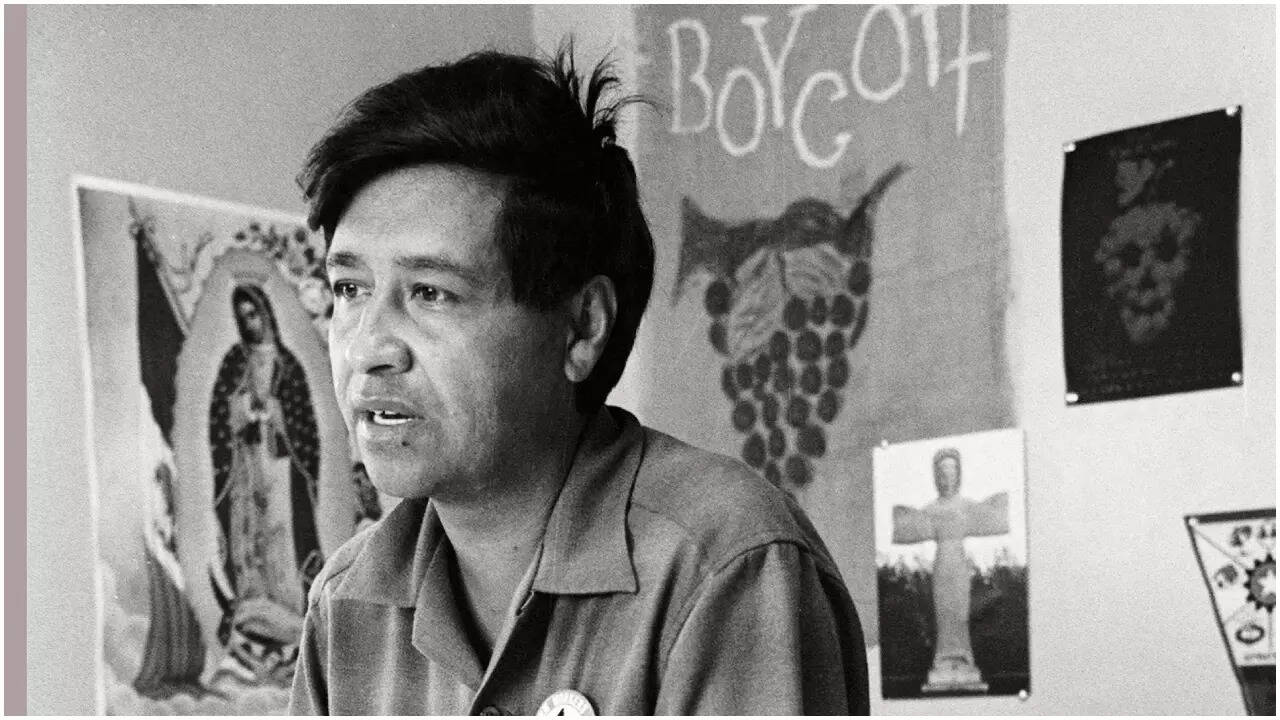
The removal of monuments and the renaming of civic infrastructure represents more than a cultural shift; it is a rapid liquidation of "symbolic capital" triggered by new data entry into a public legacy ledger. When allegations of abuse and cult-like behavior regarding Cesar Chavez surfaced via recent investigative reporting and archival excavations, the response from municipal and academic boards followed a predictable pattern of risk mitigation. This process—de-commemoration—functions as a corrective mechanism for institutions that previously over-indexed on a singular narrative of a historical figure. The fallout is not merely emotional; it is a structural reassessment of how labor history is codified in the public square.
The Framework of Moral Obsolescence
Legacy assets, such as statues or street names, are subject to a "moral depreciation" schedule. In the case of Cesar Chavez, the asset was built on his role as the primary architect of the United Farm Workers (UFW) and his status as a non-violent labor icon. The introduction of credible evidence regarding his authoritarian turn in the late 1970s—specifically his implementation of "The Game" (a coercive group criticism tactic borrowed from the Synanon cult) and the purging of loyal staff—created a sudden deficit in his moral valuation.
This devaluation operates through three distinct institutional pressures:
- Liability of Association: Schools and municipalities view the maintenance of a Chavez-named asset as an endorsement of his entire operational history, including the newly publicized abuses.
- Stakeholder Realignment: The demographic that previously championed Chavez—labor activists and Latino civil rights groups—is now fragmented. Younger cohorts prioritize intersectional transparency over the "Great Man" theory of history, reducing the political cost of removal.
- The Sunk Cost Fallacy of Civic Branding: While changing a street name involves significant administrative costs, maintaining a controversial one invites persistent reputational friction, which carries a higher long-term "maintenance" cost in public relations.
Quantifying the Shift from Iconography to Inquiry
The transition from unquestioned reverence to active removal is driven by the density of the derogatory data. Unlike historical figures whose flaws were documented in real-time (such as Thomas Jefferson), the "Chavez Revisionism" is hitting a digital-age public that was largely educated on a sanitized version of his life. This creates a "Betrayal Gap"—the distance between the mythologized brand and the historical reality.
The Synanon Integration Variable
The most damaging component of the fallout is the documented link between Chavez and Charles Dederich, the founder of Synanon. When a labor leader adopts the psychological architecture of a known cult to maintain internal discipline, the organization's output (labor rights) becomes inextricably linked to its internal methodology (coercion).
The mechanism of fallout here follows a specific sequence:
- The Purge Logic: Evidence shows Chavez used "The Game" to identify and expel perceived enemies within the UFW. This transforms him from a populist leader into a structural antagonist within his own movement.
- The Anti-Immigrant Paradox: Data regarding the UFW’s "Illegals Program"—which involved reporting undocumented workers to federal authorities to maintain strike leverage—undermines the contemporary alignment between Chavez’s image and modern immigrant rights movements.
Structural Responses to Civil Erasure
When a city council votes to cover a mural or rename a park, they are performing a "Civic Rebrand." This is rarely about the historical figure itself and almost always about the current governing body’s desire to signal alignment with modern ethical standards.
There are two primary models for this transition:
1. The Erasure Model
This involves the total removal of the physical asset. It is the most common response when the "moral deficit" is deemed unrecoverable. For Chavez-named schools, this necessitates a complete overhaul of stationary, digital footprints, and physical signage. The objective is to reset the institutional identity to a neutral state.
2. The Contextualization Model
A more complex and less frequently utilized approach where the monument remains but is augmented with "Corrective Signage." This attempts to preserve the historical contribution while acknowledging the systemic failures of the individual. However, this model often fails in high-traffic public spaces because it requires more cognitive load from the viewer than a simple binary (hero/villain) allows.
The Economic and Logistical Friction of Renaming
The physical fallout of the Chavez controversy manifests in significant municipal expenditures. Renaming a major thoroughfare involves:
- Direct Hardware Costs: Replacement of street signs, highway markers, and public transit maps.
- Digital Infrastructure Updates: Updating GIS (Geographic Information Systems), emergency services databases, and postal routes.
- Private Sector Externalities: Businesses located on "Cesar Chavez Way" incur costs for legal address changes, re-printing of marketing materials, and SEO adjustments.
These costs act as a "Brake Mechanism" on the speed of de-commemoration. A city may acknowledge the moral necessity of removing the name but delay the action due to the budgetary impact, creating a period of "Dead Legacy"—where the name remains physically present but is socially and politically disavowed.
The Impact on Labor Movement Intellectual Property
Cesar Chavez was the "Brand" of the farmworker movement. By deconstructing the man, the movement risks losing its most potent symbol for fundraising and mobilization. The current fallout suggests a transition from "Hero-Centric Labor History" to "System-Centric Labor History."
The data indicates that the UFW’s decline in membership and influence preceded the current controversy, but the tarnishing of the Chavez name removes the "Legacy Shield" that protected the organization from criticism of its modern efficacy. When the founder’s methods are proven to be abusive, the current organization's tactics are viewed through a more skeptical lens.
Strategic Realignment of Public History
The collapse of the Chavez hagiography provides a blueprint for how other 20th-century icons will be reassessed. The movement toward de-commemoration is not an isolated event but a systemic update to the "Social Credit Score" of historical figures.
The strategy for institutions moving forward involves:
- Vetting Beyond the Peak: Analyzing the entire lifecycle of a figure, not just their most productive or "iconic" decade.
- Collective vs. Individual Recognition: Shifting the naming of public assets toward movements, dates, or concepts (e.g., "The Delano Manpower Park" vs. "Cesar Chavez Park") to mitigate the risk of individual moral failure.
- Sunsetting Clauses: Implementing periodic reviews of named assets to ensure they still align with the evolving ethical framework of the community.
The controversy surrounding Cesar Chavez demonstrates that no amount of historical achievement can provide a permanent hedge against the discovery of systemic internal abuse. As the physical reminders of his tenure are removed, the vacuum left behind will likely be filled by a more diffuse, less centralized representation of the farm labor movement—one that prioritizes the workers over the figurehead.
Institutions currently managing Chavez-related assets should initiate a "Legacy Audit" immediately. This involves a three-tier assessment: first, a factual verification of the local asset's specific ties to the controversial periods of Chavez’s leadership; second, a survey of stakeholder sentiment to quantify the reputational risk of retention; and third, a fiscal projection of the costs associated with a total rebrand. Waiting for a public crisis to dictate the timeline of removal is a high-risk strategy that cedes control of the narrative to external activists. Proactive contextualization or phased removal allows the institution to manage the transition as an evolution of values rather than a panicked retreat from a scandal.