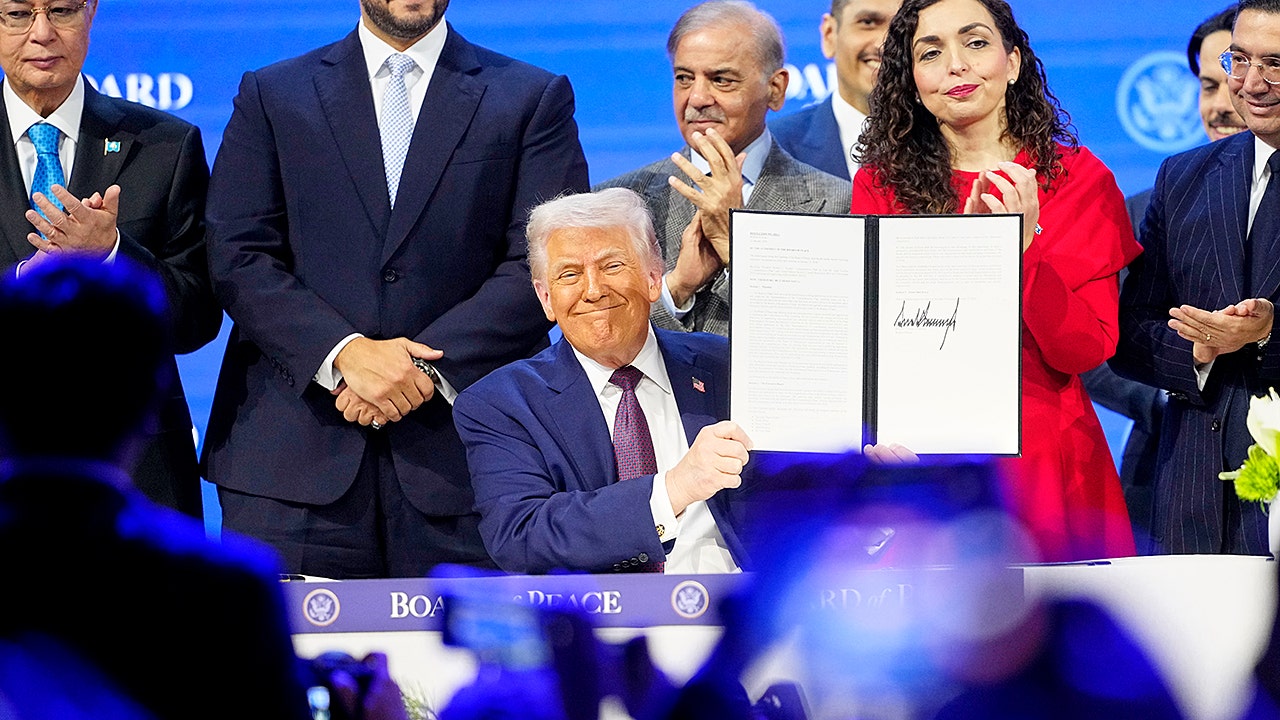
The ultimatum delivered to the United Nations this week was stripped of diplomatic nuance. Nickolay Mladenov, the veteran Bulgarian diplomat now serving as the High Representative for Gaza, stood before the Security Council to present a choice that is effectively a demand for surrender. The "Board of Peace," a private-public international hybrid chaired for life by Donald Trump, has finalized its Phase Two framework for the Gaza Strip. The central pillar of this architecture is the total, phased disarmament of Hamas.
This is not a traditional peace treaty. It is a high-stakes restructuring project that treats a war-torn enclave like a distressed asset in a bankruptcy court. Under the proposal, Hamas must relinquish its heavy weaponry and provide detailed maps of its tunnel infrastructure within 90 days. In exchange, the Israeli Defense Forces (IDF) would begin a staged withdrawal, handed over to a combination of an International Stabilization Force (ISF) and a new, vetted Palestinian technocratic body.
The ambition is staggering. The risk of total collapse is equally high.
The Privatization of Peace
The Board of Peace (BoP) represents a radical departure from the 20th-century model of multilateralism. Formally established in Davos in January 2026, the organization bypasses the traditional bureaucracy of the UN, which Trump has frequently dismissed as ineffective. The BoP is structured more like a corporate board than a diplomatic mission. It features an executive committee that includes Secretary of State Marco Rubio, Jared Kushner, and former British Prime Minister Tony Blair, alongside private equity titans like Marc Rowan of Apollo Global Management.
To join this "most prestigious board," nations are required to pay what critics call an entry fee: a $1 billion commitment for permanent status. This financial barrier has already winnowed the field, creating a coalition of the willing that includes 25 countries such as Saudi Arabia, the UAE, and Argentina. By tying participation to capital, the administration has created a model where peace is funded by those with the most to gain from regional stability.
The logic is unapologetically transactional. Jared Kushner has openly described the "New Gaza" as a real estate and infrastructure opportunity, envisioning a territory divided into modern districts modeled after Dubai. The Board of Peace intends to use "free market principles" to replace a decades-long reliance on international aid with a self-sustaining, if tightly controlled, economy.
The Disarmament Deadlock
While the financial blueprints are drawn in gold ink, the reality on the ground remains stained by the stalemate over weaponry. The Board's proposal sequences disarmament in two distinct phases.
- Phase One (90 Days): Handover of heavy weapons, including long-range rockets, missile launchers, and the "metro" tunnel system.
- Phase Two (Up to 8 Months): The surrender of light arms and the transition of security to the National Committee for the Administration of Gaza (NCAG).
To sweeten the deal, the BoP has proposed a "buy-back" scheme. This would offer cash incentives and guaranteed employment in reconstruction projects for militants who turn in their rifles. It is a pragmatic attempt to de-escalate, but it ignores the fundamental ideological drive of the factions involved.
Hamas has, unsurprisingly, signaled its resistance. From their perspective, disarming without a clear, guaranteed path to a sovereign Palestinian state is not a peace plan; it is a liquidation. Reports from Cairo suggest that Hamas leaders are demanding the right for members to retain personal weapons for "self-protection" against internal rivals, a condition the Board of Peace has already labeled a non-starter.
Governance Without Politicians
Perhaps the most controversial aspect of the Trump plan is the total exclusion of existing political factions from the driver's seat. The National Committee for the Administration of Gaza (NCAG), led by Dr. Ali Sha’ath, is designed to be a "technocratic and depoliticized" body. Its 15 members have been vetted by Israel and the U.S. to ensure they have no ties to "terrorist activity."
This committee is tasked with the impossible: restoring schools, hospitals, and utilities while an international force of 20,000 soldiers from nations like Albania and Indonesia maintains the perimeter. The plan essentially creates a "Third Way" for Gaza governance that sidesteps both Hamas and the Palestinian Authority (PA), at least in the short term.
Critics, including several European UN members, argue that this creates "Two Gazas"—a sanitized, supervised coastal strip for development, and a neglected, volatile hinterland. There is also the glaring question of the West Bank. While the Board of Peace focuses its capital on Gaza's beachfront, the lack of a broader political settlement leaves the door open for continued settlement expansion and de facto annexation elsewhere.
The Billion Dollar Gamble
Success for the Board of Peace hinges on the "Phase Two" transition. If Hamas refuses to disarm, the billions in pledged reconstruction funds remain locked. If the IDF refuses to withdraw due to security concerns, the technocratic government lacks the legitimacy to operate.
The Trump administration is betting that the exhaustion of the Gazan population and the financial muscle of the Gulf states will eventually break the cycle of violence. They are treating peace as a commodity that can be bought, provided the price is right and the management is "best-in-class."
The coming weeks, specifically the period following Eid al-Fitr, will determine if this corporate model of conflict resolution can survive its first contact with the reality of the Middle East. If it fails, the Board of Peace may just be another expensive letterhead in the history of failed diplomacy. If it succeeds, it will have rewritten the manual on how wars are ended in the 21st century.
Monitor the upcoming donor summit in Riyadh to see if the $1 billion "permanent member" seats are actually filled by the remaining invited nations.