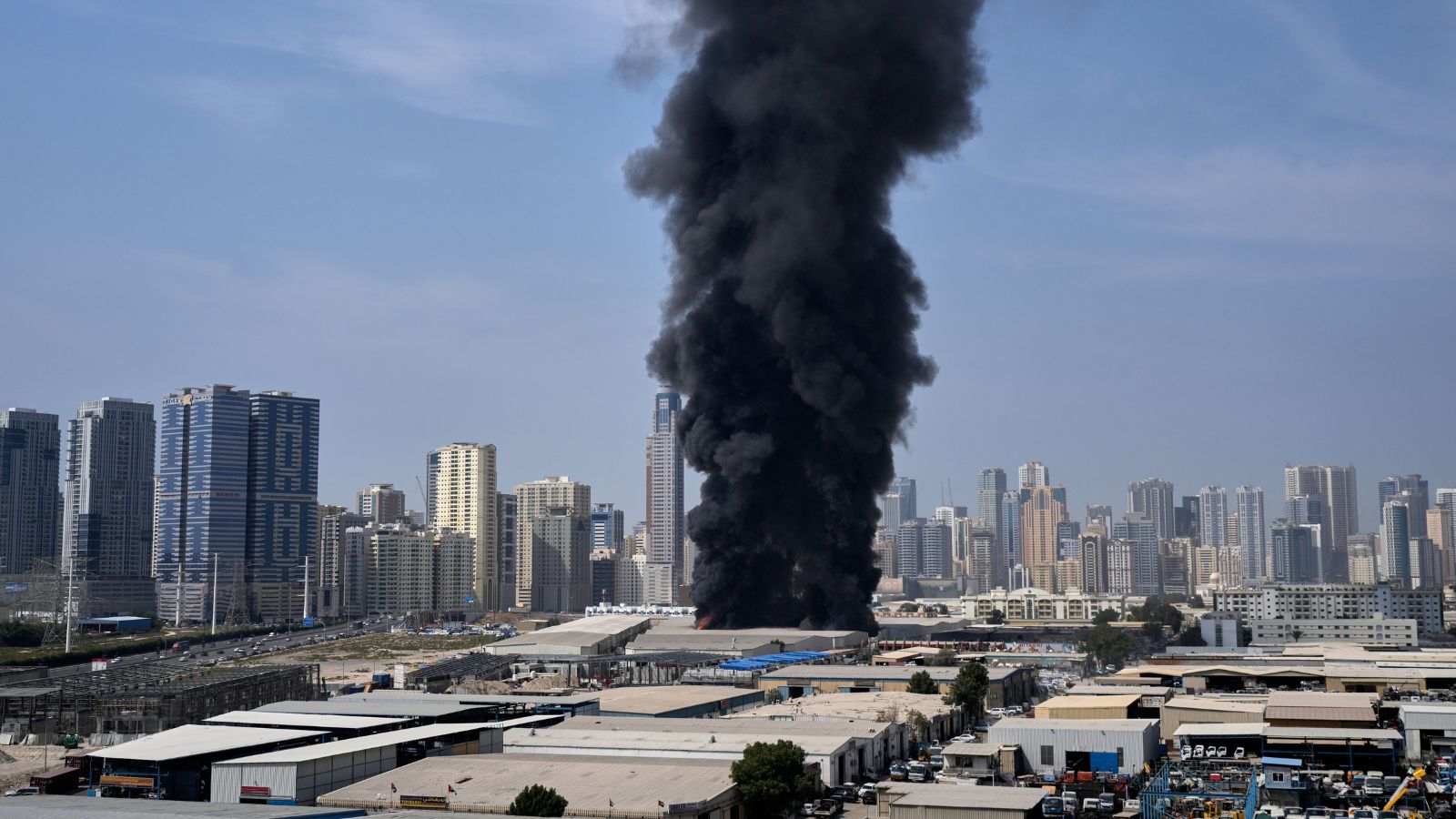
The era of Ayatollah Ali Khamenei did not end with a peaceful transition or a planned handoff. It ended in the flash of a joint U.S.-Israeli bombardment on February 28, 2026, leaving the Islamic Republic’s seat of power a smoking crater and its hierarchy in total disarray. For thirty-seven years, Khamenei was the singular glue holding together a fractious mix of clerical traditionalists, military hardliners, and a restless population. Now, the state is forced into a survival-mode succession while the very candidates meant to replace him are being crossed off the list by kinetic strikes and internal purges.
Iran’s constitution dictates that the Assembly of Experts, a body of 88 senior clerics, must "immediately" elect a new leader. In reality, the "immediate" has become an impossibility. With the air over Tehran contested and at least 40 top-tier officials reported dead in the opening salvos of the conflict, the constitutional process is being bypassed by an Interim Leadership Council. This stop-gap trio—President Masoud Pezeshkian, Judiciary Chief Gholam-Hossein Mohseni-Ejei, and cleric Alireza Arafi—is trying to project a facade of continuity. But behind the scenes, a more brutal reality is taking shape. The Iranian state is no longer a theological debate; it is a military junta in the making. You might also find this related coverage insightful: Strategic Asymmetry and the Kinetic Deconstruction of Iranian Integrated Air Defense.
The Clerical Kingmakers Under Siege
The traditional path to the leadership required a candidate to be a "Marja" or a high-ranking jurist with deep religious legitimacy. Khamenei himself struggled with these credentials in 1989, and the current crop of contenders faces an even steeper uphill battle. The religious center of Qom is currently paralyzed.
Alireza Arafi: The Bureaucrat of Faith
At 67, Alireza Arafi has become the most visible face of the interim government. As the head of Iran’s seminary system and a member of the Guardian Council, he represents the institutional survival of the clerical class. Arafi is the "safe" choice for those who want the system to look exactly as it did before. He has spent years aligning himself with the security apparatus, evidenced by his 2024 diplomatic mission to Moscow. He views the West not just as a political rival, but as an existential "conspiracy" that requires a unified, uncompromising response. As reported in latest reports by NPR, the results are widespread.
However, Arafi lacks the personal charisma or the revolutionary pedigree of those who came before him. He is a manager of the faith, not a leader of a movement. In a time of war, a manager may not be enough to prevent the Islamic Revolutionary Guard Corps (IRGC) from simply taking the keys to the kingdom.
Mohammad Mehdi Mirbagheri: The Radical Alternative
If the regime decides that the only way to survive is to lean into its most extreme impulses, Mohammad Mehdi Mirbagheri is the man they will call. Mirbagheri is the intellectual architect of the "civilizational" hardline. He famously viewed the COVID-19 pandemic as a Western plot and has long advocated for Iran to possess "special weapons"—a thinly veiled reference to a nuclear arsenal. He is the darling of the ultra-conservatives who believe that any compromise with the outside world is a form of spiritual suicide. His elevation would signal that Iran is preparing for a "Last Stand" scenario rather than a diplomatic off-ramp.
The Bloodline Gamble
The most controversial name in the hat remains Mojtaba Khamenei, the second son of the late leader. For years, the whisper campaign in Tehran was that Mojtaba was the shadow power, the man who controlled the Basij paramilitary and the intelligence networks.
The primary obstacle is the very foundation of the 1979 Revolution. Ayatollah Khomeini toppled a monarchy; turning the Islamic Republic into a hereditary dynasty by appointing a son would be a psychological blow the system might not survive. Reports from the ground suggest that Mojtaba’s status is currently "unclear" following the February strikes. If he survived, he remains the IRGC’s preferred candidate because he understands the dark arts of internal security. If he is gone, the IRGC loses its most direct link to the "Khamenei" brand.
The Pragmatist’s Ghost
There is a third, quieter faction that sees the current war as the inevitable result of decades of hardline mismanagement. This group looks toward figures like Ali Larijani, the former Speaker of Parliament.
Larijani is a creature of the establishment but has the intellectual flexibility to negotiate. He was reportedly appointed to lead the Supreme National Security Council just days before the assassination, making him the de facto civilian commander of the war effort. While he is not a high-ranking cleric—a major constitutional hurdle—there is talk of reviving the "Vice Supreme Leader" position or creating a governing council to include him.
The IRGC, however, views Larijani with deep suspicion. To the generals, a pragmatist is just a man waiting for the right moment to sell out the revolution for a ceasefire.
The IRGC’s Shadow Coup
The most critical factor in this succession isn't a person, but an institution. The Islamic Revolutionary Guard Corps has spent thirty years morphing from a volunteer militia into a multi-billion dollar conglomerate with its own army, navy, and air force.
During the current war, the IRGC has reportedly taken over "operational coordination" as the chain of command shattered. They are the ones actually firing the missiles. They are the ones controlling the streets of Tehran. If the Assembly of Experts cannot meet or cannot agree on a cleric, the IRGC may move to appoint a "Supreme Leader in Name Only"—a figurehead who provides the religious stamp of approval for what is effectively military rule.
The Looming Civil Unrest
While the elites bicker and dodge missiles, the Iranian public is the "X-factor" that both sides fear. The memory of the "Women, Life, Freedom" protests of 2022 remains fresh. Any delay in choosing a leader, or the choice of a particularly hated hardliner, could trigger a mass uprising. The regime’s greatest fear is not just the American bombs, but a domestic population that sees the transition as the perfect moment to finish what was started in 1979.
The choice of the next Supreme Leader will not be a selection based on "piety" or "wisdom," regardless of what the state media claims. It will be a cold calculation of who can keep the IRGC from revolting and the public from rioting.
There is no longer a perfect candidate. The "frontrunners" of two years ago, like Ebrahim Raisi, are dead. The "successors" of two weeks ago are being hunted. What remains is a system being hollowed out from the top down, trying to find a head for a body that is already in shock.
The next leader of Iran will likely be the man who is simply left standing when the dust clears. Whether he can actually lead a nation in the midst of a total war is another question entirely. The transition isn't just a political change; it is the final test of the Islamic Republic's structural integrity.
Would you like me to analyze the specific roles of the current Interim Leadership Council members in the ongoing war effort?