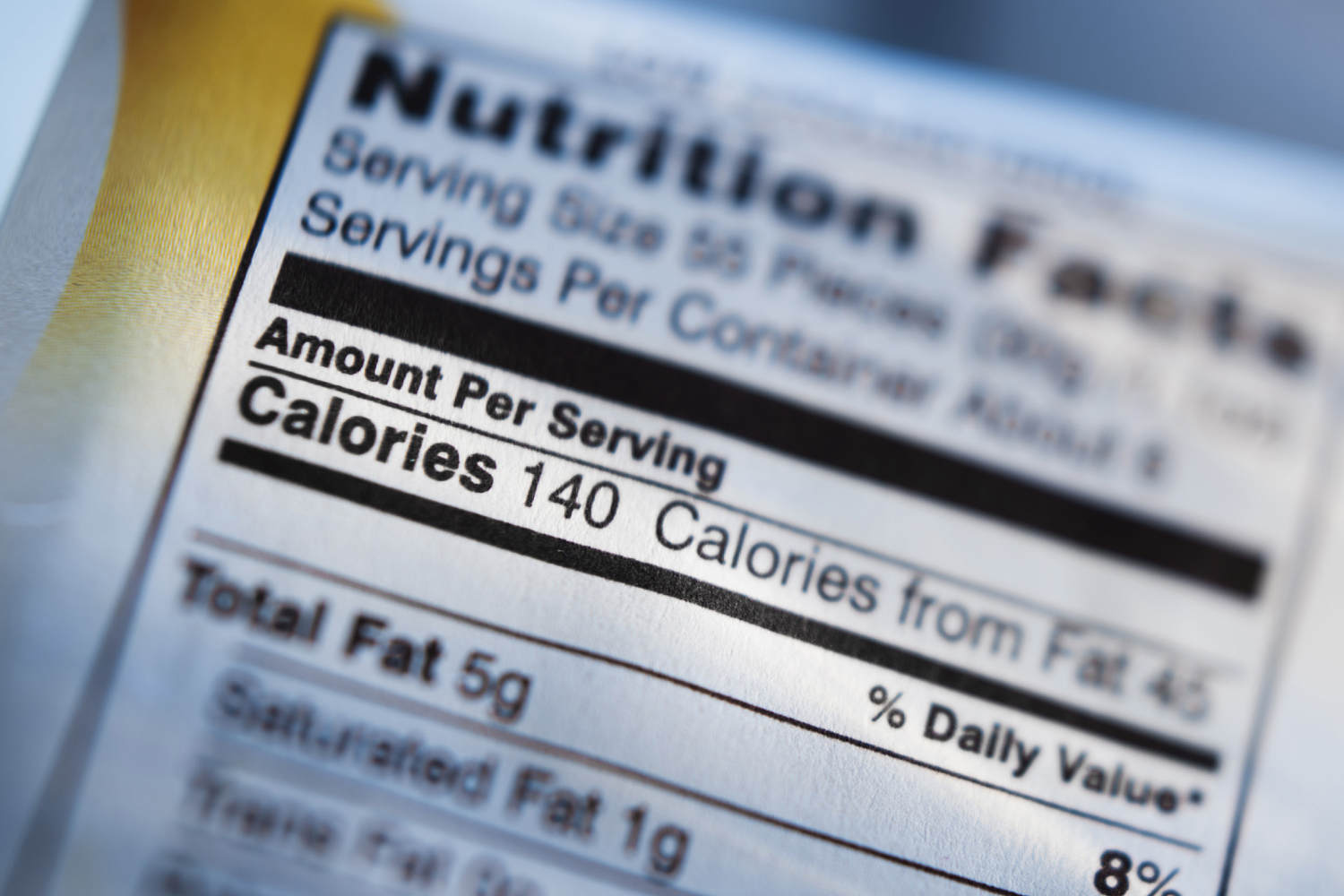
The black-and-white nutrition facts panel on the back of your food packaging is the ultimate arbiter of modern dieting. We treat the numbers printed there as absolute mathematical truths. If the label says 200 calories, we log 200 calories into our tracking apps and move on.
The numbers are a facade. The primary flaw in our nutritional ecosystem is not that consumers fail to count calories accurately, but that the calories themselves are regulatory approximations. Under current guidelines from the Food and Drug Administration (FDA), the calorie counts on packaged foods are legally permitted to be off by up to 20%.
This margin means a snack labeled at 200 calories could easily contain 240 calories and remain in perfect legal compliance. If you eat several of these products a day, that invisible margin of error can quietly sabotage weight management efforts, adding hundreds of unlogged calories to your weekly tally.
To understand how we arrived at this systemic gray area, one must look past the lab tests and examine the structural machinery of the food industry.
The Phantom Math of the Database Bot
The public largely assumes that food manufacturers send every new product to a laboratory to be incinerated in a bomb calorimeter—a device that measures thermal energy by burning food inside a pressurized chamber. That is rarely the case.
True laboratory testing is expensive. It is time-consuming. For small and mid-sized food brands, shipping every single batch to a third-party laboratory is a financial non-starter. Instead, the industry relies on a much faster, cheaper shortcut: database calculation.
When a company develops a new packaged pastry or frozen dinner, they do not necessarily blend it into a slurry and test it for chemical composition. They use software. A product developer inputs the recipe into a program—two cups of enriched flour, a half cup of unsalted butter, three tablespoons of cane sugar. The software references historical, standardized data for those raw ingredients and spits out a compliant nutrition label.
This method assumes that all ingredients are created equal. They are not.
Agricultural products are subject to the chaos of the natural world. A carrot grown in mineral-depleted soil during a drought does not possess the exact nutritional profile of a carrot grown in nutrient-dense soil during a wet spring. Dairy products fluctuate wildly based on what the livestock ate that season. Spring milk from grass-fed cows is biochemically different from winter milk produced on dry feed.
When software calculates calories based on historical averages, it ignores the inherent biological variance of the actual harvest. The resulting food label is a statistical guess. It is an average of an average, wrapped in the authoritative visual styling of a federal document.
Bioavailability and the Measurement War
The crisis of calorie counting is not just about agricultural variance. It is also a war over how the human body actually processes energy, a conflict that recently boiled over into the legal arena.
Consider a recent dispute involving a high-protein snack brand. Independent laboratory testing of the brand's protein bars suggested they contained significantly more calories and fat than what was printed on the wrapper. The company's defense highlighted a massive blind spot in standard calorie testing: bioavailability.
Traditional laboratory testing often measures combustion energy—how much heat an item releases when it is burned to ash. The human digestive tract is not a furnace. It is a biological filter.
When we consume fiber, complex carbohydrates, or modified fats, our bodies cannot extract 100% of the theoretical energy trapped inside those molecular bonds. A laboratory furnace will burn a gram of insoluble fiber and register it as energy. The human gut will simply pass it through.
The FDA allows manufacturers to calculate calories based on metabolizable energy rather than raw combustion energy. This is a necessary scientific distinction, but it creates an enormous loophole. Manufacturers can use specific conversion factors for modified ingredients that yield fewer usable calories in the human gut. The friction between what a laboratory machine burns and what a human stomach absorbs is a massive gray area that food lawyers and industry analysts navigate daily.
The Illusion of the Precise Serving Size
Even if the caloric density of a food was perfectly calculated, the label still relies on a single, fragile variable: the serving size.
If you analyze the fine print on a bag of potato chips, you will find the serving size listed in both a visual metric (e.g., 15 chips) and a weight metric (e.g., 28 grams). Most snackers rely on the visual metric.
Manufacturing lines are mechanical systems operated at blinding speeds. Mechanical dispensers drop chips into bags. Extruders push cereal dough through metal molds. Because of these rapid industrial tolerances, single servings inside a bag are rarely uniform. One serving of chips might be thick and heavy. The next might be thin and airy.
If a consumer counts out exactly fifteen chips, they may be eating 35 grams of potato instead of the standardized 28 grams.
Studies of packaged snack foods routinely show that the actual weight of the food inside the bag exceeds the stated serving size by a small percentage. When you combine a heavier-than-stated serving size with a baseline 20% regulatory margin of error, the math breaks down completely. You are no longer tracking your diet. You are guessing.
Breaking the Dependency
The solution to the calorie count crisis requires a fundamental shift in how we view dietary tracking. Obsessing over a single-digit calorie deficit while relying on commercial food labels is a mathematical exercise in futility. The error bars are simply too wide.
The most effective countermeasure is to decrease your heavy reliance on hyper-processed foods that require complex labeling in the first place. Whole foods present their own caloric variances, but they bypass the compounding industrial errors of recipe software, mechanical portioning, and chemical additives. When you eat a baked potato, there is no corporate compliance department calculating how to shave percentages off the total fat count.
If you must rely on packaged foods, treat the printed numbers as a rough guide rather than an infallible ledger. Assume a baseline variance. If your weight loss or athletic goals stall while your tracking app says you are hit your numbers perfectly, the culprit is likely not your discipline. The culprit is the permissible, invisible margin of error legally baked into the box.
Adjust your intake based on observable, real-world data—how your body responds over weeks, how your clothing fits, and how your energy levels fluctuate. The scale and the mirror will tell you what the nutrition facts label cannot. Would you like me to analyze the specific FDA compliance regulations regarding how macronutrients are calculated for packaged goods?