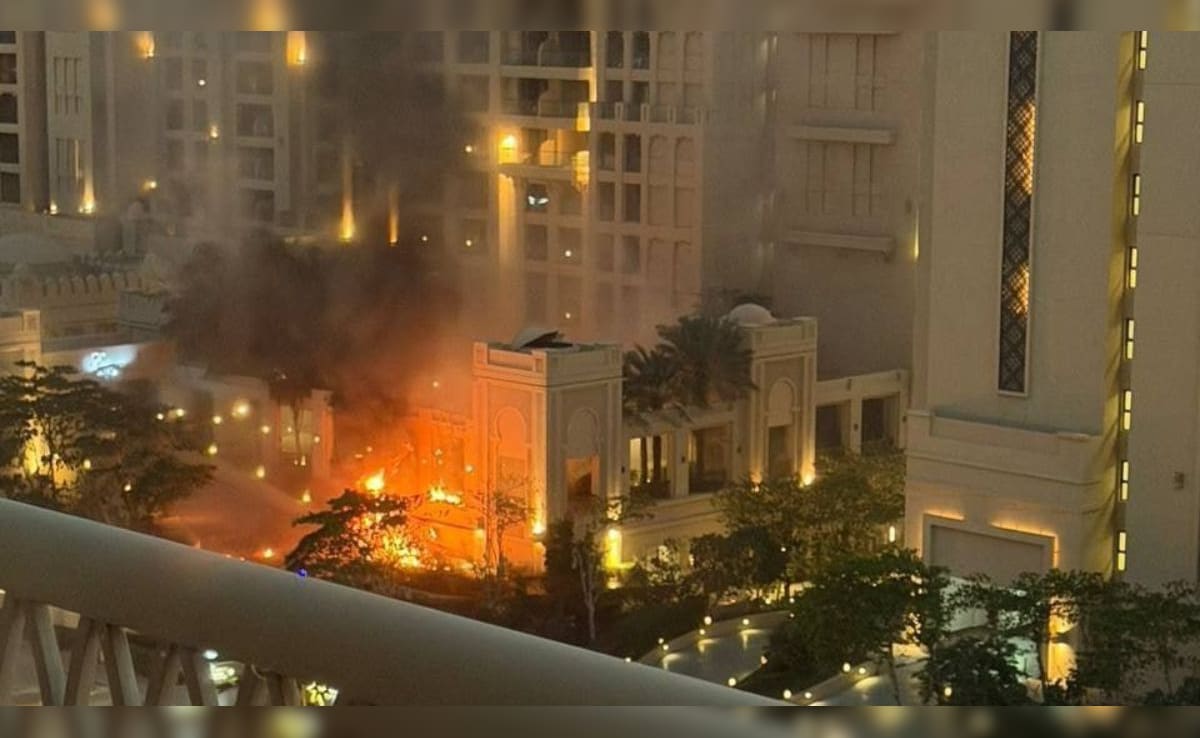
The visual confirmation of smoke rising from a high-rise structure on the Palm Jumeirah provides a case study in the intersection of architectural complexity and emergency management. In an environment defined by extreme density and verticality, a localized incident—such as a mechanical failure or a localized combustion event—is not merely an isolated fire; it is a stress test for the building’s integrated life safety systems and the city’s logistical response framework.
The immediate propagation of information through social media often precedes official reporting, creating a data gap where speculation replaces technical clarity. To analyze this event with rigor, one must look past the optics of the smoke and examine the structural and systemic variables that dictate the outcome of such an incident.
The Triad of Vertical Vulnerability
High-rise incidents in luxury coastal developments like the Palm Jumeirah are governed by three primary risk vectors. These vectors determine the speed of escalation and the efficacy of containment.
- The Stack Effect and Airflow Dynamics
Thermal buoyancy, or the stack effect, is the movement of air into and out of buildings through unsealed openings. In Dubai’s climate, the pressure differential between the conditioned internal environment and the high external ambient temperature can create powerful vertical drafts. This mechanism can inadvertently transport smoke and heat through elevator shafts and stairwells, turning a localized kitchen or electrical fire into a multi-floor crisis. - Cladding Composition and Fire Spread
The material science of the building’s exterior is the most critical factor in rapid vertical fire spread. Modern regulations in the UAE have tightened significantly regarding Aluminum Composite Panels (ACP). However, the legacy of older cladding materials remains a latent risk. The performance of these materials during a heat event determines if the incident remains a structural internal event or evolves into a catastrophic exterior fire. - The Logistical Bottleneck of the Palm
The Palm Jumeirah’s geography, while iconic, presents a singular failure point: limited terrestrial access. The reliance on a primary arterial spine for emergency services means that any significant incident must be managed with a high degree of local suppression capability, as the arrival of heavy reinforcements is subject to the traffic density of a single entry and exit corridor.
Technical Deconstruction of the Smoke Signature
The visual evidence of smoke rising from a building is an insufficient metric for assessing the severity of the damage. Smoke color, density, and flow rate provide the only reliable indicators of the underlying combustion process.
- White and Light Gray Smoke: Usually indicative of the evaporation of water vapor or the pyrolysis of light materials. This often points to the early stages of a fire or the successful application of an automated suppression system, such as a localized sprinkler deployment.
- Black and Acrid Smoke: This signal is synonymous with the incomplete combustion of petroleum-based products. In high-end developments, this often originates from synthetic furnishings, electrical insulation, or exterior cladding. The high toxicity and opacity of this smoke present the primary threat to life, far more so than the heat itself.
- Neutral Plane and Smoke Stratification: When smoke rises to a certain floor and then spreads horizontally, it has reached the neutral plane where its temperature and density match the surrounding air. This indicates a stabilization of the event, where the buoyancy of the smoke is no longer sufficient to overcome the building's air pressure systems.
The behavior of the smoke seen on the Palm suggests a localized failure point rather than a systemic structural collapse. However, the presence of visible smoke at high altitudes suggests that the fire was either external or had compromised the building's internal ventilation controls.
The Economics of Luxury Risk Management
The Palm Jumeirah is more than a residential development; it is a high-value asset class where the perception of safety is a fundamental component of the market value. An incident of this nature triggers an immediate reassessment of the insurance and risk profiles for the entire district.
The Insurance Multiplier
Insurance premiums in the UAE have been increasingly sensitive to fire safety compliance following historical high-profile incidents. For a property on the Palm, the "all-risks" policy is contingent on rigorous adherence to the UAE Fire and Life Safety Code of Practice. A single localized explosion or fire forces an audit of the entire facility’s safety protocols. The cost of a fire is not just the physical repair; it is the permanent upward adjustment of the risk premium for all owners within that strata.
The Reputation Hedge
In the luxury real estate sector, a building's brand is its most fragile asset. The speed and transparency of the developer’s response dictate the long-term impact on resale values. A lack of clarity regarding the cause—whether it was an industrial accident, an electrical surge, or a tenant-led oversight—creates a vacuum that devalues the asset. The strategic response must prioritize the confirmation of structural integrity over cosmetic repairs.
Crisis Response as a High-Stakes Engineering Problem
The Dubai Civil Defence (DCD) response is an exercise in resource allocation and precision timing. In a high-rise scenario, the objective is never just to "put out the fire." The goal is the sequential management of four critical systems.
- Life Safety and Egress Management
The priority is the activation of pressurized stairwells to prevent smoke infiltration and the orderly evacuation of the "fire floor" and the floors immediately above and below it. In high-density environments, a full building evacuation is often counterproductive, as it can clog egress routes and impede emergency personnel. - Fire Pump and Standpipe Reliability
The building’s internal water delivery system must function flawlessly. A fire at height requires the building’s own pumps to maintain pressure; if these fail, the DCD must use external pumps to push water up the standpipe, a process that adds minutes to the response time—minutes that can be the difference between containment and catastrophe. - HVAC and Smoke Control Integration
Modern buildings are designed to "vent" smoke through the HVAC system by reversing fans to create negative pressure in the fire zone and positive pressure in the evacuation zones. If the smoke is seen rising externally, it often indicates that the fire has breached the envelope or that the internal smoke control systems were either overwhelmed or deactivated. - Structural Integrity Monitoring
Intense heat for prolonged periods can weaken the structural steel or spall the concrete. Even after the fire is extinguished, the building remains a risk until a thermal imaging survey and a structural engineer's assessment are completed.
The Mechanism of Localized Explosions in Residential Towers
The report of an "explosion" suggests a rapid release of energy that precedes or accompanies the fire. This is usually the result of one of two mechanical failures.
- Gas Distribution Failures: In many high-rises, LPG or natural gas is piped to individual units. A leak in a confined space can lead to a fuel-air explosion. The primary indicator of this is structural displacement—blown-out windows or non-load-bearing walls—occurring before the fire becomes visible.
- Electrical Transformer or Capacitor Failure: High-voltage equipment located in mechanical rooms or mid-level plant floors can suffer catastrophic failure due to overheating or short circuits. These events produce a loud report and a brief, intense fireball, followed by thick black smoke from burning oil and insulation.
Strategic Implications for Urban Development
The incident on the Palm is a reminder that as cities build higher and more densely, the margin for error in maintenance and emergency response shrinks toward zero. The future of high-rise safety lies in the transition from reactive response to predictive maintenance.
- IoT and Real-Time Monitoring: The next generation of luxury towers will utilize distributed sensor networks that detect the chemical precursors of combustion before a fire even ignites. This allows for the automatic isolation of gas lines and electrical circuits at the earliest possible moment.
- Mandatory Retrofitting: For older buildings on the Palm, the cost of retrofitting modern fire-stop materials and smart suppression systems is high, but the cost of inaction is the eventual loss of the entire asset's value.
- District-Wide Emergency Protocols: Given the geographical constraints of the Palm, there is a clear need for a localized, high-speed emergency response hub situated directly on the crescent or the trunk, independent of the city's main grid.
Property owners and investors must move beyond the visual narrative and demand a full technical audit of the building’s life safety systems. The real story is not the smoke; it is the failure or success of the engineering systems that were supposed to prevent it. Any asset where the smoke control systems fail to contain a localized event to its floor of origin should be considered a high-risk investment requiring immediate divestment or extensive remediation.


