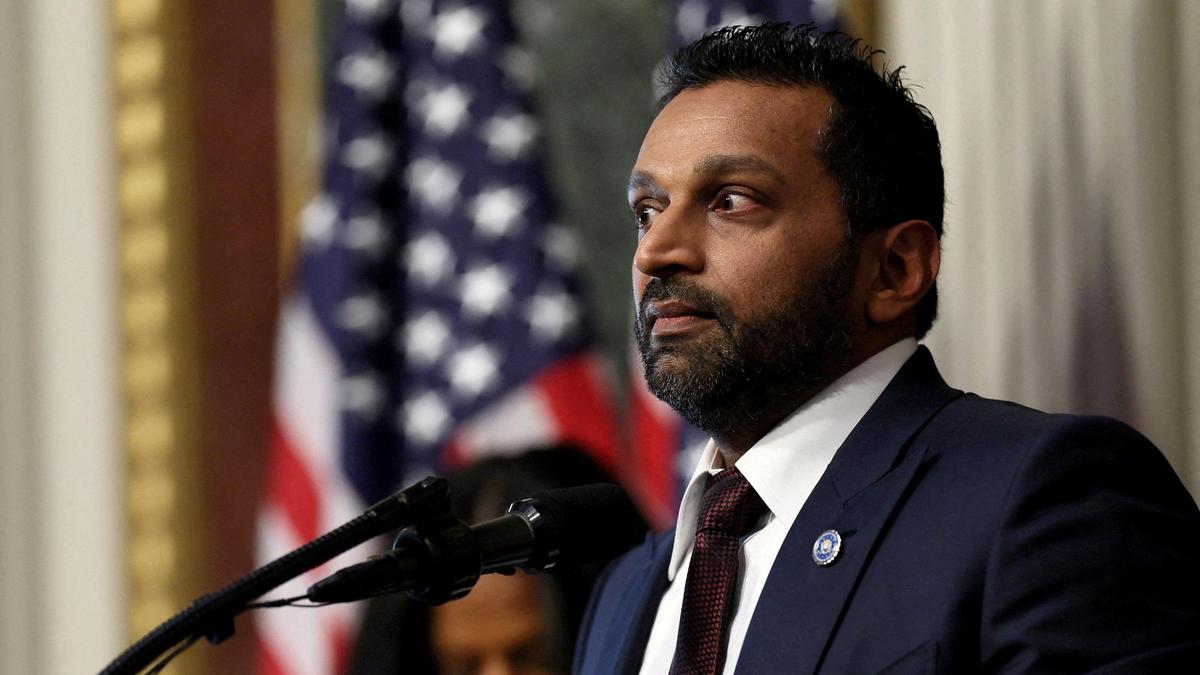
He sits in a chair that costs more than a mid-sized sedan, but Neal Mohan looks like a man trying to explain the physics of a tidal wave while standing knee-deep in the surf. As the CEO of YouTube, he is the custodian of the world’s largest library, its most chaotic town square, and its most addictive drug. When we talk about YouTube, we aren't just talking about a website. We are talking about the primary lens through which a significant portion of the human race now perceives reality.
Everything is there. The recipe for a perfect sourdough. The video of a coup in a country you couldn’t find on a map. The ASMR artist whispering into a binaural microphone. The algorithm doesn’t care about the difference between these things. It only cares that you stay.
The Ghost in the Machine
Consider a hypothetical user named Elias. Elias is twenty-four, living in a studio apartment, and he is lonely. He doesn't go to the movies much anymore. Why would he? He has a "community" on YouTube. He watches a creator named Jack play horror games for six hours a day. Elias feels like he knows Jack. He knows Jack’s favorite soda, his girlfriend’s name, and the exact shade of anxiety Jack feels when a jump-scare hits. This is a parasocial relationship—a one-sided intimacy that feels biologically real but is digitally hollow.
Mohan’s job is to ensure Elias keeps watching. But the stakes for Elias are different than the stakes for Google’s balance sheet. For Elias, YouTube is a surrogate for human connection. For Mohan, it is a logistical marvel involving petabytes of data and a content moderation system that must judge millions of hours of footage every single day.
The tension lies in that gap. YouTube is a business built on the most precious resource we own: our attention. Once that attention is sold, it is gone forever. We are trading our hours for "free" content, but the currency we're using is our own lives.
The Myth of the Level Playing Field
We were told that the internet would democratize information. In many ways, it did. A teenager in Mumbai can learn calculus from a retired professor in Chicago. That is the miracle. But the same infrastructure that hosts the calculus lesson also hosts the "rabbit hole."
The algorithm is a reflection of our baser instincts. It is a mirror. If you show it a spark of anger, it will bring you a forest fire. If you show it a hint of curiosity about a conspiracy theory, it will provide a doctoral thesis on why the moon is made of cheese. This isn't because the algorithm is "evil." It’s because the algorithm is a math problem designed to solve for one variable: watch time.
When asked about this, the corporate response is often a polished shield of "user choice" and "community guidelines." But choice is a complicated word when you are being nudged by a machine learning model that knows your preferences better than your mother does. It knows you’re more likely to click on a thumbnail with a bright red circle and a face contorted in simulated agony. It knows you’ll stay longer if the video confirms your existing biases.
The Creator’s Gold Mine is a Treadmill
Then there are the creators. We see the mansions and the custom-wrapped Lamborghinis. We don’t see the burnout. To stay relevant on YouTube is to be locked in a permanent sprint. If a creator stops posting for a week, the algorithm might forget them. Their views drop. Their income craters.
They are the digital sharecroppers of the twenty-first century. They till the land owned by Google, and while they get to keep a percentage of the harvest, they never own the soil. They live in a state of constant, low-grade terror that a single policy change or a "yellow dollar sign" (demonetization) could end their career overnight.
Mohan speaks of "fostering" a creative economy. (Though he might use a more corporate term). But for the person behind the camera, it feels less like a garden and more like a coliseum. You perform, or you disappear.
The Architecture of Influence
YouTube is now the second-most visited website on the planet, trailing only its parent, Google Search. It is the world’s biggest jukebox and its largest television network. Yet, it operates under different rules than traditional media. If a cable news network broadcasts a blatant lie, there are regulatory bodies and legal frameworks that can, eventually, provide a check.
On YouTube, the check is "the community." But what happens when the community wants the lie?
What happens when the most engaging content is the most divisive? Mohan and his team are tasked with being the world’s editors, but they are editing at a scale that defies human comprehension. They use AI to catch the "bad" stuff, but AI lacks the one thing required for true editing: context. It can’t always tell the difference between a documentary about hate speech and hate speech itself. It is a blunt instrument used to perform brain surgery.
The Invisible Cost of Convenience
We have traded the friction of the old world for the "seamlessness" of the new one. (To use a word the tech giants love). But friction serves a purpose. It gives us time to think. It forces us to move our bodies to find information. Now, information finds us. It hunts us down.
Think about the last time you went to YouTube to watch one specific video—maybe a tutorial on how to fix a leaky faucet. You watched the five-minute video. Then, you saw a recommendation for "Top 10 Plumbing Disasters." Then, "World's Most Expensive Homes." Two hours later, you are watching a video about the history of the Roman Empire, and your faucet is still leaking.
The platform has won. You have lost two hours of your Saturday.
The Quiet Reshaping of the Human Mind
Neuroscience tells us that our brains are plastic. They adapt to the tools we use. When we spend hours a day consuming short-form "Shorts" or hyper-edited vlogs, we are training our dopamine systems to expect constant novelty. The "boredom" of real life becomes intolerable. A quiet walk in the woods feels like a sensory deprivation chamber.
This is the true dominance of YouTube. It isn't just a market share. It is a cognitive takeover. It is the reshaping of the human attention span into something that fits neatly into a thirty-second vertical video.
Mohan sits at the top of this pyramid, navigating the pressures of advertisers, governments, and disgruntled creators. He is a man of data, but the data cannot capture the soul of what is happening. It cannot measure the loneliness of Elias or the exhaustion of the creator. It can only measure the click.
The Mirror in Your Pocket
We like to blame the C.E.O.s. We like to point at the algorithms and demand they be "fixed." But the algorithm is fed by us. Every time we click on a sensationalist headline, every time we watch a "takedown" video, every time we ignore the educational content for the drama, we are voting for the world we currently inhabit.
YouTube is a mirror. If we don’t like what we see, we can’t just blame the glass.
The light of the screen flickers in the dark of Elias’s apartment. He is tired, his eyes are dry, and he has work in the morning. But the "Autoplay" countdown is ticking down. Three. Two. One.
The next video starts.
He stays.
Would you like me to analyze the specific economic shifts in creator revenue mentioned in the latest YouTube transparency reports?