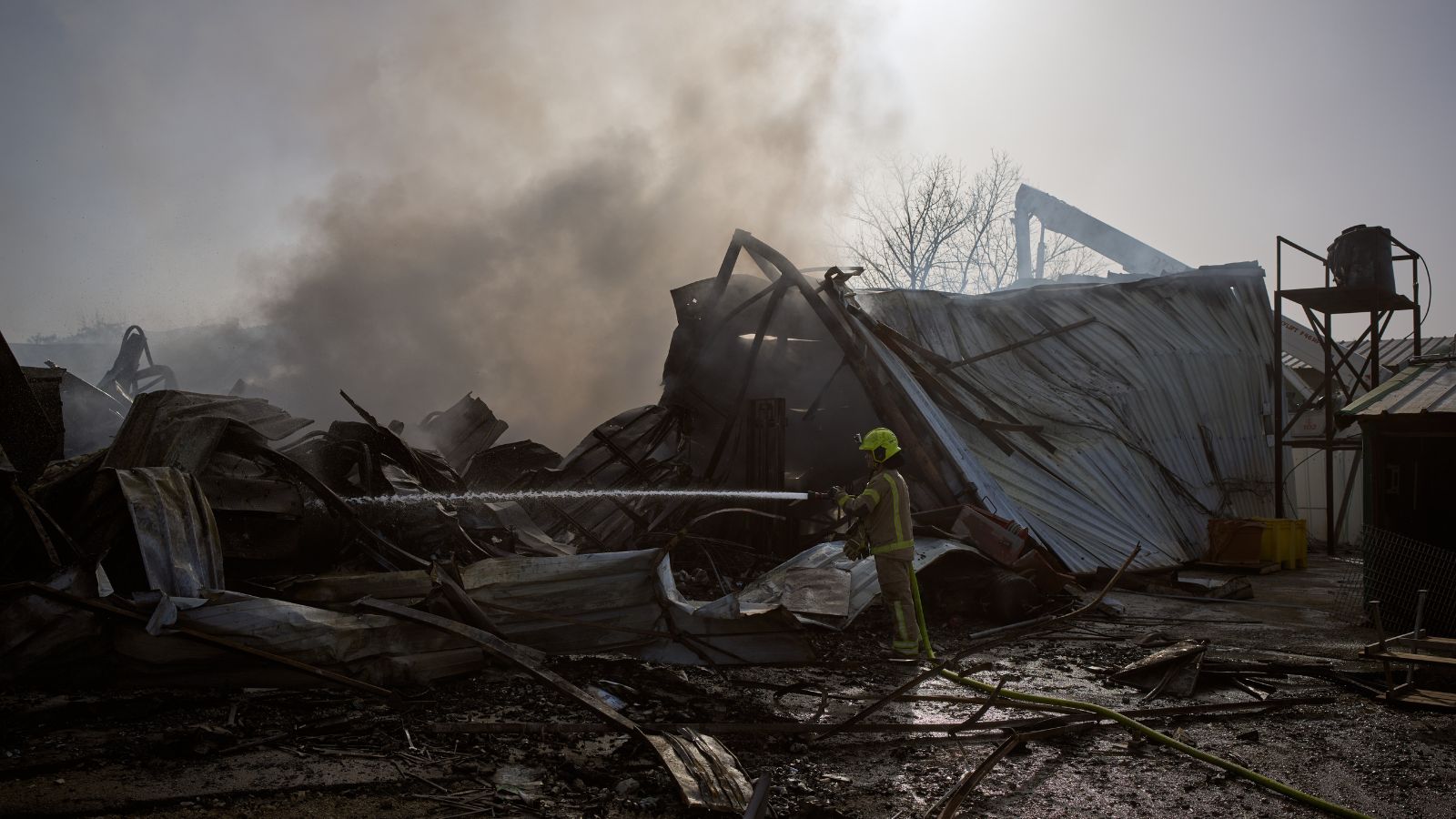
The containment of a localized fire at Ras Laffan Industrial City (RLIC) without casualties or significant structural failure is not a matter of operational luck; it is the output of a high-reliability organizational (HRO) framework. In the context of global energy markets, where Ras Laffan serves as the central nervous system for Qatar’s Liquefied Natural Gas (LNG) exports—roughly 20% of the global supply—any thermal event must be analyzed through the lens of kinetic risk management and infrastructure redundancy. The success of the response indicates a mature integration of automated suppression systems and rigorous emergency protocols that prevent a "cascading failure" common in high-pressure petrochemical environments.
The Physics of Containment in Hydrocarbon Facilities
Industrial fires in LNG and gas-to-liquids (GTL) complexes differ fundamentally from structural fires due to the energy density of the fuel source. At Ras Laffan, the containment strategy relies on the Three Pillars of Thermal Defense: For an alternative look, see: this related article.
- Passive Fire Protection (PFP): The use of intumescent coatings and cementitious materials on load-bearing steel. These materials buy critical time by delaying the structural reach of the "critical temperature"—approximately 550°C—at which steel loses 50% of its load-bearing capacity.
- Active Mitigation Systems: This includes the immediate activation of deluge systems and high-capacity monitor nozzles. The goal is rarely to "extinguish" a high-pressure gas fire immediately, which can lead to an unignited gas cloud and a subsequent vapor cloud explosion (VCE). Instead, the objective is controlled burnout combined with radiative heat cooling.
- Zonal Isolation: The rapid deployment of Emergency Shutdown Valves (ESDVs) to segment the fuel source. By isolating the affected "train" or segment, operators convert a potentially infinite fuel supply into a finite volume.
The Cost Function of Operational Downtime
While the lack of casualties is the primary human metric, the secondary metric for analysts is the Recovery Time Objective (RTO). In a facility like Ras Laffan, the cost of a total plant shutdown can be measured in millions of dollars per hour. The "containment" reported suggests that the event did not trigger a site-wide ESD (Emergency Shutdown), which would have required a complex, multi-day restart process involving cryogenic cooling and pressure stabilization.
The financial impact of such events is typically governed by a power-law distribution. A small, contained fire represents a negligible cost, mostly relegated to equipment replacement and minor maintenance. However, if the fire had breached the "containment boundary," the cost function would have shifted from linear to exponential. This shift occurs when thermal radiation affects adjacent "trains," leading to a synchronous shutdown of multiple export lines. Similar reporting on the subject has been shared by Business Insider.
Engineering Redundancy and Human Factors
The absence of casualties points to a sophisticated Exclusion Zone Strategy. In modern petrochemical facilities, the proximity of personnel to high-risk nodes is minimized through remote sensing and automated control rooms. When an alarm is triggered, the response follows a deterministic logic:
- Detection Latency: Optical flame detectors and multi-spectrum infrared sensors identify the ignition within milliseconds.
- Automated Logic Controllers: Before a human operator can process the alarm, the system initiates pre-programmed cooling sequences on adjacent pressurized vessels to prevent a Boiling Liquid Expanding Vapor Explosion (BLEVE).
- Manual Intervention: Firefighting teams at Ras Laffan are specialized industrial units, trained not just in fire suppression but in the specific chemistry of hydrocarbon combustion. Their role is to manage the "fringe" of the event while the automated systems handle the core thermal load.
The primary limitation of this system is the "Human-in-the-Loop" delay. In scenarios where automated logic fails or sensors are bypassed for maintenance, the risk of a late-stage intervention increases significantly. The reported outcome at Ras Laffan suggests that the automated-to-manual handoff functioned without friction.
The Geopolitical Resilience Factor
Qatar’s ability to maintain "Business as Usual" (BAU) following a fire at its primary export hub is a signal to global energy markets. The volatility of LNG prices is highly sensitive to supply disruptions. A contained fire with no impact on export schedules reinforces the "Reliability Premium" that Qatari LNG commands in long-term sale and purchase agreements (SPAs).
This resilience is built into the geography of the site. Ras Laffan is designed with significant "buffer distances" between liquefaction trains. Unlike older, more cramped refineries in Europe or Asia, RLIC utilizes its vast land area to ensure that a fire in one sector cannot easily bridge the gap to another through radiant heat alone.
Quantifying the Risk of "Near Misses"
In safety science, this event would be categorized under the Bird’s Safety Pyramid, which posits that for every major disaster, there are hundreds of minor incidents and thousands of "near misses." Analyzing this fire requires looking at the "Precursor Data":
- Mechanical Integrity (MI): Was the ignition caused by a seal failure in a centrifugal pump or a fatigue crack in high-pressure piping?
- Operational Discipline: Was there "hot work" being performed in the vicinity, or was this a spontaneous equipment failure?
- Maintenance Backlogs: There is often a correlation between deferred maintenance and the frequency of "contained" fires.
If the fire was caused by equipment fatigue, it suggests a need for enhanced non-destructive testing (NDT) across similar aging assets. If it was an operational error, the focus shifts to the Safety Management System (SMS) and permit-to-work (PTW) protocols.
Strategic Recommendations for Infrastructure Operators
The Ras Laffan event serves as a validation of high-capital investment in safety infrastructure. To replicate this level of containment, operators must move beyond compliance-based safety toward a Predictive Maintenance and Response Model:
- Implement Digital Twin Simulations: Run "what-if" thermal scenarios to identify which specific pipe racks are most vulnerable to radiant heat from neighboring units.
- Upgrade to Smart Deluge: Transition from "dumb" spray systems to automated monitors that use AI-driven thermal imaging to direct water or foam precisely at the point of highest heat flux, conserving resources and reducing water damage to sensitive electronics.
- Refine Isolation Logic: Ensure that ESDV closing times are optimized to prevent "water hammer" effects that can cause secondary pipe ruptures while still achieving rapid fuel isolation.
The long-term strategy for energy hubs must be the decoupling of human presence from high-energy zones. By moving toward "Lights-Out" operations in high-risk areas, the "zero casualty" metric becomes a structural certainty rather than an operational goal. Future audits should focus on the integrity of the isolation valves and the latency of the flame detection network to ensure this containment capability scales with the planned expansion of the North Field.
Deploy an immediate internal audit of all automated suppression triggers and ESDV response times to ensure that the "containment success" at Ras Laffan is a repeatable outcome rather than an isolated incident of effective manual intervention.