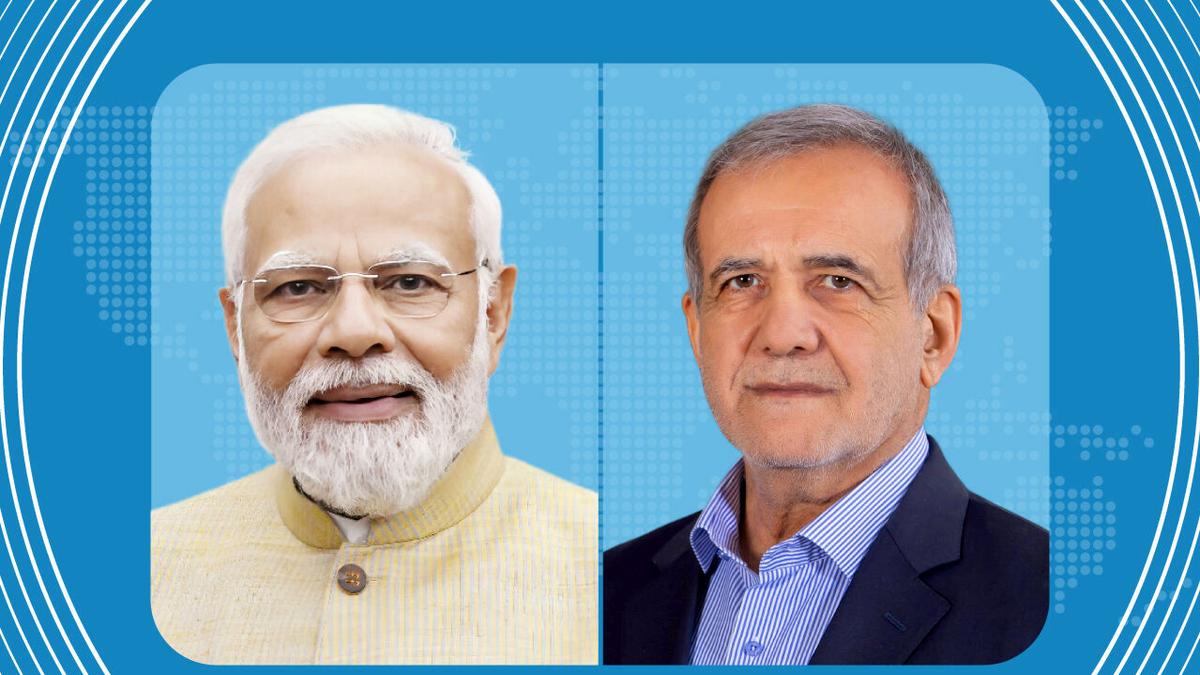
The diplomatic press is currently swooning over a phone call. Iran’s President proposes a "West Asia security framework" to Narendra Modi, and the commentary class treats it like the birth of a new world order. They see a "pivotal" moment where India, as the current BRICS chair, finally steps up to mediate the chaos in the Middle East.
They are wrong. Dead wrong.
What we are witnessing isn't the dawn of a new security architecture. It is a desperate, calculated PR maneuver by an isolated Tehran and a polite, non-committal nod from a New Delhi that knows better than to touch this third rail. The "lazy consensus" suggests that India is the missing piece of the West Asian puzzle. In reality, India’s greatest strength in the region is its refusal to actually do anything.
The Myth of the BRICS Stabilizer
The argument usually goes like this: India is a neutral power with deep ties to both Israel and Iran. Therefore, India is uniquely positioned to "halt hostilities."
This assumes that the belligerents in West Asia actually want a neutral mediator. They don’t. They want an ally who brings hardware, veto power at the UN, or financial insulation. India offers none of these in the context of a hot war.
When Iran asks India to use its BRICS chairmanship to "halt hostilities," they aren't asking for peace. They are asking for a diplomatic shield. They want New Delhi to use the BRICS platform to dilute Western sanctions and provide a moral veneer to the "Axis of Resistance."
If India actually tried to mediate, it would fail instantly. Why? Because you cannot mediate a conflict where you have zero leverage over the primary aggressors. India cannot stop an Israeli airstrike, and it certainly cannot tell the Islamic Revolutionary Guard Corps (IRGC) to stand down. To pretend otherwise is to engage in "strategic vanity."
Why the "Security Framework" is a Ghost
Tehran’s proposal for a regional security framework is a recycled script from the 1990s. It sounds sophisticated in a press release, but it collapses under the slightest scrutiny.
A security framework requires a shared definition of a threat. For Iran, the threat is the United States and Israel. For India’s other massive trading partners—the UAE and Saudi Arabia—the threat is Iran.
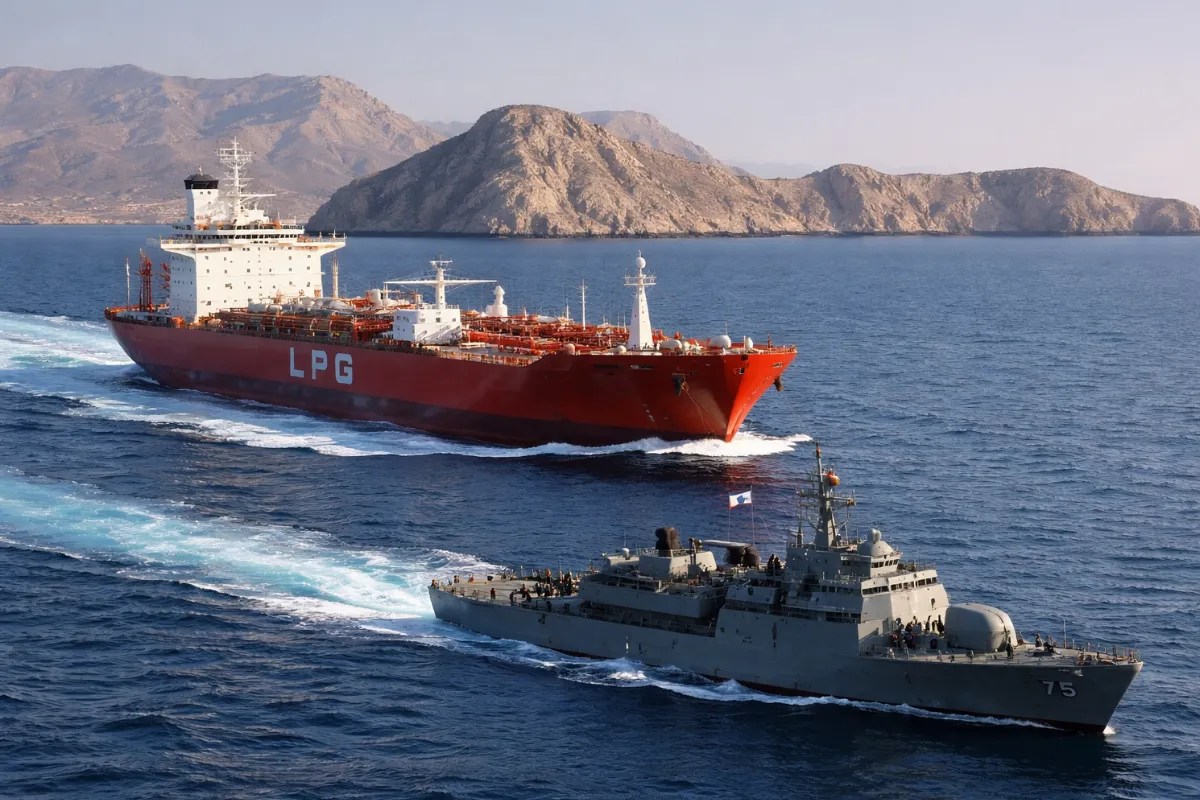
- The Energy Contradiction: India’s economy depends on the stability of the Persian Gulf. Any "framework" led by Iran that excludes the U.S. Navy is a direct threat to Indian energy security. New Delhi knows that without the Fifth Fleet, the Strait of Hormuz becomes a choke point that Tehran can squeeze at will.
- The Investment Trap: The UAE and Saudi Arabia are pouring billions into India’s infrastructure and tech sectors. Do we honestly think Modi will jeopardize those relationships to entertain a vague security pact with a sanctioned, cash-strapped regime?
- The Israel Factor: India’s defense industry is now inextricably linked to Israeli technology. From Heron drones to Barak missile systems, the Indian military runs on Israeli "brains."
The idea that India would pivot toward a security alignment with Iran is not just counter-intuitive; it is a mathematical impossibility for the Indian Ministry of Defence.
The Chabahar Sunk Cost Fallacy
"But what about Chabahar Port?" the pundits scream.
Chabahar is the favorite talking point for those who want to prove the "Indo-Iranian brotherhood." Yes, India has a 10-year contract to operate the terminal. Yes, it bypasses Pakistan to reach Central Asia.
But let’s talk about the "battle scars" of actually doing business in Iran. I have seen projects stall for decades because of the "compliance chill." Even when India gets a "sanction waiver," global shipping lines, insurers, and banks refuse to touch anything involving Iranian soil.
Chabahar isn't a strategic masterstroke; it’s a strategic hedge that has consistently underperformed. While India was faffing around with a few cranes in Iran, the Adani Group was buying Haifa Port in Israel. That tells you everything you need to know about where the real "synergy"—to use a word I hate—actually lies. India isn't building a bridge to Tehran; it's maintaining a footpath just in case the bridge to the West collapses.
The BRICS Chairmanship is a Burden, Not a Tool
The competitor article frames the BRICS chairmanship as a "tool" to halt hostilities. This is a fundamental misunderstanding of what BRICS has become.
BRICS is no longer a tight-knit economic club. Since its expansion, it has become a sprawling, incoherent talk-shop. It includes Iran and the UAE. It includes Egypt and Ethiopia. These are countries that, in many cases, are actively working against each other’s interests.
For India, the BRICS chairmanship is a tightrope walk. Modi’s goal isn't to "unleash" the power of BRICS; it's to prevent the organization from being hijacked by China and Iran to create an "Anti-West" bloc. India wants a "Non-West" world, not an "Anti-West" one. There is a massive difference.
If India uses its position to back Iran’s "security framework," it effectively signals to Washington that it is choosing a side. And India never chooses a side. India’s strategy is "Strategic Autonomy," which is a polite way of saying "We will take what we want from everyone and owe nothing to anyone."
Stop Asking "How Can India Help?"
The premise of the question is flawed. People ask: "How can India bring peace to West Asia?"
The honest, brutal answer: It can’t. And it shouldn't try.
The moment India steps into the role of a mediator, it loses its ability to trade with all sides. In the Middle East, a mediator is just someone both sides can eventually blame for the failure of the peace process.
India’s real "West Asia" policy is "Transactional Realism."
- It buys oil from wherever it’s cheapest (including Russia, despite Western whining).
- It sells labor and services to the Gulf.
- It buys high-end tech from Israel.
- It keeps the door open to Iran just enough to keep China from having a monopoly on the region’s geography.
This isn't "holistic" diplomacy. It’s a cold, hard calculation of national interest.
The Reality of the Phone Call
When President Pezeshkian calls Modi, he is looking for a lifeline. He wants to show his domestic audience that Iran isn't isolated. He wants to show the West that he has "options."
Modi takes the call because India is a polite civilization and because you don't ignore a neighbor who sits on the world’s second-largest gas reserves. But don't mistake manners for a mandate.
The "security framework" is a ghost. The "BRICS intervention" is a fantasy.
India will continue to issue platitudes about "dialogue and diplomacy" because words are free. But the moment the check comes due for a regional security commitment, New Delhi will find a reason to be out of the room.
The Actionable Truth for Investors and Analysts
If you are betting on a major shift in West Asian dynamics because of this Indo-Iranian "rapprochement," you are going to lose money.
- Watch the IMEC, not the INSTC: The India-Middle East-Europe Economic Corridor (IMEC) is the real play. It connects India to the UAE, Saudi Arabia, Jordan, and Israel. That is where the capital is flowing.
- Ignore the "Security" Rhetoric: Iran cannot provide security for itself, let alone a region. India will continue to rely on the U.S. security umbrella for its energy lanes while publicly criticizing U.S. foreign policy. It’s a double game that India has mastered.
- Focus on the Tech-Defense Axis: The real story isn't a security pact with Iran; it's the quiet integration of Indian and Israeli defense supply chains. That is a concrete reality; the Iranian "framework" is a vaporware proposal.
The status quo in West Asia is a mess, but it’s a mess that India has learned to navigate with surgical precision. Changing that by jumping into a "framework" with a pariah state would be the greatest strategic blunder in the history of the Republic of India.
Fortunately, the people in the South Block are far more cynical than the journalists reporting on them.
Stop looking for "game-changers" in every diplomatic phone call. Some calls are just calls.
Audit your portfolio for exposure to Middle Eastern instability and realize that India's "neutrality" is actually a form of aggressive self-interest. If you want a mediator, call Norway. If you want a trade partner who will look the other way while you settle your scores, call India.
The era of "Great Power Responsibility" is over. Welcome to the era of the Great Power Transaction.
Go check the actual trade volume between India and Iran over the last five years. Then compare it to India-UAE trade. The numbers don't lie, even if the diplomats do.