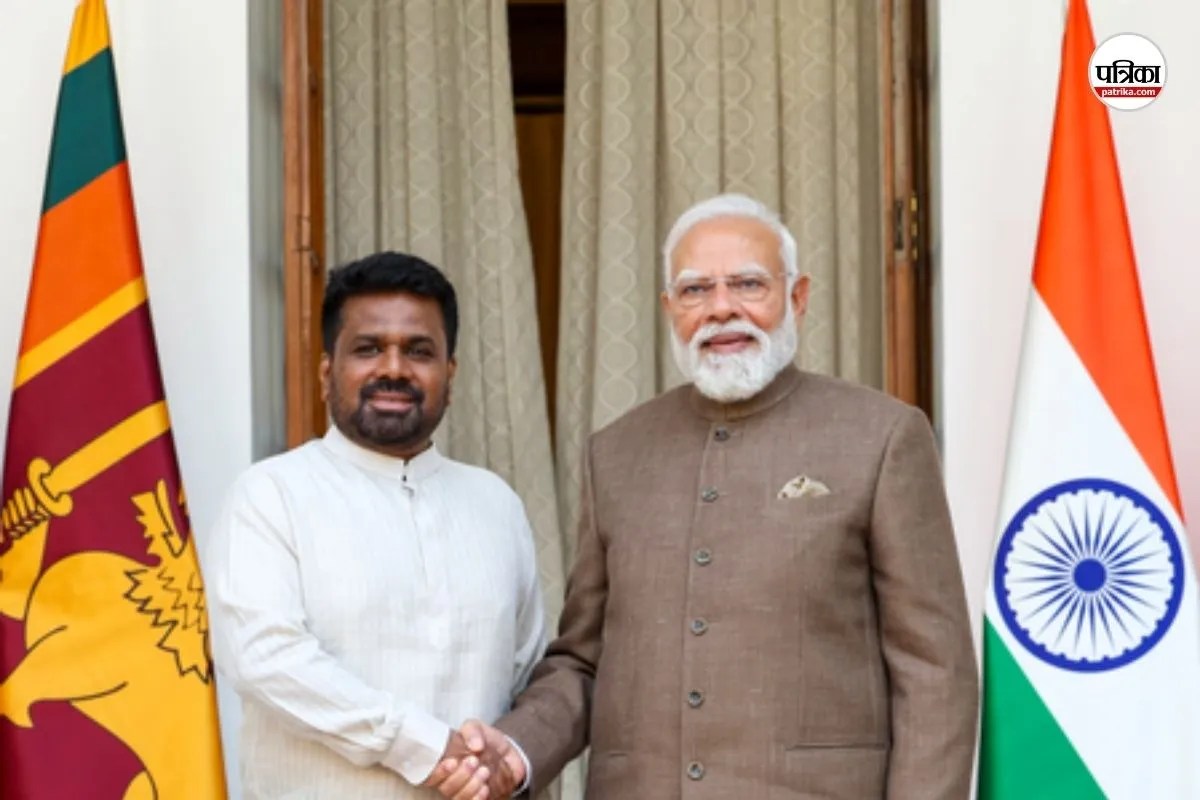
Geopolitics isn't a charity ward. When you see headlines shouting about India’s "healing hand" or Sri Lanka’s "heartfelt gratitude" regarding fuel shipments, you’re reading a press release, not an analysis. The mainstream narrative likes a simple story: India, the benevolent neighbor, saves Sri Lanka from a total blackout. But looking at the balance sheet tells a different story. India isn't just sending diesel; it’s exporting a long-term, high-interest sphere of influence that Colombo may never be able to afford.
The "Fuel Crisis" is a symptom. The real disease is a structural failure of energy sovereignty, and India’s intervention is less like a doctor and more like a high-interest payday lender. We need to stop pretending this is about neighborly love and start acknowledging it as the most aggressive geopolitical play New Delhi has made in decades.
The Myth of the "Gift"
Most people see a line of credit and think "free money." It isn't. Every liter of petrol sent across the Palk Strait is backed by a Line of Credit (LoC) that carries specific, often grueling, conditions. These aren't just interest rates. They are strategic anchors.
When India provides a $500 million LoC for fuel, that money doesn't just sit in a Sri Lankan bank. It is frequently tied to Indian suppliers. This is a closed-loop system where Indian taxpayer money goes to Indian oil companies to send Indian-refined products to a nation that is then perpetually indebted to—you guessed it—India.
I’ve seen this play out in private equity and international trade for years. You don't give a struggling competitor a loan to help them get back on their feet; you give them a loan to ensure you own their infrastructure when they inevitably fail to pay. By tying fuel security to these lines of credit, India has effectively nationalized a portion of Sri Lanka’s future energy policy.
The Math of Dependence
The physics of energy are brutal. Sri Lanka’s daily fuel requirement for power generation and transport is a fixed variable. When your own currency is worth less than the paper it’s printed on, you have two choices: stop moving or borrow.
If we look at the energy density of the fuel being provided, we see a deeper issue. Sri Lanka is burning expensive diesel for electricity—a thermodynamic and economic sin.
$$Efficiency = \frac{Useful Energy Output}{Total Energy Input} \times 100$$
By supplying the specific fuels needed for these inefficient thermal plants, India ensures that Sri Lanka remains stuck in a cycle of high-cost energy production. It prevents the hard pivot to renewables or nuclear that would actually solve the crisis. Why would you build a solar farm when you can just sign another Indian LoC to keep the lights on for another month? It’s a narcotic for a dying economy.
Adani, NTPC, and the Infrastructure Land Grab
The fuel shipments are the bait. The infrastructure projects are the hook.
While the world watches tankers unload at Colombo Port, the real action is happening in Trincomalee. The joint venture to develop the Upper Tank Farms is not about "regional stability." It’s about securing a strategic deep-water harbor that acts as a checkmate against Chinese maritime ambitions.
- The Trincomalee Deal: 61 massive oil tanks handed over to a subsidiary of the Indian Oil Corporation.
- The Wind Power Pivot: Massive renewable projects handed to the Adani Group without competitive bidding.
- The Power Grid Link: Plans to physically connect the Indian and Sri Lankan power grids.
Once that physical cable connects the two nations, Sri Lanka loses the ability to say "no" to New Delhi. If India controls the switch, India controls the sovereignty. This isn't "helping a neighbor"; it’s an acquisition.
Why Everyone Asking "How Can India Help?" Is Wrong
The "People Also Ask" sections of the internet are filled with questions like "How much fuel did India give Sri Lanka?" or "Is India helping Sri Lanka out of the crisis?"
These are the wrong questions. The right question is: "At what point does 'help' become 'hostile takeover'?"
If you are a Sri Lankan policymaker, you aren't looking at India as a savior. You are looking at a giant that is slowly eating your ports, your energy grid, and your future autonomy. The "help" India provides is designed to be just enough to prevent a total collapse that would bring refugees to Indian shores, but never enough to allow Sri Lanka to stand on its own two feet.
The China Factor: A False Dichotomy
The standard analysis says Sri Lanka is caught between a "Debt Trap" (China) and "Neighborhood First" (India). This is a binary delusion.
China’s debt trap was about concrete—ports and airports that no one used. India’s strategy is far more sophisticated. It’s about flow. By controlling the flow of fuel and electricity, India controls the pulse of the country. You can ignore an empty airport in Hambantota. You cannot ignore a dark house or a dry gas station.
India has learned from China's mistakes. Instead of building useless monuments, India is buying the vital organs of the Sri Lankan state.
The Brutal Reality of Renewable Sovereignty
If Sri Lanka actually wanted to escape this cycle, it would stop taking "help" and start enforcing a radical energy shift. But it can't.
When a country is in a liquidity trap, its time horizon shrinks to twenty-four hours. You don't think about 2030; you think about whether the buses will run tomorrow. India knows this. By keeping the fuel coming in small, controlled drips, they ensure the time horizon never expands.
- Fact: Diesel-based power costs roughly $0.25-$0.30 per kWh in a crisis environment.
- Fact: Utility-scale solar in the region can be produced for under $0.05 per kWh.
By accepting Indian fuel credits, Sri Lanka is essentially choosing to pay a 500% premium for the privilege of being indebted. It is the most expensive "charity" in history.
Stop Calling It Diplomacy
Let's call it what it is: The Energy Annexation of the South.
India is using its state-owned enterprises and its favored private billionaires to construct a regional energy monopoly. This isn't a critique of the strategy—it's actually quite brilliant from a Machiavellian perspective. If I were sitting in the Ministry of External Affairs, I’d be doing the exact same thing.
But as an observer of the industry, we have to stop the sycophantic applause. We are watching the systematic dismantling of a nation's independent energy policy. Every time a Sri Lankan politician says "Thank you," they are really saying "We have no other choice."
There is no such thing as a free lunch, and there is certainly no such thing as free fuel. The price of India’s diesel isn't measured in dollars or rupees; it’s measured in the long-term surrender of Sri Lankan policy to Indian boardrooms.
Colombo isn't being saved. It's being integrated.
Would you like me to analyze the specific ROI of the Adani wind projects in the Mannar basin compared to Indian domestic rates?