The prevailing narrative in Washington suggests that Donald Trump has backed himself into a corner in the Persian Gulf. After a year of "Maximum Pressure" on steroids, including the kinetic devastation of Operation Midnight Hammer and the targeted killing of Supreme Leader Ali Khamenei, the administration finds itself in a strange, violent limbo. Critics argue the President has run out of options. They are wrong. He hasn’t run out of options; he has entered a phase where every remaining choice carries a price tag that neither his "America First" base nor the global economy is prepared to pay.
The current crisis is not a stalemate of inaction, but a collision of two incompatible fantasies. On one side, the White House believes that enough fire and brimstone will eventually force a "business-first" capitulation from a decapitated Iranian leadership. On the other, the fragmented remnants of the Islamic Republic—now led by the more radical Mojtaba Khamenei—gamble that they can outlast American patience by turning the world’s most vital energy artery into a graveyard for tankers.
The Kinetic Limit of Air Power
By March 2026, the limits of "shock and awe" have become painfully visible. While U.S. and Israeli strikes have successfully turned much of Iran’s surface-level nuclear infrastructure into smoking ruins, the core of the problem remains underground. Deep-fortified facilities near Natanz and Isfahan have proven resistant to anything short of a sustained ground invasion or the use of specialized, low-yield nuclear penetrators—options that remain politically radioactive.
Intelligence assessments now suggest that while the "hardware" of the Iranian program is damaged, the "software"—the scientific know-how and the 60% enriched uranium stockpile—has been dispersed into a honeycomb of secondary tunnels. You cannot bomb a physicist’s brain, and you cannot easily find a suitcase-sized canister of uranium in a country the size of Alaska.
The administration’s reliance on air superiority has reached its point of diminishing returns. Without boots on the ground to seize and hold territory, the U.S. is essentially playing a high-stakes game of Whac-A-Mole. Every time a centrifuge hall is leveled, the IRGC moves another dozen into a civilian basement in Mashhad or Tabriz.
The Strait of Hormuz Shakedown
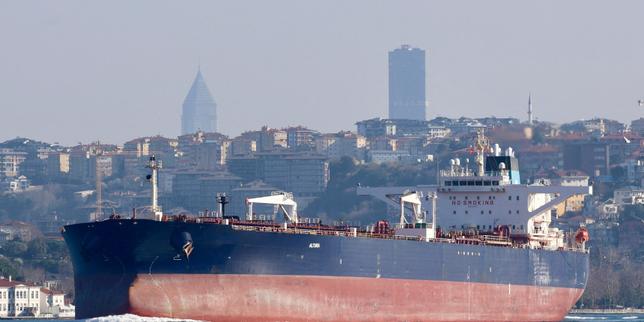
While the Pentagon eyes 10,000 more troops for the region, the real war is being fought over the price of a gallon of gas. Iran’s strategy has shifted from conventional defense to a sophisticated "shakedown" in the Strait of Hormuz. By deploying Chinese-made YLC-8B anti-stealth radars and swarms of low-cost suicide drones, Tehran has effectively spiked the cost of maritime insurance to prohibitive levels.
The "Open for All or Closed to All" policy proposed by some hawks in Washington has met the hard reality of global energy markets. With Brent crude hovering at $112 per barrel, the administration has been forced into the humiliating position of lifting sanctions on some "shadow fleet" Iranian oil just to prevent a global recession.
The White House’s attempt to use "secondary tariffs" against any nation—even allies—that buys Iranian energy has backfired. In March 2026, major economies from Turkey to India are quietly recalibrating their alignment. They see a Washington that can break things, but not one that can fix the flow of oil.
The Mojtaba Gambit
The death of Ali Khamenei in February 2026 was supposed to be the regime's "Berlin Wall moment." Instead, it has radicalized the survivors. The appointment of Mojtaba Khamenei as Supreme Leader—a move Donald Trump himself called "unacceptable"—has closed the door on the pragmatic "Larijani wing" of the Iranian government.
The de facto leader of the pragmatists, Ali Larijani, was killed in an Israeli strike on March 17. His death eliminated the last bridge for a "grand bargain" that might have satisfied both Washington’s need for a nuclear-free Iran and Tehran’s need for economic survival.
The new, younger leadership in Tehran has no memory of the 2015 JCPOA as anything other than a Western trap. For them, a nuclear weapon is no longer a bargaining chip; it is the only insurance policy against a "Venezuela-style" transition or the fate of Muammar Gaddafi.
The Board of Peace and Other Fantasies
In his second term, the President has leaned heavily on his newly established "Board of Peace," a 26-country coalition designed to bypass the United Nations and handle regional security through a "business-first" lens. The board’s 20-point plan for a Middle East ceasefire, however, remains a collection of high-concept bullet points with no ground-level buy-in.
Critics of the administration’s strategy point to the "Icarus complex"—an overconfidence that high-profile summits and personal relationships with regional autocrats can replace the "day-to-day-work" of traditional diplomacy. While the Abraham Accords created a security nexus between Israel, Jordan, and Egypt, this axis has proven unable to deter a desperate Iran that believes its back is against the wall.
The "Maximum Pressure" campaign is now hitting its ceiling. China, which imports 90% of Iran's oil, has signaled it will not be bullied by U.S. sanctions at a time when its own economy is under strain. The Treasury Department’s recent issuance of General License U—allowing the sale of some Iranian crude—was a silent admission that the U.S. cannot afford to truly zero-out Iranian exports without crashing the global market.
The Choice of a Ground War
The Pentagon has presented options for the seizure of strategic Iranian islands and even the occupation of key oil facilities. These plans, however, require a troop commitment far beyond the 10,000 currently being discussed. To truly "dismantle" the Iranian nuclear and missile program would require hundreds of thousands of soldiers and a multi-year occupation.
Donald Trump, who campaigned on "ending forever wars," is now the "peace president" presiding over the largest U.S. military buildup since the 2003 invasion of Iraq. This is the paradox of 2026: to achieve the "Peace Through Strength" he promised, he may have to launch the very war he was elected to avoid.
The Iranian regime understands this better than anyone. Their strategy is simple: inflict enough pain on the global economy and enough casualties on the U.S. military to make the political cost of "victory" too high for the President to pay. They are not fighting to win; they are fighting to make the American president lose his base before the next election cycle.
The Brinkmanship of the Second Armada
As a second aircraft carrier strike group moves into the Persian Gulf, the administration continues to send contradictory signals. One day, the President is "winding down" the war; the next, he is "locked and loaded." This unpredictability, once seen as a strategic asset, is now creating a vacuum of leadership that regional allies are starting to fill with their own, often conflicting, agendas.
The failure of the Muscat negotiations in February 2026 was the final warning. Indirect talks mediated by Oman failed because the U.S. demanded a total Iranian surrender, while Iran demanded a total lifting of sanctions before even discussing its nuclear program.
There is no middle ground left. The "middle" was bombed out of existence along with the Isfahan research center. The U.S. and Iran are now two trains on the same track, both hoping the other will jump first.
The reality of March 2026 is that the U.S. has reached the limits of what can be accomplished with sanctions and air power alone. To go further is to invite a regional conflagration that would redefine the 21st century. To go back is to admit that the "Maximum Pressure" campaign was a failure. The trap has been set, and the only way out is through a door that both sides have spent the last year bolting shut.
Would you like me to analyze the specific economic impact of General License U on global oil prices during this period?