The reports coming out of Vienna are meant to sound reassuring, but the fine print tells a much darker story. On Monday, the International Atomic Energy Agency (IAEA) claimed there was "no indication" that Iran's nuclear facilities were hit during the massive wave of U.S. and Israeli airstrikes. By Tuesday, that narrative flipped.
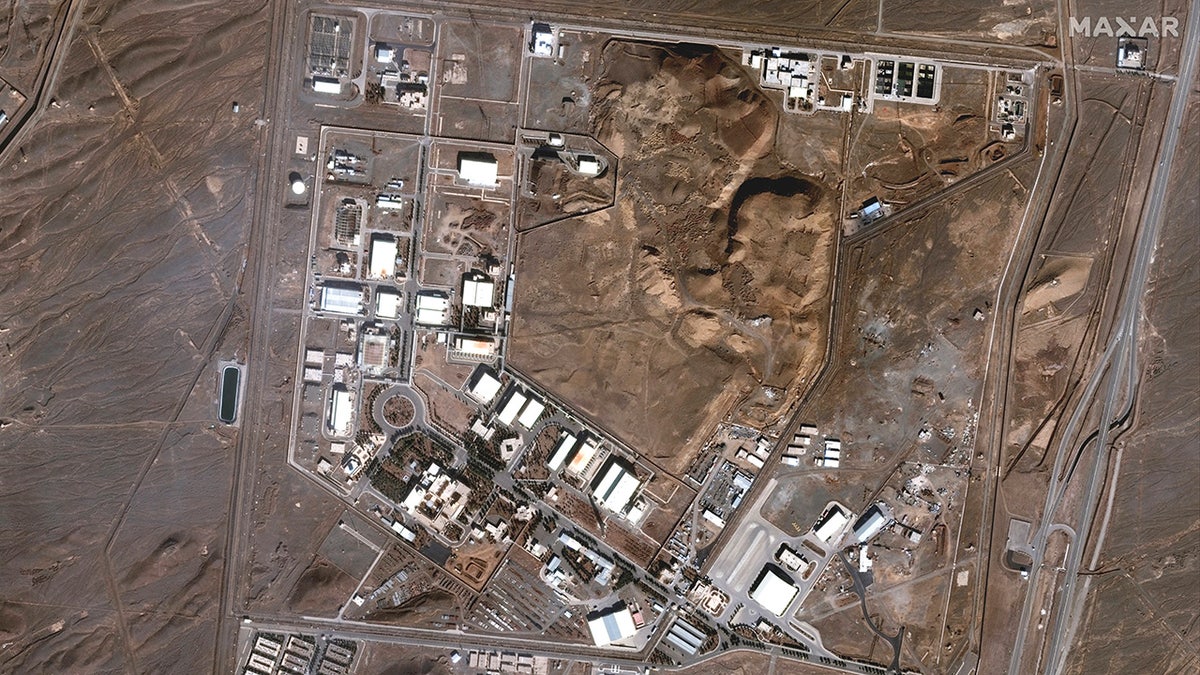
New satellite imagery now confirms damage at the Natanz Fuel Enrichment Plant (FEP). While the world breathes a sigh of relief because radiation levels haven't spiked, we're missing the bigger picture. We aren't looking at a "miss" by Western forces. We're looking at a surgical decapitation of the facility's infrastructure that leaves the most dangerous materials exactly where they shouldn't be: in a black box.
The Shell Game at Natanz
The IAEA’s updated statement confirms that the entrance buildings to the underground enrichment plant were hit. Specifically, the strikes targeted the two three-story personnel entrances and the primary vehicle ramp. It’s a classic "entombment" strategy. You don't need to blow up the centrifuges 50 feet underground to stop a program; you just need to make sure nobody can get in or out, and that the power and ventilation systems are trashed.
The problem with this approach is that it makes "no radiological spike" a temporary metric. Rafael Grossi, the IAEA Director General, admitted that communications with Iranian nuclear authorities have been effectively cut. Since the "12-day war" in June 2025, inspectors haven't had real eyes on the ground. We're relying on sensors in neighboring countries like Kuwait and Iraq to tell us if something is wrong. That's like trying to tell if a house is on fire by standing three blocks away and sniffing the air.
Why the core remains the real threat
- Centrifuges are still spinning: Unless the strike caused a catastrophic structural collapse of the underground halls, those machines are likely still enriched.
- The "Black Box" effect: Without IAEA inspectors inside, we don't know if the damage to the entrances has compromised the cooling systems. If those systems fail, we won't see a "spike" immediately—we'll see a slow-motion disaster.
- Retaliation loops: Iran’s ambassador, Reza Najafi, has already labeled this a "pretext for invasion." When you hit a "safeguarded" site, you give the other side a green light to scrap the rules.
The Isfahan Shadow
While everyone is staring at Natanz, the Isfahan Nuclear Technology Center is a much bigger wildcard. Satellite photos from February showed a new roof over a building that was supposedly "obliterated" last year. Reports of explosions around Isfahan on Monday were brushed off, but the IAEA can't confirm what was hit because they simply aren't allowed in.
Grossi’s latest briefing was surprisingly blunt: the situation is "very concerning." That's UN-speak for "we’re flying blind." He mentioned the possibility of evacuations for areas as large as major cities if a release actually happens. That doesn't sound like a man who's confident in the "no damage" reports he was forced to walk back.
It’s Not Just About Radiation
The media loves to focus on the Geiger counters because it's a binary—safe or not safe. But the real shift is geopolitical. The joint U.S.-Israeli operation, "Epic Fury" and "Roaring Lion," is clearly aiming for a total dismantling of Iran’s nuclear capabilities. By targeting the entrances at Natanz, they’ve signaled that no site is off-limits, even those buried deep in the mountains.
If you're waiting for a clear "mission accomplished" or a definitive "all clear" from the IAEA, don't hold your breath. We're in a phase where the lack of news is the worst news possible. The "indispensable channel of communication" Grossi keeps asking for is dead.
Don't let the headlines about "normal radiation levels" fool you into thinking the risk is gone. The risk has just moved into the dark where we can't measure it.
Keep an eye on the following developments over the next 48 hours:
- Air Monitoring in the Gulf: Watch for any redirected flight paths or "atmospheric research" flights by the U.S. Air Force—they’ll be the first to know if the entombment at Natanz has a leak.
- IAEA Board Resolutions: If the board doesn't formally condemn the strike, expect Iran to officially withdraw from the Non-Proliferation Treaty (NPT) by the weekend.
- Isfahan Imagery: High-resolution "after" shots of the Isfahan complex will tell us if the U.S. finally went after the 60% enriched uranium stockpiles stored there.