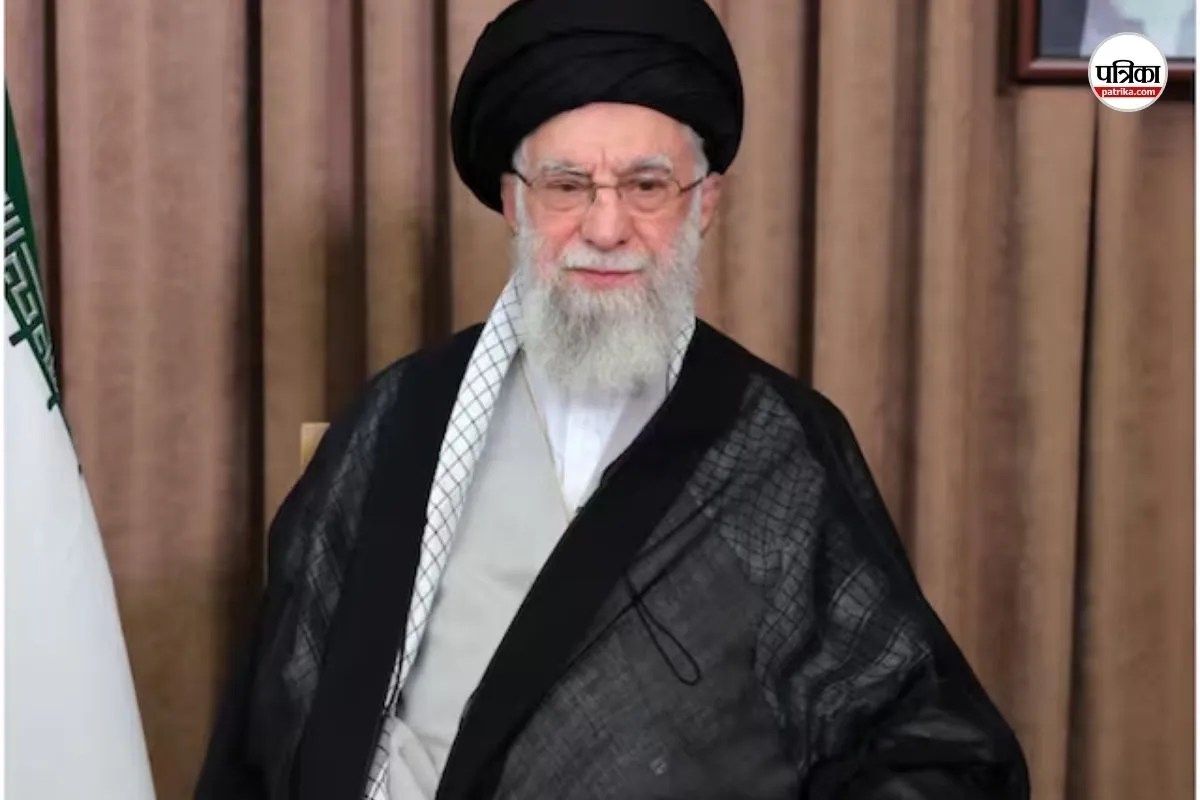
Israel just changed the rules of engagement in the Middle East. For decades, the shadow war between Jerusalem and Tehran followed a predictable, albeit bloody, script. Proxies fought on the borders while scientists and generals faced assassinations in the dark. That script is in the trash now. The recent strike targeting the private residence of Supreme Leader Ali Khamenei isn't just another military operation. It's a loud, vibrating message that the head of the snake is no longer off-limits.
If you’ve been following the headlines, you know the basics. Missiles fell near the nerve center of Iranian power. Reports suggest the Supreme Leader’s personal quarters were the intended destination. This isn't about degrading military hardware or hitting a drone factory in Isfahan. This is about personal survival for the man who has ruled Iran since 1989.
The end of the invisible shield
For years, there was an unwritten understanding. You don't go for the top guy. You hit the commanders, the nuclear physicists, and the shipment of missiles headed for Hezbollah. But after the massive Iranian ballistic missile barrages against Israel, the Israeli cabinet clearly decided that "proportionality" is a dead concept.
When a missile lands near the Supreme Leader’s office, it’s a psychological operation as much as a kinetic one. Israel is telling the Iranian leadership that their bunkers aren't deep enough. Khamenei has spent years cultivating an image of a divinely protected leader. Seeing smoke rise from his own neighborhood shatters that image. It creates a sense of paranoia within the inner circle. Who leaked the location? How did the tracking happen? These are the questions keeping the IRGC (Islamic Revolutionary Guard Corps) up at night.
Why Khamenei is the ultimate target
You might wonder why Israel would take such a massive risk. Killing a head of state is usually seen as the ultimate escalation, the kind that triggers a full-scale, no-holds-barred regional war. But from the Israeli perspective, the Iranian regime is a monolith controlled by one mind.
The Supreme Leader holds absolute power over the military, the media, and the foreign policy. Unlike a democracy where a leader can be replaced through a vote, or even some autocracies with a clear line of succession, Iran’s system is built entirely around the "Velayat-e Faqih" or the Guardianship of the Islamic Jurist. Khamenei is the glue. If you remove the glue, the IRGC factions start fighting each other for the scraps.
Israel isn't just looking for a tactical win. They’re looking for a systemic collapse. By putting Khamenei in the crosshairs, they’re forcing the regime to choose between its ideological war against the "Zionist entity" and its own physical existence. Most dictators, when faced with that choice, choose their own skin every single time.
The intelligence failure in Tehran
Let's be real about the situation on the ground. For a missile to get that close to a high-value target in a heavily defended capital like Tehran, something went horribly wrong for Iran. This points to a massive intelligence gap. It suggests that Israel has successfully penetrated the highest levels of Iranian security.
Think back to the assassination of Ismail Haniyeh in the heart of Tehran. That was a guest house managed by the IRGC. Now, the Supreme Leader’s own residence is under fire. It shows a level of technical and human intelligence that is frankly terrifying for the Iranian leadership. They can't trust their own guards. They can't trust their own communication lines.
What the world gets wrong about escalation
Critics often argue that hitting Khamenei will only make Iran more aggressive. They say it'll rally the Iranian people around the flag. Honestly, that’s a fundamental misunderstanding of the current mood in Iran.
The Iranian public is exhausted. They’ve seen their currency tank. They’ve seen "morality police" crack down on their daughters. They’ve seen billions of dollars sent to militias in Yemen, Lebanon, and Gaza while the domestic infrastructure crumbles. When a missile hits a government building in North Tehran, the average person in Tabriz or Shiraz isn't necessarily rushing to enlist. Many see it as the regime finally reaping what it sowed.
Israel knows this. They aren't fighting the Iranian people; they're fighting a specific theological-military elite. By targeting the top, they minimize broader civilian casualties while maximizing the pressure on the people who actually make the decisions to launch missiles.
The technical reality of the strike
Speculation is flying about what exactly was used in the attack. Was it a long-range Jericho missile? Was it an F-35 firing from outside Iranian airspace? Or was it a drone launched from within Iran’s own borders by Mossad operatives?
The "from within" theory is the most embarrassing for Tehran. It implies that the regime doesn't even control its own backyard. If Israel can move components for a high-precision strike into the capital, assemble them, and fire them at the Supreme Leader’s house, then the IRGC has already lost the internal war.
The fallout for regional proxies
Hezbollah, the Houthis, and the various militias in Iraq are watching this very closely. Their entire power structure relies on the "Axis of Resistance" being led by an untouchable, powerful Iran. If the patron is bleeding, the clients start to panic.
We've already seen Hezbollah’s command structure get decimated in Lebanon. If they see that even Khamenei isn't safe, their willingness to sacrifice everything for Tehran might start to waver. No one wants to be the last person dying for a lost cause. The psychological impact on the proxy network is arguably more important than the physical damage to the building in Tehran.
How to read the situation moving forward
The conflict has moved into a "Maximum Pressure" phase that isn't just economic. It's physical. You should expect more of these surgical strikes. Israel has signaled that they are done with the outskirts. They're going for the center.
Keep an eye on the official Iranian response. If they downplay the strike, it means they are scared and trying to save face. If they scream for blood, they might be forced into a retaliatory move that they aren't actually prepared to handle. Either way, the myth of the Supreme Leader’s invincibility is gone.
If you're trying to stay ahead of this, watch for changes in Iran's internal security protocols. Watch for reports of purges within the IRGC. That will tell you how deep the Israeli penetration really goes. The war has moved from the trenches to the hallways of power, and there's no going back to the old rules now. Pay attention to the movements of the Iranian cabinet; their sudden disappearances into "secure locations" are the best barometer for how much they fear the next incoming strike.


