The kitchen clock says it is exactly 10:14 PM. Most of the house is asleep, but Mark is standing in the blue glow of the open refrigerator. He isn’t hungry. Not in the way his ancestors were when they hunted mammoths. His stomach is full of a perfectly reasonable dinner, yet his brain is screaming. It’s a specific, relentless itch that only a third glass of bourbon or a sleeve of cookies can scratch.
For Mark, and for millions of people navigating the quiet desperation of "just one more," the problem has always been framed as a defect of character. We call it a lack of willpower. We call it an addictive personality. We treat it as a moral failing that requires a spiritual solution or a grueling exercise in self-denial.
But what if the itch isn't in his soul? What if it’s just a broken thermostat in his brain?
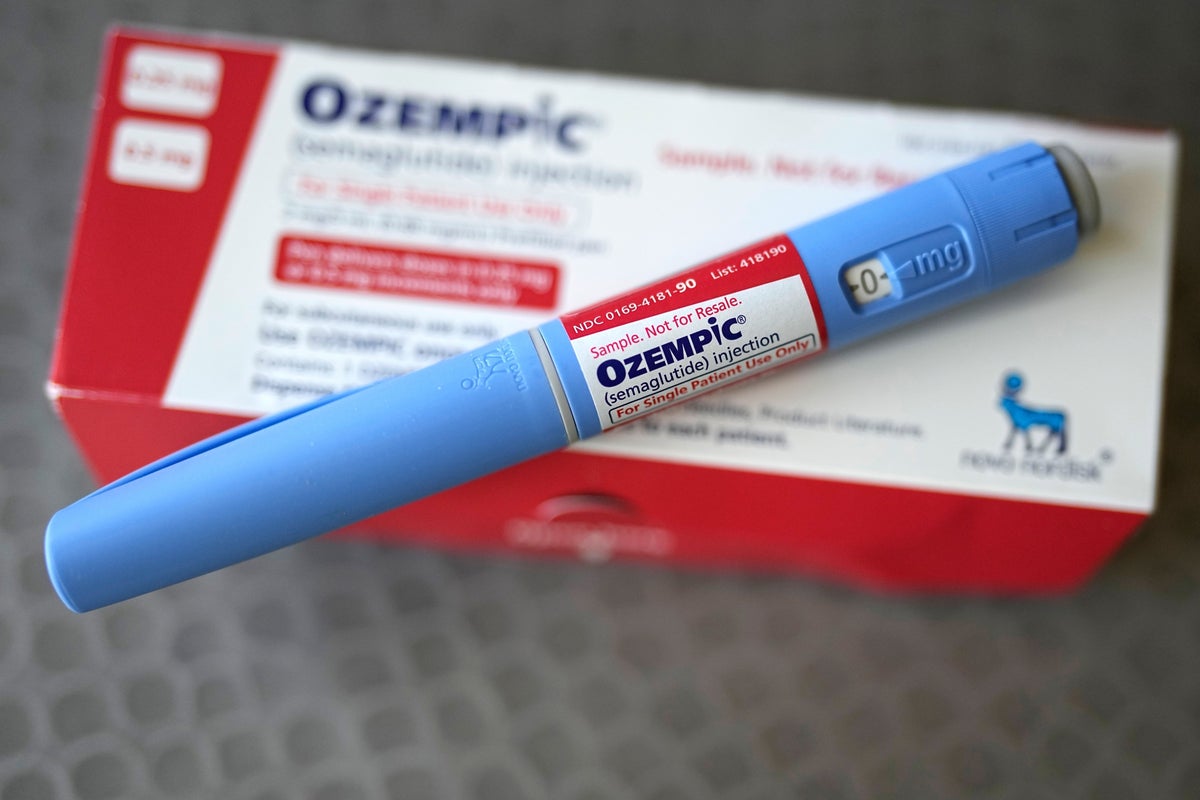
Recent clinical observations and a growing body of data are pointing toward a radical shift in how we understand the mechanics of craving. The same medications that have dominated headlines for weight loss—the GLP-1 receptor agonists—are revealing a startling side effect. People taking them for diabetes or obesity are finding that their other, darker "hungers" are simply evaporating.
The wine doesn’t call to them from the cupboard. The cigarette tastes like ash. The pull of the needle or the pill loses its magnetic north.
The Engine of Wanting
To understand why a metabolic drug might stop an opioid craving, we have to look at the reward center of the human brain. Think of your brain as a high-performance engine. In a balanced state, the "reward" system—the mesolimbic pathway—releases dopamine to reward you for things that keep you alive, like eating, drinking water, or social connection.
In the brain of someone struggling with substance use, that engine is stuck in a permanent redline. The dopamine spikes from alcohol or drugs are so massive that the brain’s natural sensors eventually dull themselves to compensate. This creates a "reward deficit." Now, the engine won't even idle without the substance. You aren't chasing a high anymore; you are just trying to keep the car from stalling.
Glucagon-like peptide-1 (GLP-1) is a hormone naturally produced in the gut. Its primary job is to tell the body it’s full. It slows down gastric emptying and tells the pancreas to release insulin. But researchers have discovered that GLP-1 receptors aren't just in the gut. They are peppered throughout the brain’s reward centers, including the ventral tegmental area and the nucleus accumbens.
When a drug like semaglutide or tirzepatide binds to these receptors, it doesn’t just tell the stomach it’s full of food. It tells the brain it is full of everything. It turns down the volume on the dopamine "wanting." It’s like someone finally walked over to that screaming engine and eased the throttle back to a steady, quiet hum.
The Evidence in the Numbers
The transition from anecdotal "miracle stories" to hard science is happening faster than many expected. A major study published in Addiction analyzed the medical records of thousands of patients. The findings were stark. Those with opioid use disorder who were also prescribed GLP-1s had a 40% lower rate of opioid overdose compared to those not on the medication.
For alcohol use disorder, the numbers were equally compelling. People on these medications saw a 50% reduction in alcohol-related hospitalizations.
These aren't just percentages on a spreadsheet. They represent thousands of people who didn't end up in an ER, thousands of families who didn't have to make a middle-of-the-night phone call to a coroner.
Consider a hypothetical patient, Sarah. Sarah has struggled with alcohol for a decade. She has tried the meetings. She has tried the white-knuckle approach. She has tried the traditional medications that make you sick if you take a sip. Nothing worked because the desire never left. The ghost of the drink was always in the room.
When Sarah starts a GLP-1 for her rising A1C levels, she notices something strange. She passes the liquor aisle at the grocery store and... nothing. No tightening in her chest. No mental rehearsal of the first pour. The "noise" is gone.
Why This Is Different
Traditional addiction treatments often focus on blocking the "high" or creating a negative physical reaction to the substance. Naltrexone blocks the receptors so you don't feel the euphoria. Antabuse makes you violently ill. These are effective for some, but they are "punishment" models. They don't address the underlying compulsion to seek the reward in the first place.
GLP-1s seem to operate on the "pre-craving" phase. They target the "incentive salience"—the brain's way of flagging something as incredibly important and desirable. By dampening this signal, the drug gives the person something they haven't had in years: time.
Time to think. Time to choose. Time to realize they don't actually want the thing their brain is telling them they need.
However, we must be careful not to paint this as a magic wand. The biology of addiction is a tangled web of genetics, trauma, and environment. A weekly injection cannot fix a broken home or erase the memories of a painful past. It is a tool, not a cure-all.
There are also the "invisible stakes" of medicalizing what we have long considered a psychological battle. If we treat addiction primarily as a hormonal imbalance, do we lose the human element of recovery? Or do we finally grant those suffering the grace of knowing their struggle was always physiological?
The Biology of Choice
There is a profound discomfort in the idea that our "will" can be tweaked by a molecule. It challenges our concept of the self. If a small dose of a peptide can make a lifelong smoker quit without even trying, what does that say about the nature of our habits?
It suggests that much of what we call "choice" is actually the result of a complex chemical dance. For a person in active addiction, the dance is a chaotic mosh pit. The GLP-1 medications act as a conductor, bringing a sense of rhythm and order back to the performance.
The scientific community is currently in a race to confirm these findings through randomized controlled trials. We need to know if the effects last. We need to know if the brain eventually finds a way to bypass the GLP-1 signal. We need to know about the long-term impacts on the brain's ability to feel natural joy—if we turn down the "bad" cravings, do we also turn down the "good" ones, like the thrill of a sunset or the warmth of a hug?
Early reports suggest that for most, the "anhedonia"—the inability to feel pleasure—is not a major side effect. Instead, patients describe a return to "normalcy." They can enjoy a single piece of cake or one glass of wine and then move on with their lives. The obsession is gone, but the capacity for joy remains.
The Quiet Shift
Back in the kitchen at 10:14 PM, Mark looks at the bottle on the counter. Usually, the internal debate would be loud, exhausting, and ultimately futile. He would list all the reasons why he shouldn't, and then he would do it anyway.
But tonight, the debate doesn't even start. The bottle is just a bottle. It has no more power over him than a stapler or a lamp. He closes the refrigerator, turns off the light, and goes to bed.
This is the quiet revolution. It isn't loud. It isn't a dramatic "just say no" campaign. It is the sound of millions of internal monologues finally falling silent.
We are entering an era where the chains of compulsion might be dissolved not by sheer force of ego, but by correcting the ancient, misfiring signals in our midbrain. It is a future where "powerless" is no longer a permanent state of being, but a medical condition that can be managed.
The tragedy of the "willpower" myth is that it kept us looking in the wrong place for the solution. We were looking at the pilot when we should have been looking at the flight controls. As we recalibrate those controls, the flight becomes smoother. The destination becomes reachable.
The itch is gone, and for the first time in a long time, the person in the blue glow of the fridge is finally, truly, free to just walk away.