Viktor Orbán isn't just playing hard to get with the European Union. He's actively dating other people. While Brussels sends sternly worded letters about democratic backsliding, Budapest is busy signing multi-billion euro deals with Beijing and maintaining a direct hotline to Moscow. It’s a geopolitical balancing act that has the rest of Europe reaching for the smelling salts. Honestly, if you're wondering why Hungary seems so comfortable ignoring the EU's complaints, you just have to look at where the money is coming from.
For years, the narrative was that Hungary was the "troublemaker" of the bloc. But in 2026, that description feels almost quaint. We're well past simple troublemaking. We're looking at a deliberate, strategic pivot toward a "neutral" economic stance that treats the EU as just one of many potential partners. It's bold, it's risky, and it's making the neighbors very nervous.
The Eastern Opening isn't a phase
You've heard of the "Eastern Opening" policy. It started as a way to diversify trade after the 2008 financial crisis. Fast forward to today, and it’s the backbone of the Hungarian economy. China has become Hungary’s largest source of foreign direct investment, pouring over €7 billion into the country in 2025 alone.
This isn't just about cheap plastic goods. We're talking about massive industrial hubs. The BYD electric vehicle plant in Szeged and the CATL battery factory in Debrecen are turning Hungary into a critical node for the future of European motoring—but with Chinese DNA. When the EU talks about "de-risking" from China, Orbán basically invites them over for a housewarming party. He knows that as long as these factories are built on Hungarian soil, the rest of Europe still has to deal with him to keep their own supply chains moving.
The Moscow connection and the treason talk
While the China relationship is mostly about the checkbook, the Russia connection is where things get messy. Even as the war in Ukraine drags on, Hungary has kept its energy deals with Gazprom and Rosatom alive. But the tension reached a boiling point recently with allegations that would make a spy novelist blush.
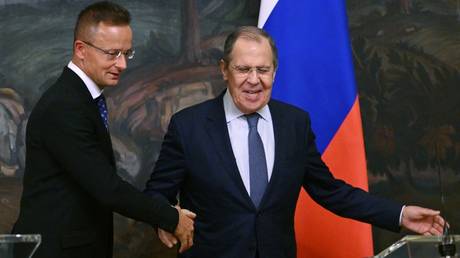
Reports surfaced suggesting that Hungarian Foreign Minister Péter Szijjártó was essentially giving "live updates" to Sergey Lavrov during confidential EU meetings. The opposition is screaming "treason," and the European Commission is demanding "clarifications." Szijjártó calls it fake news. Whether it's true or not, the mere fact that EU allies are now genuinely afraid to speak freely when a Hungarian representative is in the room tells you everything you need to know about the state of trust in the union.
Why the EU's tools are failing
Brussels has tried the "power of the purse." They’ve frozen billions in cohesion funds and recovery money over rule-of-law concerns. They’ve dragged Hungary through countless Article 7 hearings. It’s the diplomatic equivalent of a long-term grounding.
But here’s the thing. If you’re a government and you’ve got €7 billion in Chinese investment and a steady stream of Russian gas, a few frozen EU grants don’t hurt quite as much as they used to. Orbán is betting that he can outlast the bureaucrats. He’s framed the whole conflict as a battle for "sovereignty" against a "Brussels puppet government." It’s a narrative that plays well at home, especially when you can point to shiny new factories as proof that you don't need the EU's permission to grow.
- Economic Neutrality: Budapest argues it shouldn't have to choose sides in a new Cold War.
- Energy Security: Maintaining ties with Russia keeps the lights on and prices (relatively) stable.
- Political Leverage: Being the "veto king" in the EU makes Hungary's favor very valuable to outside powers.
The rise of the Tisza challenge
It’s not all smooth sailing for the Fidesz government. For the first time in over a decade, there's a real challenger in the rearview mirror. Péter Magyar and his Tisza party have been surging in the polls. Magyar, a former insider, knows exactly where the bodies are buried. He’s using the government’s closeness to Russia as a blunt instrument, accusing them of betraying Hungarian interests.
But even if Magyar manages to pull off an upset in the next election, don't expect a 180-degree turn overnight. The economic ties with China are deep. The dependency on Russian energy infrastructure is physical—you can't just move a pipeline. Any future leader will find themselves tangled in the same web Orbán spent years weaving.
Living on the edge of the bloc
Hungary is effectively a bridgehead for Eastern interests inside the EU and NATO. It's a role that offers huge rewards and massive risks. By acting as the "entry point" for China, Hungary gets the investment that other EU countries are too hesitant to touch. But it also risks total isolation.
You can see the frustration in the recent "boycotts" of informal EU meetings in Budapest. When other ministers refuse to show up, it’s a clear sign that the "honest broker" role usually expected of a presiding country has vanished. Hungary isn't trying to lead the EU; it’s trying to leverage it.
Stop waiting for a "grand compromise" between Budapest and Brussels. It isn't coming. The strategy is clear: stay in the club for the benefits, but keep the side-hustles with the club's rivals. If you want to understand where Hungary is headed, stop reading the EU's rule-of-law reports and start tracking the flight paths between Budapest, Beijing, and Moscow.
Pay attention to the upcoming Hungarian elections. The results will determine if this "neutrality" strategy is a temporary glitch or the new blueprint for mid-sized powers in a fractured world. Keep an eye on the BYD production launch later this year. That’s the real metric of success for Budapest, far more than any vote in the European Parliament.