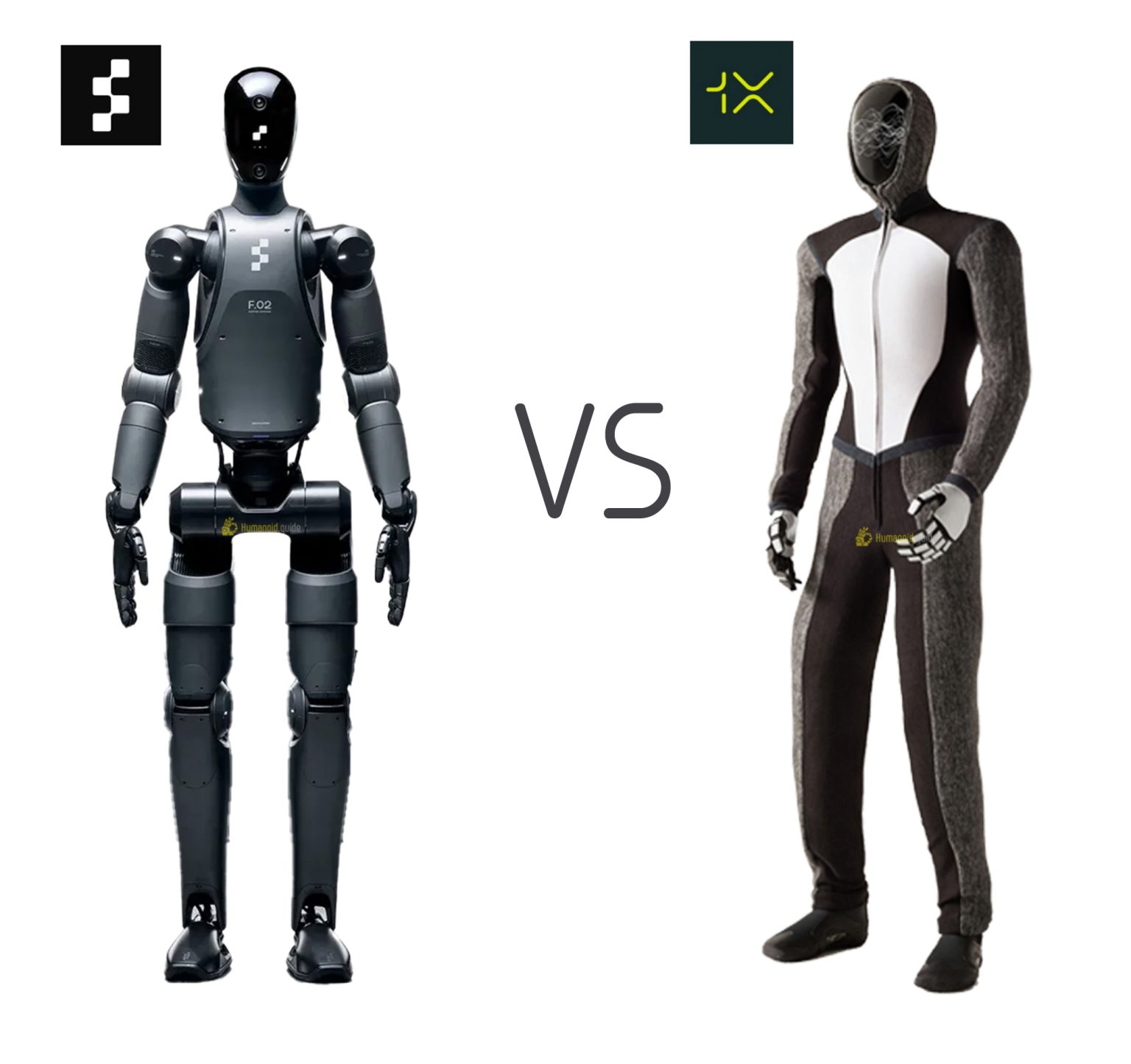
The valuation of Figure AI rests not on the novelty of a bipedal form, but on the successful integration of Large Language Models (LLMs) with physical actuators to solve the "General Purpose" bottleneck in industrial automation. Historically, robotics has been defined by specialized rigidity—machines designed for a singular, repetitive task within a controlled environment. Figure AI is attempting to pivot the industry toward a horizontal platform model where a single hardware set can execute a diverse array of tasks by translating high-level semantic instructions into low-level motor commands.
The public visibility of Figure’s 01 and 02 models, often highlighted through high-profile demonstrations and strategic partnerships, obscures the underlying engineering challenge: the synchronization of neural networks with sub-millisecond physical feedback loops. This analysis deconstructs Figure’s operational strategy, its partnership with OpenAI, and the unit economics required to displace human labor in the global supply chain.
The Three Pillars of General Purpose Autonomy
To move beyond the "toy" phase of humanoid robotics, Figure AI focuses on three distinct technical layers. Failure in any single layer results in a machine that is either too slow to be economical or too dangerous to be deployed.
- The Neural Engine (Cognition): This layer utilizes vision-language models (VLMs) to interpret the environment. When a Figure robot "sees" a crate, it isn't just identifying pixels; it is performing semantic mapping. It understands that the crate is an object that can be moved, that it has weight, and that it must be placed according to a specific logic.
- The Dynamic Control Stack (Action): This is the translation of intent into movement. Figure employs "end-to-end" neural networks, meaning the robot learns to move by watching human data and practicing in simulation. This replaces the old method of manually coding every joint angle for every possible movement.
- The Integrated Hardware (Actuation): Humanoid robots require high torque density. Figure’s hardware design focuses on minimizing the weight of the limbs while maximizing the power of the motors (actuators) at the joints. Excessive weight in the extremities increases inertia, making the robot clumsy and energy-inefficient.
The OpenAI Strategic Moat
The collaboration between Figure AI and OpenAI is the most significant differentiator in the current humanoid race. While competitors like Tesla (Optimus) or Boston Dynamics (Atlas) focus heavily on the mechanical "body," Figure is outsourcing a portion of the "brain" to the world's leading AI research lab.
This partnership addresses the Semantic-Physical Gap. Traditional robots struggle with ambiguity. If told to "clean up the mess," a standard industrial arm fails because it cannot define "mess." By integrating OpenAI’s models, Figure 01 can process natural language, reason through the steps required, and then execute the physical motion. The robot can describe what it is doing in real-time, providing a feedback loop that increases human trust and operational transparency.
The technical mechanism at play is Visual Reinforcement Learning. The robot observes a human performing a task, creates a digital twin of that task in a simulated environment, and runs millions of iterations to optimize the movement before ever attempting it on the factory floor. This drastically reduces the time-to-deployment for new tasks from months of programming to hours of model training.
The Economics of Displacement: The Cost Function of Humanoid Labor
For Figure AI to achieve mass-market penetration, the "Humanoid Cost-Benefit Ratio" must flip. Currently, a human worker in a warehouse represents a variable cost (wages, benefits, turnover). A Figure robot represents a massive upfront capital expenditure (CapEx) followed by low marginal operational expenses (OpEx).
The viability of Figure’s business model depends on three variables:
- Reliability (Mean Time Between Failure): If a robot requires a technician every 40 hours of operation, the labor savings are negated.
- Cycle Time: A robot must match or exceed human speed in "picks per hour" to be competitive. Currently, humanoids are generally slower and more cautious than human counterparts.
- The Hardware Amortization Schedule: If a Figure robot costs $150,000 to manufacture and has a five-year lifespan, the "hourly rate" of the robot (including electricity and maintenance) must be significantly lower than the local minimum wage.
Figure’s strategy involves targeting high-turnover, high-injury roles first—specifically in logistics and automotive manufacturing. Their pilot program with BMW at the Spartanburg plant serves as a "Proof of Concept" for this economic theory. In these environments, the robot does not need to be perfect; it only needs to be more predictable and less expensive than the 20% to 30% annual turnover common in manual labor roles.
Physical Constraints and Technical Bottlenecks
Despite the polished demonstrations, several physical bottlenecks prevent immediate global scaling.
Energy Density and Thermal Management
The human body is remarkably efficient. A humanoid robot, conversely, consumes massive amounts of electricity to maintain balance and power high-torque actuators. Current battery technology limits most humanoids to 2–5 hours of rigorous work before requiring a swap or a charge. Furthermore, the heat generated by these motors in a compact chassis requires sophisticated cooling systems that add weight and complexity.
The Problem of Generalization
While Figure can train a robot to move a specific part in a BMW factory, that skill does not automatically transfer to a different factory with different lighting, floor textures, or part dimensions. This is known as the Distribution Shift. For Figure AI to be truly "General Purpose," its models must reach a level of "Zero-Shot Learning," where the robot can walk into a brand-new environment and begin working without site-specific retraining.
Latency in Reasoning
There is a measurable delay between a robot sensing an obstacle and the neural network processing an evasive maneuver. In a fast-paced warehouse where humans and machines coexist, even a 200-millisecond lag can lead to collisions. Figure is currently working to move more of the "reasoning" to "on-device" (edge) computing to bypass the latency of the cloud.
Strategic Positioning and Market Entry
Figure AI has positioned itself as a "Labor-as-a-Service" (LaaS) provider. Instead of selling the robots outright, they are likely to move toward a leasing model where companies pay for the hours worked. This lowers the barrier to entry for cautious manufacturers and ensures Figure retains control over the data generated by the machines.
Data is the ultimate currency in this sector. Every second a Figure robot spends on a factory floor, it collects telemetry data that is fed back into the central model. This creates a Data Flywheel:
- More robots in the field lead to more diverse edge-case data.
- More data leads to better trained, more robust models.
- Better models lead to more capable robots.
- More capable robots lead to higher sales and more deployments.
The Human-Robot Interface
The decision to utilize a humanoid form factor—as opposed to a quadruped or a wheeled base with arms—is a strategic bet on the "Brownfield" environment. Most of the world's infrastructure was built by humans, for humans. Steps, doorways, tool handles, and workstations are all optimized for a bipedal creature with two hands and a specific reach radius.
By matching the human form, Figure AI ensures its robots can be dropped into existing factories without requiring billions of dollars in infrastructure retrofitting. The "Melania Trump" event and other public showcases are less about political alignment and more about "Social Normalization." For these machines to work alongside humans, they must be perceived as predictable tools rather than alien intrusions.
The integration of a face-like screen and speech capabilities serves a functional purpose: Intent Signaling. If a robot can tell a human coworker, "I am moving to the left to pick up that box," it prevents the "uncanny valley" hesitation that slows down productivity in mixed-labor environments.
The Sovereign Robotics Race
The development of Figure AI must be viewed through the lens of national industrial policy. As populations age in the US, Japan, and Germany, the labor pool for "Dull, Dirty, and Dangerous" jobs is shrinking. Humanoid robotics is no longer just a venture capital play; it is a hedge against demographic collapse.
Figure’s ability to secure massive funding from the likes of Nvidia, Jeff Bezos, and Microsoft suggests that the market views humanoid AI as the next foundational platform, akin to the smartphone or the internet itself. The winner of this race will control the operating system of physical labor.
To maintain its lead, Figure AI must transition from "scripted autonomy"—where the robot performs a pre-learned sequence—to "reactive autonomy." This requires the hardware to have tactile skin (haptic sensors) that can feel the difference between a glass bottle and a metal pipe, adjusting grip strength in real-time. Without this "Sense of Touch," the robot remains a blind instrument of force.
The immediate strategic move for observers and stakeholders is to track "Time to Task Mastery." The speed at which Figure can take a robot from a "New Environment" to "Human-Equivalent Output" is the only metric that truly matters. If that window drops below one week, the displacement of traditional industrial automation—and significant portions of the manual labor force—becomes an inevitability rather than a projection.
Evaluate the Spartanburg BMW pilot results specifically for "Intervention Rate." If Figure can achieve an intervention rate of less than once per eight-hour shift, the transition to full-scale commercial deployment is imminent. Identify the specific actuators used in the 02 model; if Figure has successfully shifted to in-house custom motors, their margins will decouple from the broader supply chain, allowing them to underprice competitors who rely on off-the-shelf components.