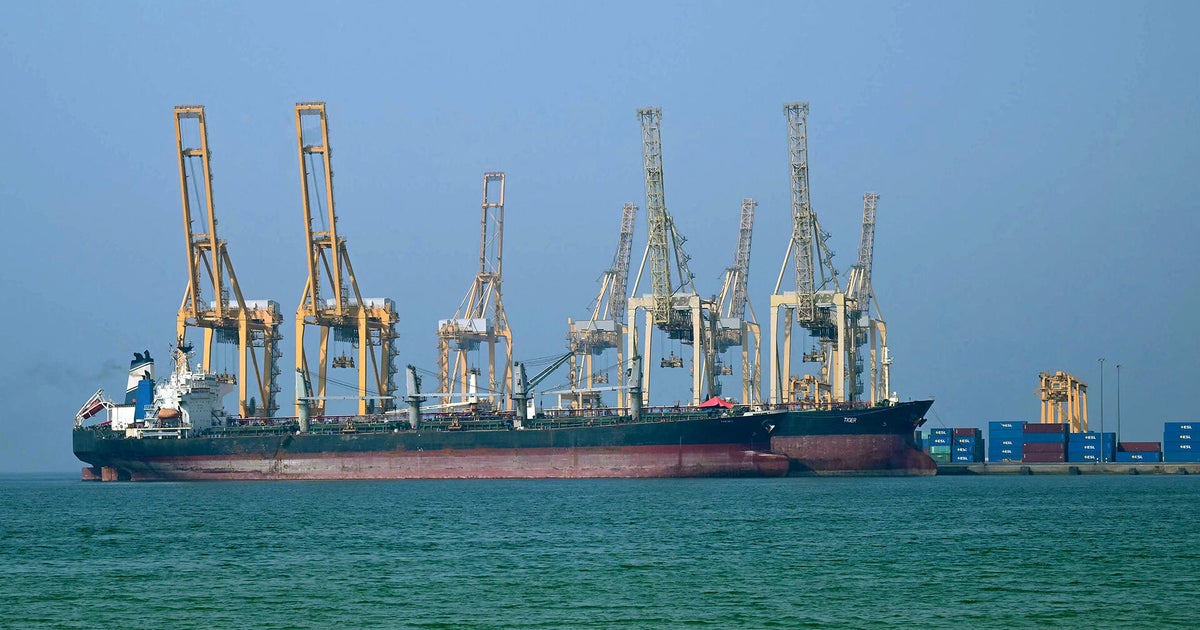
The headlines are celebrating a "breakthrough." They want you to believe that a single French vessel, the CMA CGM Jules Verne, passing through the Strait of Hormuz under the watchful eye of a frigate, signals a return to normalcy in global shipping. They are wrong. This isn't a victory for Western maritime security. It is a choreographed performance that highlights exactly how fragile the global supply chain has become.
While the "lazy consensus" in maritime journalism paints this as a bold defiance of Iranian influence, the reality is far more cynical. Shipping giants aren't "defying" risk; they are pricing in a new era of permanent volatility. If you think a escorted transit means the route is open for business, you don't understand the math of maritime insurance or the physics of modern naval warfare.
The Escort Fallacy
The mainstream narrative suggests that naval escorts are a solution. In reality, they are a logistical nightmare that proves the route is fundamentally broken. When a carrier like CMA CGM requires a multi-million dollar destroyer to babysit a container ship, the "freedom of navigation" has already been lost.
Consider the sheer scale of the mismatch. We are using $2 billion warships to defend against $20,000 loitering munitions and asymmetric shore-based batteries. This is not a sustainable business model for a global economy. Every time a vessel like the Jules Verne makes this trip, it isn't "securing the lane"—it is proving that the lane is now a high-cost, high-risk corridor that only the most desperate or the most subsidized can afford to traverse.
The industry likes to talk about "calculated risk." I’ve sat in boardrooms where executives weigh the cost of a three-week detour around the Cape of Good Hope against the "probability" of a hull breach in the Middle East. The consensus usually lands on a coin flip. That isn't strategy. That's gambling with other people's inventory.
The Myth of Western Deterrence
The competitor's piece frames this as a "First Western European transit" as if the flag on the stern provides a magical shield. It doesn't. Iran and its proxies don't care about the registry of the ship; they care about the leverage the ship provides.
By framing this as a successful "European" move, analysts miss the nuance of the current geopolitical chessboard. This transit happened because it suited the regional players to allow it—for now. It serves as a pressure valve. It keeps the global community from completely pivoting away from the region, which would strip those controlling the chokepoints of their primary source of geopolitical blackmail.
Why the "Safe Passage" Narrative is Dangerous
- Insurance Premiums: Even with an escort, War Risk Surcharges are not dropping. Underwriters aren't fooled by a single successful crossing. They look at the "Threat Environment," which remains at a fever pitch.
- Operational Friction: You cannot run a "Just-In-Time" supply chain when your arrival depends on the schedule of a French Navy frigate.
- The False Sense of Security: Encouraging other vessels to follow suit creates a target-rich environment. One lucky hit on a Suezmax tanker would instantly render the "CMA CGM success story" a historical footnote.
Stop Asking if the Strait is Open
The question itself is flawed. The Strait of Hormuz is "open" the same way a door is "open" in a house on fire. Sure, you can run through it, but why would you want to?
The real conversation should be about the death of the global maritime commons. For decades, we operated under the assumption that the seas were a neutral, safe space for trade. That era ended when commercial vessels became primary targets for state-level political signaling. If you are a logistics director still waiting for the "situation to stabilize," you are failing your shareholders.
The Cost of the "Shortcut"
Everyone looks at the fuel savings of the shorter route. Nobody accounts for the "hidden tax" of geopolitical dependency.
Imagine a scenario where every major shipping line decides to resume Hormuz transits based on this one CMA CGM event. Suddenly, 20% of the world's oil and a massive chunk of East-West TEU (Twenty-foot Equivalent Unit) volume is back in the crosshairs. The "shortcut" becomes a chokehold. By choosing the shorter path, carriers are handing the keys to global inflation to regional actors who have every incentive to turn the lights off the moment they need a seat at the bargaining table.
I have seen companies lose eight-figure sums because they prioritized a five-day shipping advantage over a zero-risk routing. The obsession with the Strait is a relic of 20th-century thinking.
The Brutal Reality of "Freedom of Navigation"
The term "Freedom of Navigation" (FON) has been hijacked. It used to mean the right to transit without interference. Now, it means "the right to transit if you have a big enough gun behind you."
If your business relies on the military of a foreign nation to ensure your product reaches the customer, you don't have a supply chain. You have a hostage situation. CMA CGM’s transit isn't a sign of strength; it’s a public admission that commercial shipping can no longer stand on its own two feet in the region.
The Unconventional Play: Abandon the Chokepoint
The smart money isn't looking for better escorts. The smart money is investing in the radical reconfiguration of trade.
- Permanent Diversification: The Cape of Good Hope isn't a "detour" anymore. It should be the baseline. Any route that passes through a chokepoint controlled by a hostile actor should be treated as a bonus, not a requirement.
- Near-shoring over Sea-shoring: If the cost of protecting a container ship exceeds the profit margin of the goods inside, the logic of globalized manufacturing collapses. We are seeing the return of regional trade blocs because the ocean is no longer a "free" highway.
- Hard-Nosed Insurance Audits: Stop paying for "War Risk" and start investing in redundant inventory. It is cheaper to hold more stock in a local warehouse than it is to pay the ransom of soaring maritime premiums and naval coordination.
The Illusion of Normalcy
The industry is desperate for a "return to normal." They want to believe that the Jules Verne is the first bird of spring. It isn't. It's a scout in a war zone.
By celebrating this transit, we are validating a system where trade is a favor granted by the powerful, rather than a right guaranteed by international law. We are teaching the world that as long as you can harass a ship, you can force the world's largest navies to act as private security for private corporations.
This isn't a victory for Western commerce. It is the blueprint for its eventual exhaustion.
Stop watching the tracking maps for the next ship to make it through. Start watching the maps for the ships that are smart enough to stay away. The "safety" of the Strait of Hormuz is a fiction maintained by people who are too afraid to admit that the old world of effortless global trade is dead.
If you're waiting for the "all clear" signal, you've already missed the exit. The Strait is no longer a shortcut; it's a gamble where the house always wins, and the house isn't located in Marseille or London. It’s located in the coastal batteries and command centers of the people holding the stopwatch on your survival.