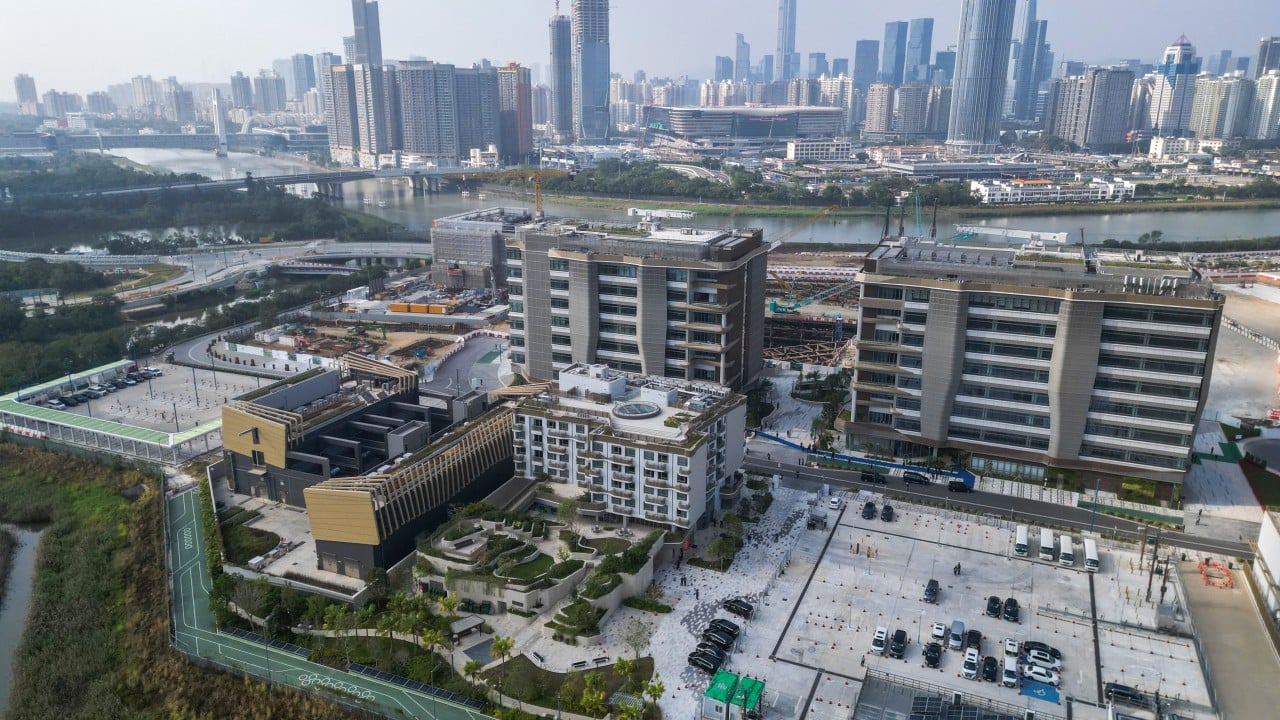
Beijing isn't asking Hong Kong to build a city. It’s asking Hong Kong to stop pretending it’s an island.
The breathless reporting surrounding the Northern Metropolis "fast-track" mandate misses the grim reality of the balance sheet. Most analysts look at the glossy renderings of "Silicon Valley Orient" and see a growth engine. I look at the capital flow and see a desperate attempt to fix a forty-year structural failure in under a decade.
For thirty years, Hong Kong’s elite treated the border with Shenzhen like a moat to keep property prices high. Now that the moat is drying up, they’re trying to build a bridge with borrowed money and optimistic slogans. The consensus says this integration will "boost" the economy. The truth? It’s a forced liquidation of the old Hong Kong model to pay for a future the city isn't yet qualified to inhabit.
The Tech Hub Myth
The most dangerous lie being circulated is that building 30,000 hectares of infrastructure will magically produce a tech ecosystem. This is "Field of Dreams" economics, and it usually ends in empty concrete shells.
I’ve watched developers burn billions trying to manufacture "innovation districts." Innovation isn't a zoning requirement. It’s a byproduct of cheap failure and high density. The Northern Metropolis plans currently prioritize high-end residential blocks and "prestige" office space. That is the exact opposite of what a startup needs.
- The Shenzhen Reality Check: Shenzhen didn't become a powerhouse because the government built fancy towers. It won because it was cheap, gritty, and allowed for rapid prototyping.
- The Hong Kong Constraint: Hong Kong’s cost of living is a barrier to entry that no amount of government subsidies can offset. If a software engineer has to spend 60% of their salary on a 200-square-foot flat, they won't stay in the Northern Metropolis. They’ll move to Nanshan or Dongguan.
We are told this project will create a "dual engine" for growth. In reality, it risks becoming a subsidized dormitory for people who actually do the high-value work across the border.
The Sovereignty of Capital
People ask: "Will the Northern Metropolis help Hong Kong compete with Singapore?"
That is the wrong question. Singapore is a city-state with a sovereign wealth fund and a coherent industrial policy. Hong Kong is an enclave currently undergoing a radical hardware update to fit a different operating system.
The competitor's narrative suggests this is about "integration." Call it what it is: The Great Convergence. Beijing’s directive to "fast-track" isn't about local prosperity; it's about national security and logistics. The goal is to make the physical boundary between the SAR and the Mainland invisible. From a macro perspective, this makes sense. From a local investment perspective, it destroys the "scarcity premium" that made Hong Kong real estate the most expensive on earth.
If you own property in Central or Mid-Levels, the Northern Metropolis is a long-term threat. You are no longer betting on a unique gateway; you are betting on a suburb of a much larger megacity. When the border dissolves, so does the justification for Hong Kong’s distorted price-to-earnings ratios.
Dismantling the Fiscal Fantasy
The math behind the Northern Metropolis is terrifying. We are talking about an estimated cost of HK$1 trillion.
In a high-interest-rate environment, with a shrinking tax base and a property market that has lost its "perpetual growth" mojo, how does the math work? The government suggests land sales will cover it.
- Fact: Land sale revenues hit a multi-year low in 2024.
- Fact: Private developers are sitting on their hands because they can't make the margins work at current valuations.
The "lazy consensus" assumes that because Beijing wants it, it will be profitable. This ignores the friction of private capital. If the government has to foot the entire bill through bond issuance, they are effectively mortgaging the city’s fiscal reserves to build a competitor to their own existing CBD.
Imagine a scenario where the government builds the infrastructure, but the private sector refuses to build the superstructures because the ROI isn't there. You end up with the world’s most expensive park.
Stop Asking About "Timelines"
The media focuses on whether the first phase will be done by 2027 or 2030. It doesn't matter.
The real question is: Who is going to live there?
Hong Kong is facing a demographic crunch. The workforce is aging. The "talent" being recruited from the Mainland often uses Hong Kong as a residency waypoint rather than a permanent home. To make the Northern Metropolis work, the city needs a massive influx of middle-class professionals who are willing to buy into the vision.
Currently, the vision is a series of PowerPoint slides.
To fix this, the city needs to do something it hates: Destroy the property monopoly. Unless the Northern Metropolis offers land at prices that are competitive with the Mainland, the "integration" will be one-way. Capital and talent will continue to flow toward the efficiency of Shenzhen, while Hong Kong provides the legal and financial "plumbing" for a fee. That’s not a metropolis; it’s a utility company.
The Strategy for Disruption
If I were advising the developers and policymakers, I’d tell them to stop trying to build a "New Central." We don't need more glass towers and luxury malls.
- Industrialize the Land: Abandon the obsession with "Grade A" offices. Build "Grade C" flexible spaces—raw, cheap, and modular.
- Unlink from the HKD: Create a special economic zone within the Metropolis where cross-border digital yuan transactions are the default for R&D projects.
- Admit the Downside: Stop pretending this won't hurt the existing property market. It will. Cannibalization is necessary for survival.
The Northern Metropolis isn't an "extension" of Hong Kong's success. It is a confession that the old model is dead. The "fast-track" isn't an invitation to grow; it’s an order to adapt before the city becomes a museum of the 20th-century financial era.
Stop looking at the maps. Look at the capital flows. The money is telling you that the border is already gone.
Build it fast, or don't build it at all, but stop calling it a "boost." It’s an evacuation from an unsustainable past.