The narrative is dead simple. It is also completely wrong.
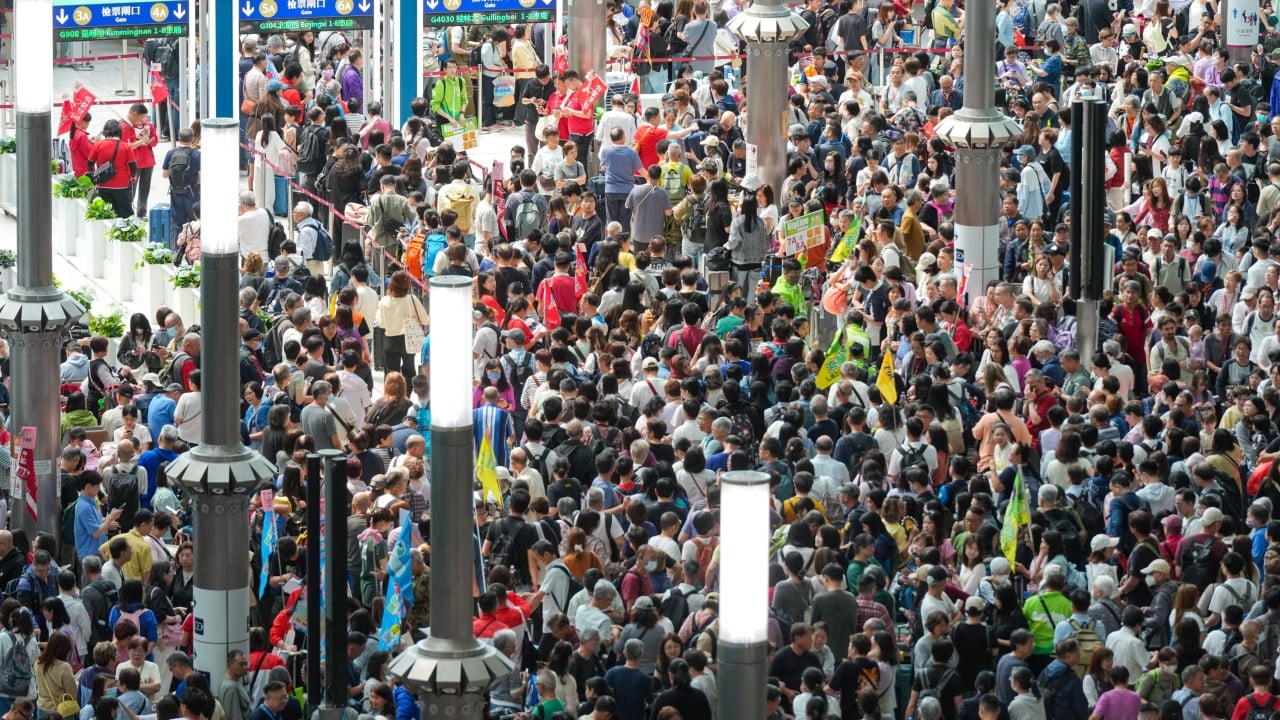
Mainstream media outlets are currently obsessed with the "northbound" wave. They paint a picture of the savvy Hong Kong traveler—the middle-class hero dodging $12 lattes in Central to find "value" in Shenzhen or Guangzhou. They talk about the high-speed rail like it is a magical portal to a cheaper, safer life.
They call it a victory for the wallet. I call it the commodification of boredom.
If you believe the headlines, Hong Kongers are flocking across the border because the mainland is "affordable" and "safe." This is a lazy analysis that ignores the psychological rot underneath. People are not just chasing cheaper dim sum; they are fleeing a city that has lost its competitive edge, seeking refuge in a curated, algorithmic experience that mimics excitement without the soul.
The Affordability Myth is a Trap
Let’s talk about the math. Yes, your purchasing power doubles the moment you cross into Futian. But "affordability" is the battle cry of the stagnant.
When a society prioritizes low-cost consumption over high-value creation, it enters a death spiral. I have watched retail empires in Tsim Sha Tsui crumble not because the products are bad, but because the local consumer has been trained to value "cheap" over "extraordinary."
The "northbound" movement is a race to the bottom. You save $40 on a hotpot dinner but spend four hours in transit and border queues. You are trading the most valuable asset you own—time—for a marginal gain in caloric intake.
- The Hidden Cost: Depreciation of the local ecosystem. Every dollar spent in a Shenzhen mall is a dollar pulled from a Hong Kong entrepreneur’s pocket.
- The Quality Illusion: We confuse "new" with "better." Shenzhen’s malls are shiny because they were built yesterday. Hong Kong’s streets are grit and history. Choosing the former because it has better air conditioning is a failure of taste.
Safety as a Sterile Cage
The argument that travelers choose the mainland for "safety" is a fascinating bit of cognitive dissonance.
Hong Kong remains one of the safest urban environments on the planet. When people talk about "safety" in the context of the mainland, they aren't talking about a lack of crime. They are talking about predictability.
The mainland travel experience is friction-less because it is heavily digitized and surveilled. Everything is inside an app. Everything is tracked. For the modern, exhausted worker, this lack of friction feels like safety. In reality, it is a sterile cage. True travel should have rough edges. It should require navigating the unknown. By choosing the "safe" path, Hong Kongers are losing the ability to interact with a world that isn't pre-rendered by a tech giant’s API.
The Algorithmic Weekend
Go to any popular "check-in" spot in Sam Shui Po or then compare it to a trendy cafe in Changsha. You will see the exact same behavior: the hunt for the "Xiaohongshu" shot.
The competitor’s take suggests this is a vibrant cultural exchange. It isn't. It is the homogenization of desire. We are seeing the rise of the Algorithmic Weekend.
- Search: Find what is trending on social media.
- Travel: Take the high-speed rail (the "seamless" lie).
- Consume: Eat the exact same cheese-topped tea as everyone else.
- Validate: Post the photo.
- Repeat.
This isn't exploration. It’s a repetitive stress injury for the soul. We are witnessing the death of the "flâneur"—the urban explorer who wanders without a map. Now, the map (and the algorithm) dictates every step.
Why Hong Kong Retail Deserves to Suffer
I am not letting the local players off the hook. If you’ve spent five minutes in a Causeway Bay mall lately, you know why people are leaving.
The service is often surly. The prices are extortionate. The "luxury" experience feels like a relic of 2005. Hong Kong landlords have spent decades squeezing tenants, who in turn squeeze customers. They relied on a captive audience that no longer exists.
The mainland’s "Superior Service" isn't a miracle; it’s a standard business tactic. While Hong Kong staff act like they are doing you a favor by taking your order, Shenzhen staff are trained to treat you like a deity because they actually want your repeat business.
The disruption we are seeing is a brutal, necessary market correction. If Hong Kong wants its people back, it needs to stop being a high-priced museum of 20th-century retail and start offering something the mainland can’t: unfiltered, chaotic authenticity.
The False Narrative of Convenience
The "one-hour living circle" is a marketing slogan, not a reality.
Imagine a scenario where you want to go from Central to a specific gallery in Shenzhen. Between the MTR, the border crossing (even with E-channel), the health declarations (when active), and the sheer scale of mainland cities, you are looking at a three-hour odyssey.
Calling this "convenient" is a lie we tell ourselves to justify the trip. It is a grueling commute disguised as a holiday. We have become so desperate for a change of scenery that we are willing to endure a transit experience that would make a Victorian coal miner weep, all for the sake of a $20 massage.
The Sophistication Gap
There is a growing divide in how we define a "good time."
The competitor article argues that "safety and affordability" are the primary drivers. This assumes the traveler is a rational, budget-conscious robot. It misses the Sophistication Gap.
The mainland has mastered the "middle-brow" experience. It is perfect for families and the "Gen Z" crowd looking for high-concept, low-cost thrills. But it lacks the deep, textured sophistication of a global hub. Hong Kong’s strength was always its ability to blend the high and the low—a Michelin-starred meal three blocks away from a wet market.
By pivoting entirely to the mainland for leisure, the Hong Kong public is essentially saying they no longer value that complexity. They want the "Easy Mode" of life.
The Actionable Truth
If you are a business owner in Hong Kong, stop whining about the border. Your customers aren't leaving because of the exchange rate. They are leaving because you are boring.
If you are a traveler, recognize that your "affordable" trip has a massive hidden tax on your culture and your autonomy.
- Stop chasing the "Check-in": If an app told you to go there, don't.
- Invest in the Friction: Go somewhere that doesn't accept your primary payment app. Talk to a human. Get lost.
- Demand Better Locally: If a Hong Kong restaurant gives you garbage service, walk out. Force the local market to evolve or die.
The northbound surge isn't a travel trend. It’s a surrender. We are trading the vibrant, difficult, and unique identity of our city for a subsidized, predictable version of "fun."
Saving twenty bucks on dinner isn't worth losing your grip on what makes a city worth living in. Stop being a tourist in your own backyard and start being a citizen who demands a better reality.
The border isn't a gateway to a better life; it’s a mirror reflecting our own local failures. Look into it and decide if you like what you see.