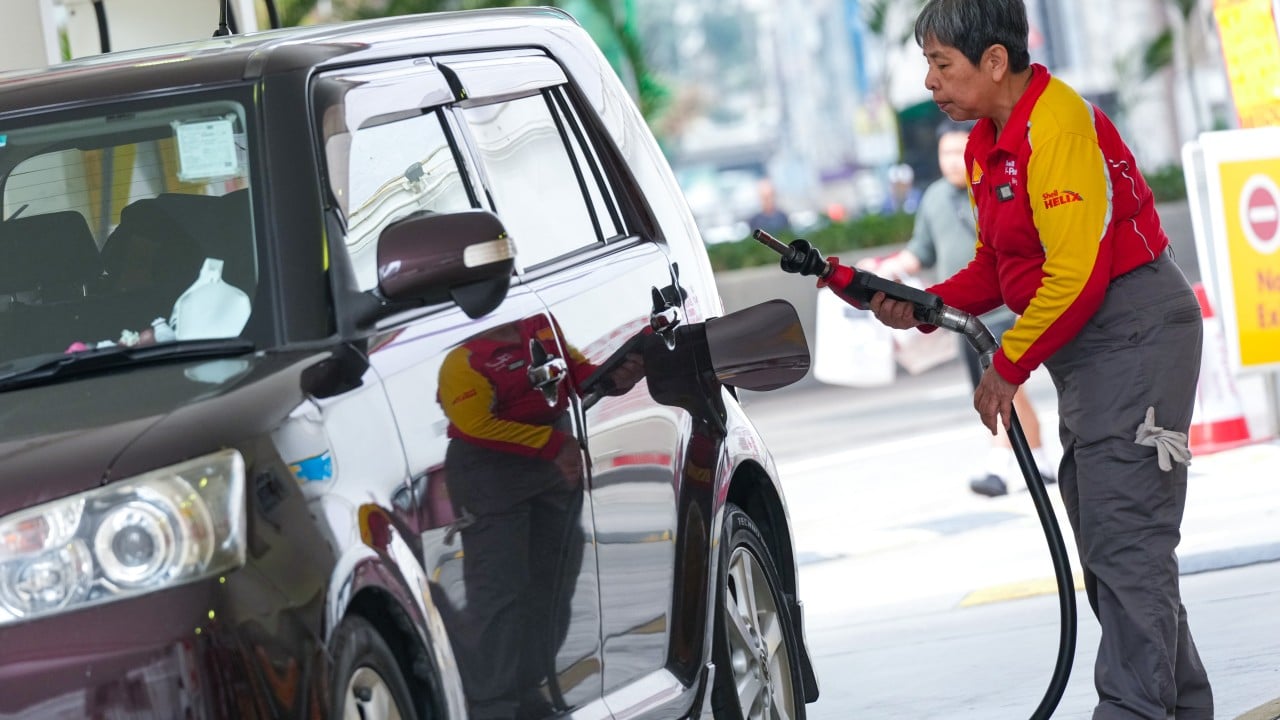
You’ve seen the lines at the Shell or Esso stations in Tuen Mun or Yuen Long. They’re long, and the mood is usually pretty grim. It’s no secret that Hong Kong has the most expensive petrol in the world. But lately, things have crossed the line from "annoying" to "unsustainable." With global oil prices hitting records and pump prices in the city hovering around HK$31 to HK$33 per liter, the math just doesn't work for the average family anymore.
That’s why thousands of drivers are doing something that seemed like a hassle just a few years ago: they’re crossing the border to fill up. Since the "Northbound Travel for Hong Kong Vehicles" scheme kicked in, the Hong Kong-Zhuhai-Macao Bridge (HZMB) has turned into a pipeline for personal savings.
The Brutal Math of the Pump
Let’s be real. If you’re paying HK$32 per liter in Hong Kong and you see that a liter of 95-octane petrol in Shenzhen or Zhuhai is roughly HK$9 or HK$10, you aren't just saving a few bucks. You're cutting your costs by two-thirds. A standard 50-liter tank costs about HK$1,600 to fill in Central. In Guangdong, that same tank is roughly HK$500.
Think about that for a second. You save over HK$1,000 on a single trip. Even with the bridge tolls and the time spent driving, if you’re heading north for dim sum or a weekend grocery run at Sam’s Club anyway, the petrol is essentially free money.
The gap has widened because of a perfect storm. The Middle East conflict has spiked Brent crude prices, and while the mainland government caps retail prices to protect consumers, Hong Kong’s market is basically a free-for-all for the big oil companies. The government keeps a fixed duty of HK$6.06 per liter, which hasn't moved in decades, but the "pre-discount" prices are what really kill you.
Northbound Travel is the Secret Weapon
The Northbound Travel scheme changed the game. Before this, you needed those expensive "dual plates" to drive across. Now, you just need a permit and some patience with the booking system. Since July 2023, more than 100,000 private cars have signed up.
Most people I talk to aren't just going for the fuel. They go for the cheaper car washes, the cheaper detailing, and the cheaper groceries. But the fuel is the anchor. It’s the thing that justifies the trip.
If you’re planning to do this, don't just wing it. The stations right across the bridge know the Hong Kong crowd is coming. I’ve seen queues at stations in Gongbei that rival the wait for a new iPhone.
What You Need to Know Before You Go
- Check the Octane: Mainland China uses different numbering. Their 95 is roughly equivalent to our "standard" unleaded, while their 98 is the premium stuff.
- The Insurance Trap: You need the "unilateral recognition" insurance. It’s easy to get now, but don't forget it. If you get into a scrape in Zhuhai without it, you're in for a nightmare.
- Customs is Watching: Don't get cute with extra containers. Customs officers are currently cracking down on "modified" tanks and people carrying jerry cans. If they think you're smuggling fuel to sell in HK, they’ll seize your car.
Why the City Won't Fix It
You might wonder why the Hong Kong government doesn't just lower the fuel tax. Ringo Lee from the Automobile Association has been shouting about this for years. He’s suggested a HK$2 or HK$3 cut. But honestly? It’s unlikely. The government is pushing for Electric Vehicles (EVs). They want us out of petrol cars entirely.
High fuel prices are a "gentle" nudge to make you buy a Tesla. If you're a commercial driver—someone driving a van or a truck—you're stuck. You can’t take advantage of the Northbound scheme because it's for private cars. Diesel is technically duty-free in Hong Kong, but the pump prices are still nearly HK$31. That's pure profit margin for the oil companies, and it’s hitting the logistics sector hard.
Making the Trip Worth It
If you’re going to make the run, maximize your time. Don't just drive to the first station you see.
- Use Apps: Use apps like "Oil Price Watch" for HK and local mainland maps like Amap (Gaode) to find the best prices in Guangdong.
- Service Your Car: Mechanics in Zhuhai or Zhongshan charge a fraction of what you’ll pay in Kwun Tong. Get your oil changed and your tires rotated while you’re there.
- Time Your Crossing: Avoid Friday evenings and Sunday nights. The HZMB becomes a parking lot. Tuesday or Wednesday trips are the way to go if you have the flexibility.
The reality is that as long as the price gap stays this wide, the "Northbound" trend isn't a fad; it’s a survival strategy. If you haven't applied for your permit yet, you're basically volunteering to pay a "laziness tax" every time you visit a local station.
Apply for your Northbound Travel permit through the Transport Department website this week. It takes time to process, and with the way oil prices are heading, you’ll want that option in your back pocket before the next price hike.


