The Price of the Morning Commute
Rain streaks the windshield of a 2018 Ford F-150 idling at a Shell station in Pennsylvania. The driver, let’s call him Elias, stares at the digital display. The numbers on the pump climb with a relentless, rhythmic clicking that feels less like a transaction and more like a heartbeat. Elias isn’t thinking about geopolitical shifts or the complexities of the Permian Basin. He is thinking about the twelve dollars that just vanished from his grocery budget because the price per gallon ticked up another twenty cents overnight.
Energy is the ghost in the machine of the American dream. It is the invisible tax on every gallon of milk, every Amazon delivery, and every cross-country flight to see a dying relative. When those prices spike, the pressure doesn't just hit the wallet; it tightens the chest.
In Washington, the response to Elias’s anxiety arrived with a pen stroke. The White House announced a massive release from the Strategic Petroleum Reserve (SPR). The goal is simple: flood the market, drown the high prices, and give the American consumer room to breathe. But beneath the surface of this political maneuver lies a high-stakes gamble involving the world’s largest emergency supply of crude oil.
A Fortress Beneath the Gulf
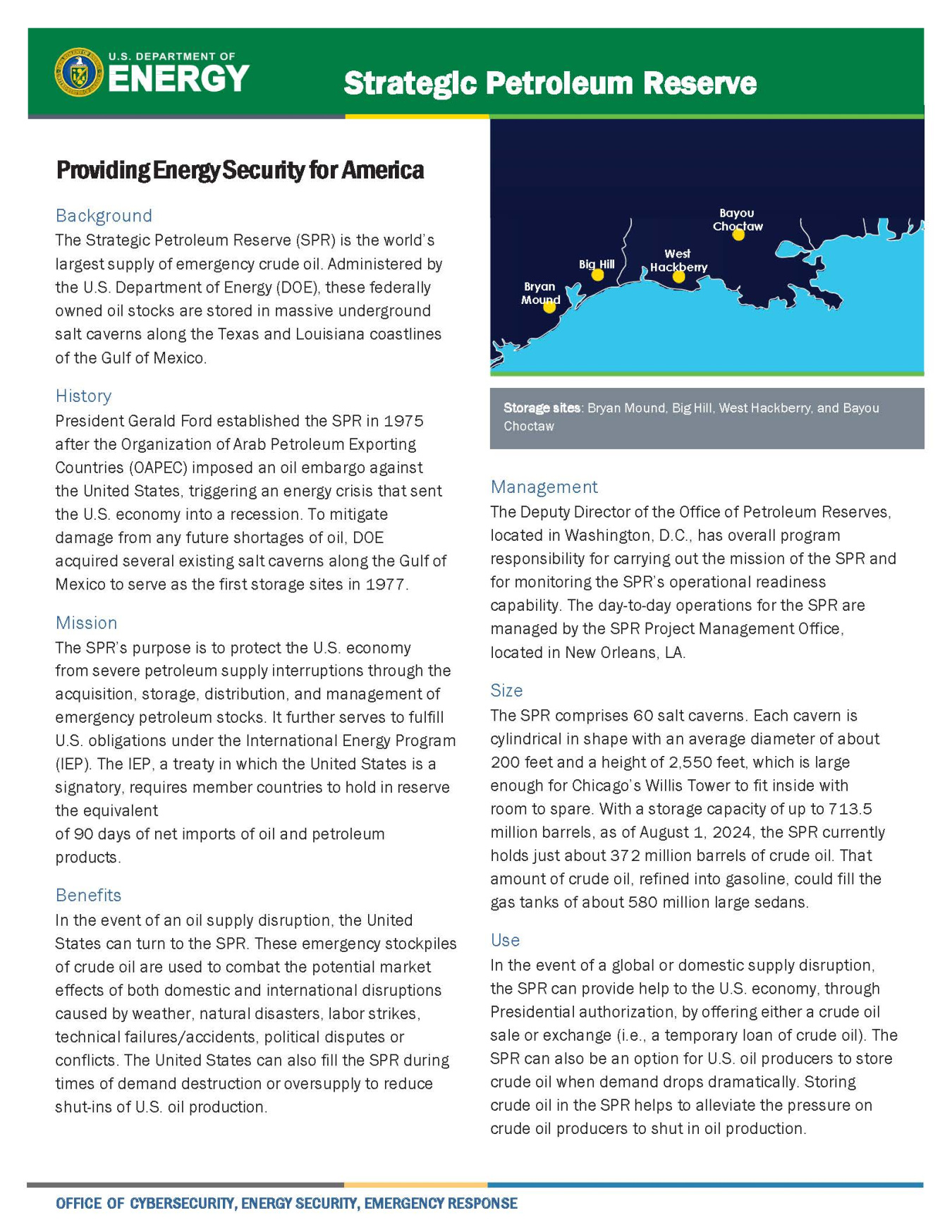
To understand the weight of this decision, you have to look down. Deep beneath the coastline of Texas and Louisiana exists a series of massive, man-made salt caverns. These aren't just storage tanks. They are hollowed-out cathedrals of brine and shadow, carved miles into the earth’s crust.
Created in the wake of the 1973 oil embargo, the SPR was designed as a shield. It was the "break glass in case of emergency" fire extinguisher for the national economy. Its purpose was to protect the United States from total collapse if foreign supply lines were severed by war or natural disaster. It was never intended to be a thermostat for the local gas station.
When the President decides to tap these reserves, he is essentially dipping into the nation's savings account to pay for a month of expensive groceries. The immediate effect is a localized cooling of the market. More supply generally equals lower prices. But the oil in those caverns is finite. Every barrel that flows out to stabilize the price today is a barrel that won't be there when a true catastrophe—a global conflict or a catastrophic hurricane—hits the Gulf Coast.
The Invisible Math of the Pump
Market psychology is a fickle beast. Traders in Chicago and London don't just look at how much oil is being produced; they look at the signals sent by world leaders. By releasing millions of barrels from the SPR, the administration is signaling a "price cap" mentality.
Consider the ripple effect.
- The announcement hits the wires.
- Futures traders anticipate a surplus and begin selling.
- The wholesale price of gasoline drops.
- Elias finally sees the price at his local station dip by fifteen cents.
It feels like a victory. For a few weeks, the tension in the Pennsylvania household eases. But the oil market is a global organism. While the U.S. releases its reserves, other players—the OPEC+ alliance, for instance—can simply choose to tighten their own taps. It is a giant, slow-motion game of poker played with the world’s most essential commodity. If the private sector sees the government artificially suppressing prices, they may be less inclined to invest in new drilling. Why spend billions to find more oil if the government is going to undercut your price with its own rainy-day fund?
The Ghost of 700 Million Barrels
At its peak, the SPR held over 700 million barrels of oil. It was a staggering figure, a testament to American caution. In recent years, however, that level has fluctuated wildly. We are currently seeing some of the lowest levels in decades.
Replenishing the reserve is not as simple as filling a tank at the gas station. The government has to buy that oil back from the open market. This creates a strange paradox: the administration releases oil to lower prices now, but eventually, they must become a massive buyer, which could drive prices right back up when they try to refill the caverns.
Imagine a baker who sells his flour at a loss today to keep his neighbors happy, knowing he will have to buy more flour next week at a premium just to keep his oven running. It is a cycle of temporary relief followed by long-term vulnerability.
The Weight of the Choice
Critics argue that this is a short-term bandage on a deep structural wound. They suggest that the real solution lies in domestic production, pipelines, and a more predictable regulatory environment. Proponents, however, argue that the "emergency" is happening right now in the checkbooks of millions of Americans. If families can't afford to get to work, the economy stalls anyway.
There is no easy answer. There is only the trade-off.
The decision to tap the reserve is a testament to the sheer power of energy over our lives. It dictates where we can live, what we can eat, and how much we can save for our children’s future. It is the ultimate leverage.
As the valves open and the crude begins its journey from the dark silence of the Louisiana salt flats into the roaring engines of the American interstate, the immediate crisis may fade. The clicking at the pump might slow down. Elias might find that extra twelve dollars in his pocket at the end of the week.
But the caverns are a little emptier today. The shield is a little thinner. We are trading the security of tomorrow for the comfort of today, hoping that the "real" emergency—the one we can't solve with a pen stroke—never actually arrives. The sun sets over the Gulf, and somewhere deep underground, the echo of the departing oil rings through the hollow salt, a reminder that every intervention has a price that eventually comes due.