Donald Trump is threatening to sever all trade ties with Spain, an unprecedented move that could upend the transatlantic economy. The ultimatum follows Madrid’s refusal to permit U.S. forces to use the Rota and Morón de la Frontera air bases for operations against Iran. By invoking the International Emergency Economic Powers Act (IEEPA), the Trump administration is attempting to transform a localized military disagreement into a full-scale economic blockade. This is not just a spat over airfields. It is a fundamental collision between American executive power and European sovereignty.
The Triggering Event in Andalusia
The friction began at the Rota Naval Station and Morón Air Base in southern Spain. These sites are the nerve centers of U.S. power projection into the Mediterranean and the Middle East, operating under a 1988 bilateral defense agreement. However, they remain under Spanish sovereignty. When the U.S. and Israel launched "Operation Midnight Hammer" against Iran, Prime Minister Pedro Sánchez’s government issued a blunt refusal. Madrid argued that any operation outside the UN Charter or existing bilateral frameworks would not be authorized.
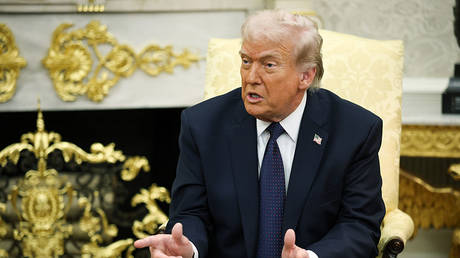
This was a logistical nightmare for the Pentagon. Within hours of the announcement, 15 U.S. aircraft, including essential Boeing KC-135 Stratotankers, were forced to relocate to Ramstein, Germany. For a U.S. president who views military alliances as transactional service contracts, this was a breach of duty. "Spain has been terrible," Trump told reporters during a meeting with German Chancellor Friedrich Merz. He then directed Treasury Secretary Scott Bessent to "cut off all dealings" with Spain.
The IEEPA Gambit
The legal mechanism for this threat is the 1977 International Emergency Economic Powers Act. While the Supreme Court recently struck down the administration’s ability to impose broad global tariffs under this act, the White House maintains that the ruling actually "reaffirmed" the power to impose a total embargo on a specific nation.
To execute this, the President must declare a national emergency, identifying Spain as an "unusual and extraordinary threat" to U.S. national security. Legal scholars are skeptical. It is difficult to argue that an ally's adherence to international law and its own sovereignty constitutes a direct threat to the United States. Yet, Secretary Bessent has already signaled that the U.S. Trade Representative and the Department of Commerce are initiating investigations to bypass these legal hurdles.
Economic Interdependence vs. Political Volatility
Spain is not an easy target for an embargo. It is the world’s top exporter of olive oil, but the real pain would be felt in the industrial sector. In 2025, the U.S. held a $4.8 billion trade surplus with Spain, exporting $26.1 billion in goods while importing $21.3 billion.
- Automotive and Aerospace: Major U.S. manufacturers have deep roots in Spain, relying on its chemical and steel production.
- Energy: Spain serves as a critical entry point for liquefied natural gas (LNG), much of which comes from American shores.
- Investment: Spain was recently ranked as the 11th-largest investor in the U.S. market.
A total cutoff would force U.S. companies to scramble for new supply chains overnight. It would also trigger an immediate response from the European Union. Since the EU negotiates trade as a single bloc, an embargo on Spain is effectively an embargo on the entire Union. German Chancellor Friedrich Merz has already warned the White House that "there is no way to treat Spain particularly badly" without involving the rest of Brussels.
The 5 Percent NATO Friction
The base dispute is the "final straw" in a relationship that has been deteriorating for over a year. The U.S. has been pressuring NATO members to increase defense spending to 5% of their GDP, a massive leap from the previous 2% target. Spain, under the leadership of its Socialist government, has resisted.
Madrid reached the 2% mark at the end of 2025, but Sánchez has argued that going further would gut the country's welfare state. Trump views this as freeloading. By combining the base access issue with the spending grievance, the administration is attempting to isolate Spain as the "weak link" in European defense.
Sovereignty at a Crossroads
Spain’s Foreign Minister, José Manuel Albares, has remained firm. He insists that the bases are not—and will not be—used for unilateral military actions that lack a collective international mandate. This position has made Spain an outlier among major European powers. While the UK and Germany eventually aligned with the U.S.-led strikes after Iranian retaliatory moves, Spain has chosen the path of "balance and moderation."
This stance is popular at home but carries immense risk. If the U.S. proceeds with the embargo, the Spanish government will have to rely on its internal resources to support affected sectors. They have already stated they have the "financial and institutional tools" to absorb the shock. Whether those tools can withstand the weight of the world’s largest economy remains to be seen.
The standoff now sits in a tense quiet. The U.S. aircraft have left Andalusian soil, and the trade investigations have begun. If the White House moves from threats to executive orders, the "Midnight Hammer" operation may be remembered less for its targets in Iran and more for the permanent fracture it caused in the Western alliance.