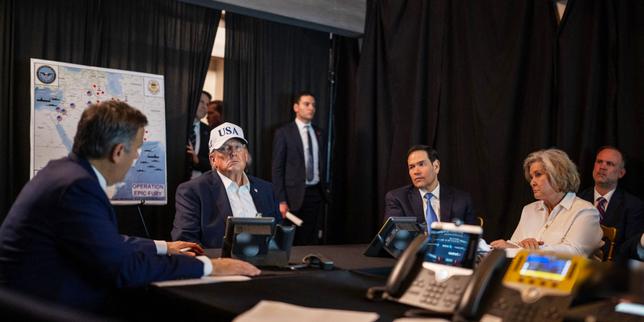
Donald Trump is betting the house on a bluff that every professional poker player knows is dangerous. He believes he can dismantle a hardened, violent regime without putting a single boot on the ground. This strategy relies entirely on the psychological weight of American prestige and the threat of economic strangulation, assuming that the mere shadow of U.S. power will force a total surrender. History, however, suggests that blood-soaked autocracies rarely fold just because the neighborhood bully starts counting his chips.
The core of this gamble lies in a fundamental misunderstanding of how survivalist regimes operate. When a ruling class perceives an existential threat, they don't look for an exit ramp; they dig a deeper bunker. By signaling that military intervention is off the table, the U.S. inadvertently gives these leaders a clear roadmap for resistance. They know the ceiling of the pressure. They know exactly how far the squeeze will go.
The Illusion of Pressure Without Presence
Washington has fallen in love with the idea of "remote-control" regime change. The theory is seductive because it promises total victory with zero casualties. You apply secondary sanctions, you freeze the central bank’s assets, and you wait for the starving population to do the dirty work of a revolution. It sounds clean on paper. In reality, it is a slow-motion disaster that often strengthens the very people it aims to topple.
Sanctions are not a scalpel. They are a sledgehammer that hits the middle class and the vulnerable while the inner circle of a regime builds a black-market empire. We have seen this in Tehran, Caracas, and Pyongyang. The elite don't lose their mansions; they just find new ways to smuggle champagne while the local currency evaporates. When the U.S. declares it will not use force, it removes the only credible deterrent that keeps these actors from escalating their own violence against their citizens.
The Credibility Gap in Maximum Pressure
For a threat to work, the target must believe the threat will be executed. Trump’s brand of diplomacy is built on the "Madman Theory"—the idea that if the world thinks you are volatile enough to do anything, they will give you everything. But the "Madman" loses his edge the moment he explicitly rules out his most effective weapon.
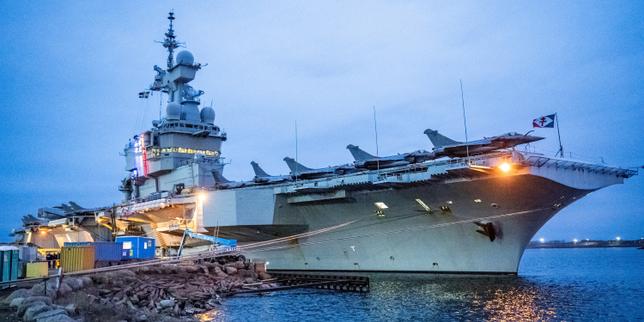
If you tell a dictator you will never invade, you have just handed him a shield. He can now pivot his entire security apparatus toward internal repression. He no longer has to worry about a carrier strike group; he only has to worry about his own disgruntled colonels. And history shows that a well-funded secret police can hold a country hostage for decades, regardless of how many trade embargoes are in place.
The Digital Fortress of the Modern Autocrat
We are no longer in the era where cutting off a phone line or seizing a radio station could spark a coup. Modern regimes have mastered the art of digital survival. They use sophisticated surveillance tech, often imported from other authoritarian hubs, to map out dissent before it even reaches the streets. This makes the "uprising" part of the U.S. strategy almost impossible to achieve.
When the administration claims it can "overturn" a regime through financial isolation, it forgets that these governments are now part of a parallel global economy. They trade in decentralized currencies, use encrypted networks for their shadow banking, and rely on a network of "neutral" countries to wash their money. The U.S. Treasury is a powerful entity, but it is not omnipotent. The more we weaponize the dollar, the faster our enemies—and even some of our friends—work to build a world where the dollar doesn't matter.
Why Bread Riots Fail to Topple Dictators
The assumption that economic pain leads to political change is a persistent myth in Western foreign policy. In reality, desperate people are rarely revolutionary; they are too busy trying to find their next meal. Revolution requires a degree of organization, communication, and hope—all of which are systematically dismantled by a regime under siege.
A "bloodthirsty" regime, as the current rhetoric describes it, views the suffering of its people as a tool of control, not a reason to resign. By starving the country of resources, the U.S. might actually be making the population more dependent on the regime’s ration cards. This creates a perverse incentive structure where the only way to eat is to stay loyal to the party.
The Strategic Void of Isolationism
There is a glaring contradiction in wanting to project strength while withdrawing from the world stage. You cannot be the world’s ultimate arbiter if you are constantly looking for the nearest exit. This "America First" approach creates a power vacuum that is immediately filled by regional powers with much darker agendas.
- Regional Hegemons: When the U.S. steps back, local players stop asking for permission. They start building their own spheres of influence, often through direct military aggression that the U.S. then has to deal with anyway.
- Intelligence Blind Spots: Without a physical presence or deep engagement, our intelligence on the ground withers. We end up making policy based on what we see on satellite feeds and social media, which is a recipe for catastrophic miscalculation.
- The Erosion of Alliances: No one wants to be the junior partner to a country that might leave them hanging at the first sign of trouble. If our allies don't trust our commitment, they will start making their own side deals with our enemies.
The idea that we can manage global security through a series of transactional "deals" ignores the messy reality of human history. Ideology, religion, and historical grievances don't fit into a spreadsheet. They don't care about your quarterly trade deficit.
The Cost of a Failed Bluff
What happens when the regime doesn't collapse? What happens when the sanctions have been at 100% for three years and the dictator is still sitting in the palace, more defiant than ever? At that point, the U.S. has two choices: admit defeat and lift the sanctions, which looks like a humiliation, or escalate to the very military intervention it promised to avoid.
This is the trap. By ruling out troops early, the administration creates a situation where the only way to "win" is to eventually use them. It is a paradox of power. To keep the peace, you must be genuinely prepared for war. If you broadcast your unwillingness to fight, you make the fight inevitable.
The New Face of Warfare is Not Commercial
Trump views foreign policy as a real estate negotiation. He thinks every leader has a price and every country is just a company waiting for a hostile takeover. This is a category error. A sovereign state, especially one led by a revolutionary or religious zealot, does not operate on a profit-and-loss statement. They operate on power, legacy, and survival.
You cannot "buy out" a regime that believes its mission is divinely or historically ordained. You cannot threaten the "bottom line" of a man who is willing to let his entire population live in the dark to stay in power. This is the fundamental flaw in the "poker" analogy. In poker, you are playing with chips you can afford to lose. In geopolitics, the chips are human lives and the stability of entire continents.
The Tech Gap and the Future of Control
The U.S. still thinks it holds the "high tech" cards, but that lead is shrinking. Our adversaries are using AI to track dissidents, blockchain to bypass sanctions, and cyber warfare to strike at our domestic infrastructure without firing a shot. While we are debating trade tariffs, they are building a digital iron curtain.
If the U.S. wants to overturn a hostile regime, it needs more than just a loud microphone and a pen to sign executive orders. It needs a comprehensive strategy that includes:
- Subversive Technology: Providing citizens with uncensored, satellite-based internet that the regime cannot shut down.
- Diplomatic Encirclement: Not just shouting at the regime, but making it impossible for their neighbors to support them.
- Credible Deterrence: Keeping the military option visible and ready, even if it is the last resort.
Without these elements, the rhetoric of "overthrowing" a regime is just noise. It is a performance for a domestic audience that does nothing to change the reality on the ground.
The world is watching this gamble with a mix of fear and fascination. If the bluff works, it will rewrite the rules of international relations. But if it fails—and the historical odds are heavily stacked against it—the U.S. will find itself more isolated than the regimes it sought to destroy. You cannot win a game of life and death by pretending the stakes don't exist. You have to be willing to sit at the table, and you have to be willing to stay until the end. Anything else is just a expensive way to lose.
Stop looking at the map and start looking at the people who live there. They are the ones who pay the price when a superpower decides to play games with their future. If you want to change a country, you have to engage with it, not just scream at it from across an ocean. The "empty boots" strategy is not a masterstroke; it is an abdication of responsibility disguised as a tactic.
Check the history of the last fifty years. Every time we thought we could fix a problem with a few signatures and a cold shoulder, we ended up back in the same spot, five years later, with a much bigger problem on our hands. The bluff is called. Now, show us the cards.