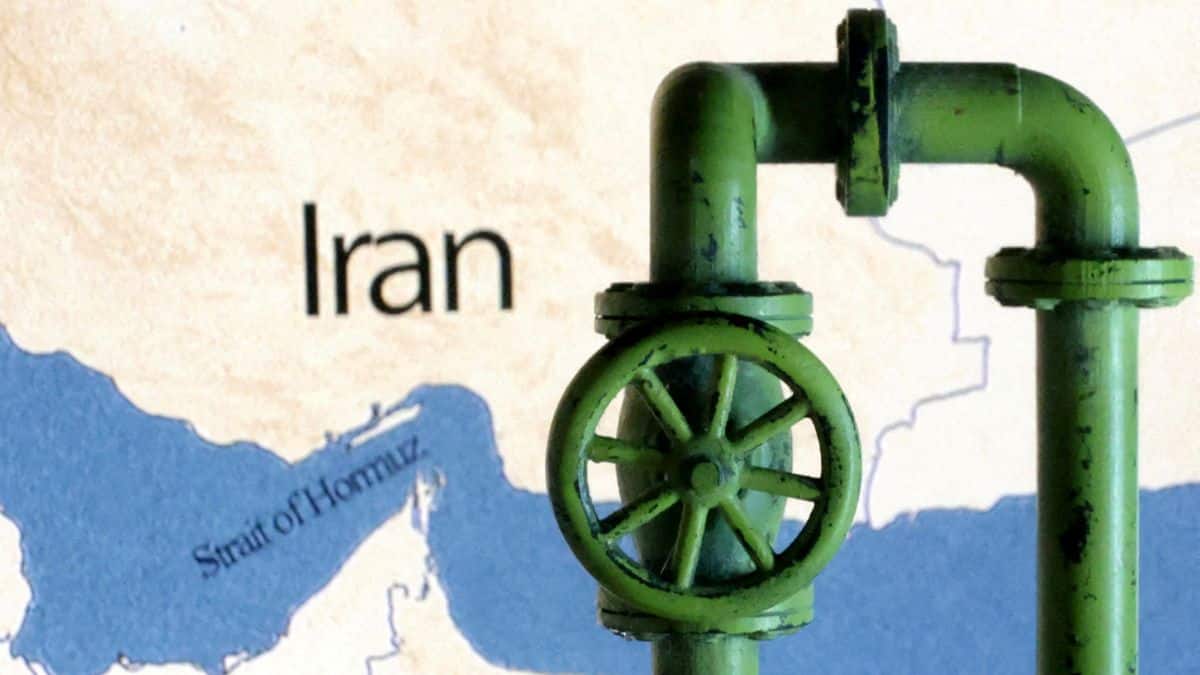
The arrival of the first Saudi crude tanker at an Indian port since the outbreak of hostilities in the Persian Gulf marks a desperate shift in global energy logistics. While markets reacted with a superficial sigh of relief, the reality on the water is far more volatile. This isn't a return to normalcy. It is a calculated, high-stakes gamble by Riyadh and New Delhi to test whether a fragile maritime corridor can survive the pressures of a hot war. The vessel, having navigated the treacherous waters of the Strait of Hormuz under heavy shadow-escort, represents more than just a delivery of millions of barrels of oil. It represents the breaking of a psychological and economic siege that has kept Indian refineries on the brink of a supply crisis for weeks.
For the Indian government, the stakes could not be higher. Faced with dwindling reserves and an economy sensitive to every cent of fluctuation in energy costs, the decision to greenlight this shipment was less about trade and more about national security. The Strait of Hormuz is the world's most important chokepoint. When it closes, the world holds its breath. When it reopens under the smoke of active conflict, the world holds its wallet.
The Logistics of a Ghost Run
Navigating the Strait during an active war between regional powers is not a matter of simple seamanship. It is an exercise in electronic warfare and geopolitical signaling. This specific tanker did not follow the standard commercial protocols that governed the gulf for decades. To reach its destination, the vessel had to manage a complex dance of "dark" sailing—turning off Automatic Identification Systems (AIS) at critical intervals—and coordinating with naval assets that officially do not exist in the region's current theater of operations.
The insurance premiums alone on such a voyage are enough to cripple smaller players. Only state-backed entities can absorb the "war risk" surcharges that now accompany any hull entering the Gulf of Oman. We are seeing a bifurcation of the shipping industry. On one side are the privateers who have fled to safer, albeit more expensive, routes around the Cape of Good Hope. On the other are the state-linked giants, like the one that just docked in India, which are forced to run the gauntlet to keep their domestic economies from stalling.
The Insurance Trap
Marine insurance is the invisible hand that moves global trade. Usually, it is a predictable expense. Now, it has become a weapon. Analysts watching the London and Singapore markets have seen premiums for Gulf-transiting vessels jump by nearly 400 percent since the start of the Iran war.
- War Risk Surcharges: These are now applied on a per-voyage basis, often settled just hours before a ship enters the danger zone.
- Hull and Machinery: Providers are demanding rigorous proof of "de-escalation protocols" before offering coverage.
- P&I Clubs: Protection and Indemnity clubs are increasingly hesitant to cover environmental disasters resulting from kinetic military action.
If a ship is hit, the legal battle over who pays for the oil spill in a war zone would last longer than the war itself. India's willingness to accept this cargo suggests that the state has provided its own sovereign guarantees to the shippers, effectively bypassing the traditional insurance market.
Why India Cannot Walk Away
India imports over 80 percent of its crude oil. Its refinery complex, particularly the massive facilities on the western coast, is finely tuned to the specific chemical signature of Middle Eastern grades. You cannot simply swap Saudi Light for American WTI or Nigerian Bonny Light without months of recalibration and significant yield loss. The technical dependency on Saudi and Iraqi crude makes India a captive customer of the Strait.
The recent arrival is a temporary reprieve, not a solution. The Indian strategic petroleum reserves (SPR) are designed for short-term shocks, not prolonged regional wars. If more tankers do not follow this one, the internal pressure on fuel prices will force the government's hand, potentially leading to subsidies that would blow a hole in the national budget.
The Geopolitical Price Tag
Riyadh is using these shipments to prove it remains a reliable partner despite the chaos on its doorstep. By successfully delivering crude through a contested waterway, Saudi Arabia is telling its Asian customers that it can project enough stability to overcome Iranian interference. However, this reliability comes with a political price. India is being squeezed to provide more than just a market; it is being asked for maritime security cooperation and diplomatic cover in international forums.
The silence from New Delhi regarding the specific security arrangements for this tanker is deafening. It suggests a level of cooperation with Western and regional navies that India typically avoids to maintain its "strategic autonomy." In the age of energy warfare, autonomy is a luxury that few can afford.
The Myth of the Alternate Route
There is a persistent narrative in energy circles that pipelines and alternate routes can bypass the Hormuz chokepoint. This is largely a fantasy. While Saudi Arabia has the East-West Pipeline (Petroline) that can move crude to the Red Sea, its capacity is nowhere near enough to replace the volume that moves through the Strait. Furthermore, the Red Sea itself has become a secondary front in the broader regional conflict, plagued by drone strikes and mining.
India’s reliance on the Strait is a physical reality that no amount of diplomatic maneuvering can erase. The arrival of this tanker proves that the "blockade" is porous, but it also confirms that the cost of doing business has changed forever. Every barrel that arrives now carries a "conflict tax" that will eventually be passed down to the consumer at the pump.
Operational Risks on the Water
The physical threats to these tankers are evolving. We are no longer just looking at traditional naval mines or anti-ship missiles. The rise of loitering munitions—cheap, effective suicide drones—means that even a lightly armed non-state actor can threaten a multi-billion dollar cargo.
- Electronic Spoofing: Ships find themselves "teleporting" on GPS screens, a result of intense regional jamming.
- Small Craft Harassment: Fast-attack boats use swarming tactics to overwhelm shipboard security.
- Subsurface Threats: The proliferation of unmanned underwater vehicles (UUVs) makes the seabed as dangerous as the surface.
The crew of the tanker that just reached India likely spent their transit in "citadels"—reinforced safe rooms—while the ship was steered remotely or by a skeleton crew on the bridge. This is the new face of commercial shipping in the Middle East.
The Fragility of the Energy Bridge
This single successful delivery should not be mistaken for a trend. One ship getting through is a feat of luck and coordination; twenty ships a week getting through is a logistical necessity that has not yet been proven sustainable. The market is currently pricing in a "conflict premium," but it has not yet priced in a "total cutoff."
The reality is that the Strait of Hormuz remains a hair-trigger. An accidental collision, a misidentified target, or a desperate move by a retreating military could shut the waterway for months. If that happens, the tanker currently sitting in an Indian port will be remembered as the last of a dying breed rather than the first of a new wave.
Refineries in Jamnagar and Vadinar are watching the horizon with more than just commercial interest. They are looking for signs that the second, third, and fourth tankers are actually on their way. Reports from ship-tracking data suggest several other vessels are currently "loitering" outside the Gulf of Oman, waiting for the same security window that allowed this first ship to pass.
Economic Cascades
When oil stops moving, the impact isn't just felt at the gas station. The petrochemical industry, which provides the building blocks for everything from plastics to fertilizers, begins to seize up. India's agricultural sector, heavily dependent on diesel for irrigation and transport, is particularly vulnerable. A failure to secure the sea lanes doesn't just mean more expensive commutes; it means a potential food security crisis.
The government's current strategy appears to be a mix of quiet naval escorting and aggressive spot-market buying. They are trying to build a bridge of ships across a sea of fire. It is a strategy born of necessity, but it lacks a long-term fallback position. If the war in the Gulf intensifies, the cost of these "war-run" shipments will eventually exceed the value of the oil itself.
The Shadow of the Next Shipment
The focus now shifts to the follow-up. The markets will be looking for a rhythm. If Saudi Arabia can maintain a steady flow of at least one tanker every three days, the immediate panic in Asian markets may subside. But "steady" is a relative term in a war zone. The Iranian navy, while battered, still possesses the capability to turn the Strait into a graveyard of steel and oil.
The Indian naval presence in the region, under the guise of "anti-piracy" or "maritime security" operations, will likely have to expand. This draws India deeper into a conflict it has spent decades trying to avoid. There is no such thing as neutral oil when you are the one sending the destroyers to make sure it arrives.
The arrival of the Saudi tanker is a tactical victory for India’s energy security team. However, in the broader context of the Iran war, it is a stark reminder of how thin the line is between economic stability and total collapse. The world is watching to see if the next ship makes it, or if the "conflict tax" finally becomes too high to pay.
Monitor the daily charter rates for Very Large Crude Carriers (VLCCs) out of Ras Tanura. If those rates continue to climb despite this successful delivery, it means the industry knows something the headlines aren't telling you. The real test isn't the first ship; it's the fifty-first.