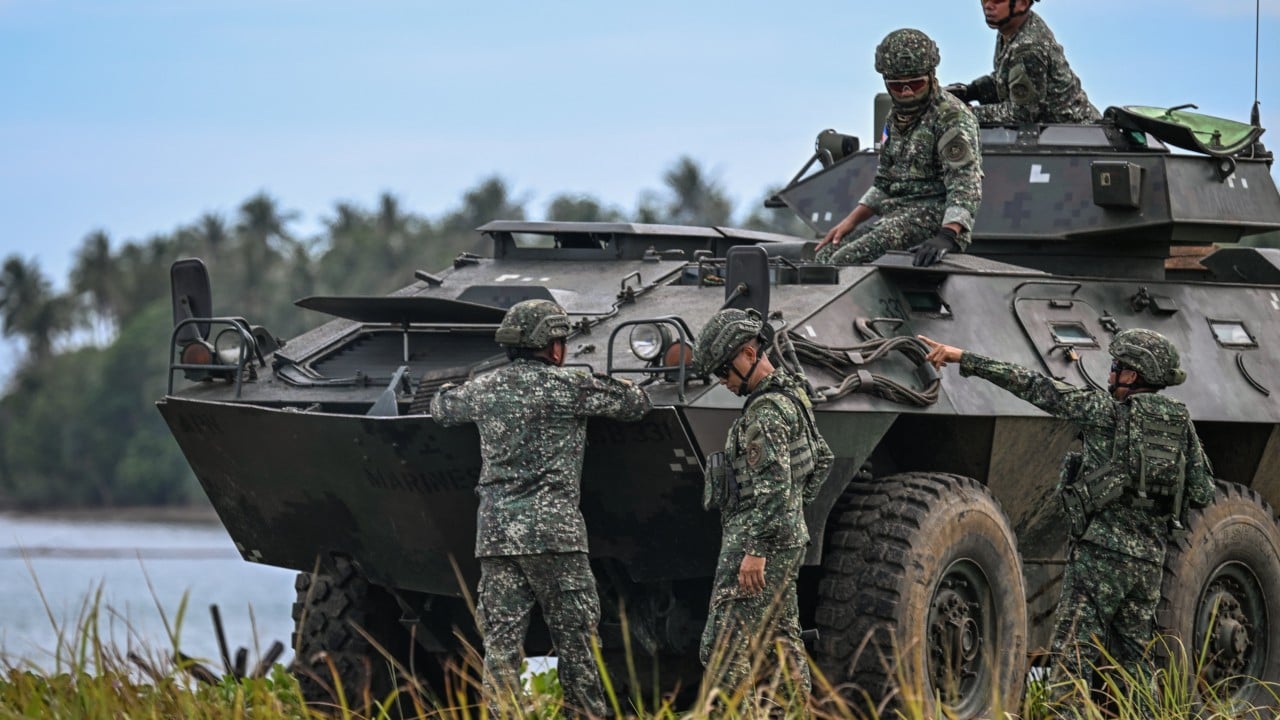
The Philippines is currently attempting a geopolitical maneuver that defies the traditional gravity of Southeast Asian diplomacy. By moving closer to NATO through formalized partnerships and increased military synchronization, Manila is not just seeking a shield against regional aggression. It is betting its entire economic and sovereign future on a Western security architecture that was never designed for the Pacific. The primary motivation is the intensifying pressure in the West Philippine Sea, but the cost of this alignment includes a loss of strategic autonomy and a potential breakdown in trade relations with the nation’s largest economic partner.
President Ferdinand Marcos Jr. has shifted the national compass. After years of the previous administration’s erratic pivots toward Beijing, the current leadership has decided that internal stability is impossible without external muscle. This isn't just about joint patrols or donated hardware. It is a fundamental rewrite of how a middle power survives in a fragmented world.
The Ghost of Brussels in the South China Sea
NATO is a North Atlantic organization by name and charter, yet its footprint in Indo-Pacific planning has grown heavy. For Manila, the "Individual Partnership Shared Programme" (ITPP) represents a bridge to high-level intelligence sharing and standardized defense protocols. The logic is simple. If the Philippines can speak the same tactical language as the world’s most powerful military alliance, it becomes a more expensive target to bully.
However, this synchronization comes with a heavy metadata trail. When a nation adopts NATO standards for its communication systems and maritime domain awareness, it effectively plugs its ears and eyes into a Western grid. This creates a technological lock-in. Once the Philippine Coast Guard and Armed Forces are fully integrated into these systems, switching back or even maintaining a neutral tech stack becomes a financial and logistical nightmare.
The "strategic dilemma" often cited by observers is actually a trap of interoperability. To be protected by the West, Manila must be compatible with the West. That compatibility requires purging Chinese-made telecommunications infrastructure and surveillance tools from the national security apparatus. This is not a theoretical concern. The United States has already made it clear that "Clean Network" initiatives are the price of admission for deeper intelligence cooperation.
The Economic Shrapnel of Security Ties
While the generals in Manila and Brussels talk about deterrence, the merchants in Binondo and the industrial zones of Cavite are watching the balance sheets. China remains the top trading partner for the Philippines. History shows that Beijing does not separate trade from territory. When tensions spiked over the Scarborough Shoal in 2012, Philippine bananas rotted on Chinese docks due to "sudden" quarantine issues.
A formalized NATO partnership provides a pretext for a much wider range of economic retaliation. We are no longer talking about fruit. We are talking about the supply chains for semiconductors, nickel exports, and the massive infrastructure projects funded by Chinese credit. The dilemma is that the Philippines is seeking security from the very entity that funds its growth.
Manila’s hawks argue that the U.S. and its allies will fill the vacuum. They point to the "Luzon Economic Corridor" and promises of G7 investment. But Western capital is risk-averse. It moves slowly. It demands transparency and legal frameworks that are still under construction in the Philippines. China’s capital, by contrast, is often a tool of statecraft—deployed quickly and withdrawn just as fast when the political wind shifts.
The Burden of the Visiting Forces
The U.S. demands for expanded access under the Enhanced Defense Cooperation Agreement (EDCA) are the physical manifestation of this NATO-adjacent strategy. By granting American forces access to sites facing Taiwan and the Spratlys, the Philippines has effectively volunteered to be the front line.
There is a hard truth that many in the Philippine Senate are hesitant to voice. If a conflict breaks out over Taiwan, the bases on Philippine soil will be targets. The NATO partnership does not come with an Article 5 guarantee. Unlike Poland or the Baltic states, the Philippines does not have a collective defense treaty with the European members of NATO. It has a Mutual Defense Treaty with the U.S. alone.
By bringing NATO into the conversation, Manila is trying to "multilateralize" its defense. It wants the prestige and the diplomatic weight of the 32-nation bloc without the formal obligations. But the U.S. is using this European interest to bolster its own "integrated deterrence" strategy. In this setup, the Philippines provides the geography, while the Western allies provide the high-end technology. The risk remains entirely local.
Sovereignty in the Age of Interdependence
The most overlooked factor in this shift is the internal political strain. The Philippines has a long, scarred history with foreign military presence. The 1991 vote to eject U.S. bases was a watershed moment for national identity. Reversing that trend under the guise of "NATO standards" is a hard sell for a significant portion of the electorate that remembers the social costs of the old base era.
Furthermore, the focus on external defense is cannibalizing the budget for internal resilience. High-tech frigates and missile systems are expensive to maintain. They require specialized training and parts that must be imported. Every peso spent on being "NATO-ready" is a peso taken away from rural infrastructure or modernization of the agricultural sector.
The military leadership argues that without a secure maritime border, there is no national economy to protect. They are right, but only to a point. If the pursuit of that security leads to a permanent state of high-alert and economic friction with the region’s largest power, the Philippines may find itself "secure" but stagnant.
The Submarines and the Sensors
Recent discussions about the Philippines acquiring its first submarine fleet highlight the technical leap the country is trying to make. France, a key NATO power, is the frontrunner for this contract. This isn't just a purchase; it's a multi-decade marriage. Submarine warfare relies on acoustic libraries and sensitive sensor data. By choosing a French platform, Manila is essentially opting into the NATO underwater data-sharing ecosystem.
This move signals to Beijing that the Philippines is no longer interested in a "middle path." It is an admission that the era of hedging is over. The dilemma isn't whether to choose sides—that choice has largely been made—but how to manage the consequences of that choice without becoming a casualty of a superpower collision.
The Philippines is currently acting as the laboratory for a new kind of Pacific security model. It is testing whether a developing nation can successfully integrate into the world’s most sophisticated military alliance while remaining economically tethered to that alliance’s primary rival. The margin for error is non-existent.
If the Western promises of investment fail to materialize, or if the U.S. political landscape shifts toward isolationism in the coming years, Manila will be left exposed. It will have alienated its neighbor and dismantled its ability to play both sides, all for a partnership that offers no ironclad guarantee of intervention. The strategy demands a level of diplomatic agility that the Philippines has rarely demonstrated over the long term.
Stop viewing the NATO partnership as a simple upgrade to the Philippine Navy. It is a fundamental shift in the nation's DNA. The real test won't be a naval skirmish, but the first time Manila has to say "no" to a U.S. demand in order to save its own economy. If the integration has gone too far by then, saying "no" might no longer be an option.