The political punditry is currently obsessed with a narrative that is as shallow as a drought-stricken creek. They want you to believe that the regional instability in the Middle East—specifically the tension surrounding Iran—is a death knell for the GOP in the upcoming midterms because it drives up the price of anhydrous ammonia. They see a linear path: Iran rattles sabers, fertilizer prices spike, farmers go broke, and angry voters flip the script on incumbent Republicans.
It is a neat story. It is also fundamentally wrong.
This "fertilizer crisis" is not a catastrophe; it is a long-overdue correction. For decades, the American agricultural engine has been addicted to cheap, natural gas-derived inputs, treating the soil like a sterile medium rather than a living ecosystem. If a temporary supply shock caused by geopolitical posturing is what it takes to break the back of Big Ag’s nitrogen addiction, then we should be welcoming the high prices, not mourning them. The real threat to the Heartland isn't a shortage of chemicals from across the globe; it’s the intellectual laziness of maintaining a failing status quo.
The Myth of the Fertilizer Vote
Political analysts love to map fertilizer costs to voting patterns. They assume the American farmer is a single-issue voter with no agency, reacting purely to the overhead costs of corn and soy.
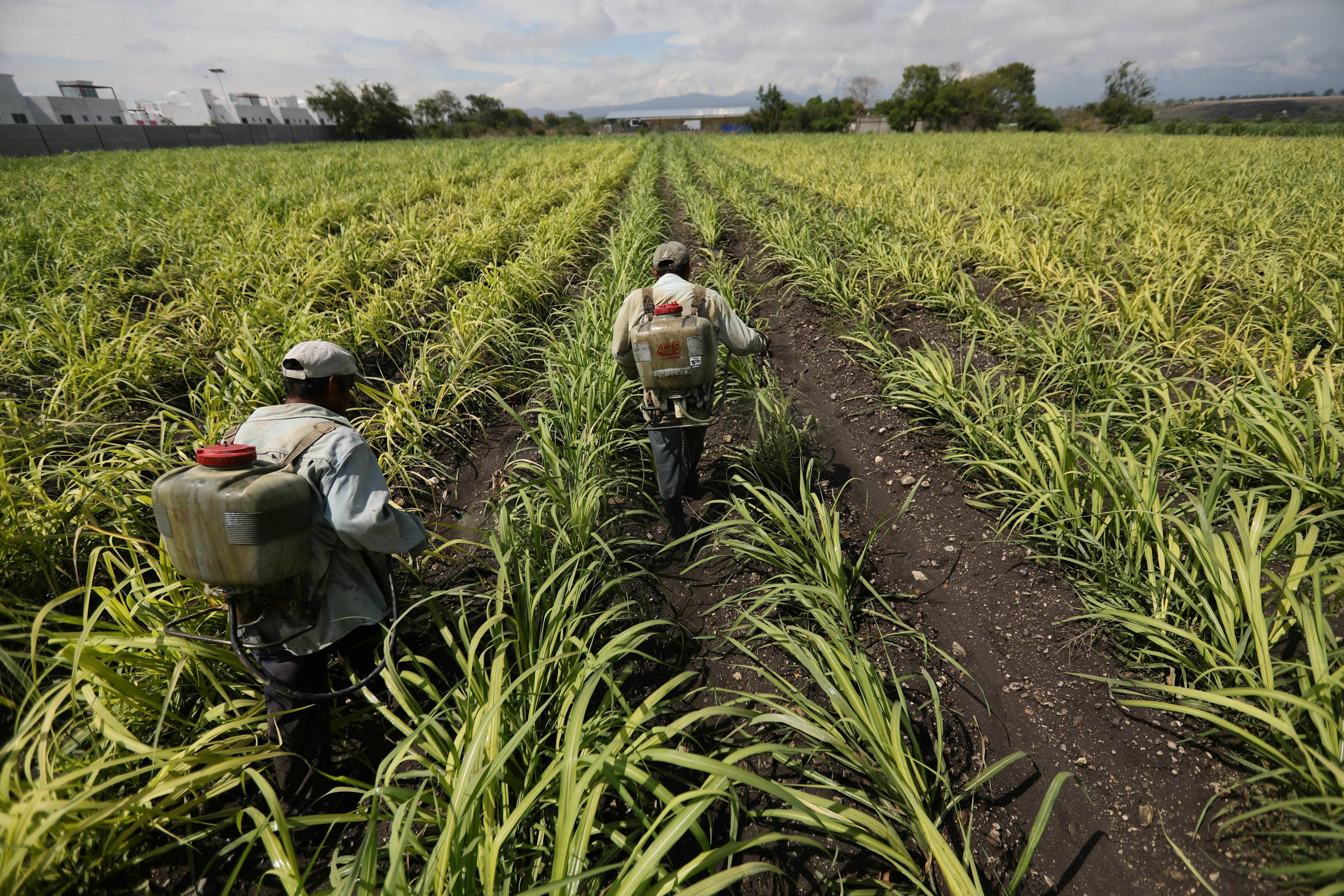
I have spent years on the ground with operations that manage thousands of acres. These producers are not panicked by a price hike in urea; they are frustrated by a system that makes them dependent on it. The idea that a temporary spike in input costs will cause a mass exodus from the Republican party ignores the cultural and structural realities of the Midwest. Farmers are, by nature, risk managers. They understand volatility better than any suit on Wall Street or any pollster in D.C.
The "lazy consensus" suggests that the GOP is vulnerable because they can't "fix" global commodity prices. But here is the nuance the mainstream media misses: High input costs are actually accelerating the adoption of precision agriculture and biologicals—technologies that the very same "vulnerable" farmers are using to reclaim their independence from global supply chains.
The Haber-Bosch Trap
To understand why the current panic is misplaced, you have to understand the $N$ problem. Most of the nitrogen fertilizer used today is produced via the Haber-Bosch process. This 20th-century marvel uses massive amounts of natural gas to pull nitrogen from the air.
$$N_2 + 3H_2 \rightarrow 2NH_3$$
This equation is the heartbeat of modern industrial farming. It is also its greatest weakness. Because it relies on natural gas, the price of food is inextricably linked to the price of energy. When Iran acts up or pipelines are squeezed, the farmer pays the price.
The competitor article argues that this dependence is a political liability. I argue it is a design flaw that we are finally being forced to patch. By keeping fertilizer artificially cheap for forty years, we have disincentivized innovation. We have ignored the fact that about 50% of applied nitrogen never even reaches the plant; it leaches into the groundwater or volatilizes into the atmosphere.
We aren't suffering from a shortage. We are suffering from extreme inefficiency.
Efficiency is the New Subsidy
If you want to see who is actually winning in this "crisis," look at the guys using variable-rate application (VRA) and "see-and-spray" technology. While the neighbor is complaining about the price of a ton of DAP (Diammonium Phosphate), the top-tier producers are using multispectral satellite imagery and AI-driven soil sensors to cut their fertilizer use by 30% without losing a bushel of yield.
I’ve seen operations save $200,000 in a single season by simply stopping the practice of "blanket applications." The high price of fertilizer is the greatest salesman for AgTech in history. It has done more to promote sustainable farming in six months than the USDA has done in thirty years of "fostering" (to use a word I despise) conservation programs.
The "shortage" is forcing a pivot toward:
- Biological Fixation: Using microbes to unlock nitrogen already present in the soil.
- Cover Cropping: Legumes that pull nitrogen from the air for free, bypassing the Haber-Bosch trap entirely.
- Precision Injection: Placing nutrients exactly where the root ball can grab them, rather than drenching the entire county.
The Geopolitical Reality Check
Let's talk about Iran. The narrative that we are at the mercy of Middle Eastern stability for our food security is a hauntingly effective bit of propaganda used by fertilizer cartels to demand subsidies.
The United States is the world’s largest producer of natural gas. We have the feedstock. We have the capacity. The bottleneck isn't "Iran war-induced shortages." The bottleneck is a domestic regulatory environment that makes it nearly impossible to build new, high-efficiency ammonia plants on-shore, and a logistical chain that is stuck in the 1970s.
If the midterms are "threatened," it’s not because of a conflict in the Strait of Hormuz. It’s because the political class would rather argue over temporary price caps than address the structural insanity of shipping fertilizer halfway around the world when we have all the raw materials in our own backyard.
Stop Asking the Wrong Question
The "People Also Ask" sections of the internet are filled with variations of: "How can the government lower fertilizer prices?"
This is the wrong question. It’s the question of a beggar.
The right question is: "How can I make my operation fertilizer-independent?"
The answer isn't a government check. The answer is a radical shift in how we view soil health. We have treated soil like a dirt-flavored sponge for liquid chemicals. True soil health—building organic matter and fungal networks—creates a system that requires fewer outside inputs.
Imagine a scenario where a farmer in Iowa doesn't care if a tanker gets seized in the Persian Gulf. That isn't a pipe dream; it's what happens when you stop farming for the chemical companies and start farming for the crop.
The Political Backfire
If the Democrats think they can win over the rural vote by pointing at high fertilizer prices, they are in for a shock. The Heartland knows exactly which policies have hampered domestic energy production. They know that the "green transition" being pushed from the coasts is often the very thing making their inputs more expensive by driving up the cost of the natural gas required to make ammonia.
The "shortage" doesn't make farmers want to vote for the opposition; it makes them want to double down on energy independence and deregulation. The competitor’s article suggests that Republicans are in trouble. I suggest that the current pressure is solidifying the base's resolve to decouple from global volatility entirely.
The Brutal Truth
You are being told a story of scarcity. I am telling you a story of transition.
Yes, the margins are tighter this year. Yes, the small-time operator who refuses to adapt will likely go under. That is the cold, hard reality of the market. But the industry that emerges on the other side of this "crisis" will be leaner, more technologically advanced, and significantly less dependent on the whims of foreign dictators.
The real threat to the Heartland isn't the price of nitrogen. It's the belief that we can't survive without it.
Stop looking at the charts from the Chicago Board of Trade and start looking at the biology in your own topsoil. The era of cheap, lazy farming is over. Good riddance.
Don't wait for a ceasefire in the Middle East to fix your balance sheet. Fix your soil, buy the sensors, and let the rest of the world fight over the scraps of the old paradigm.

.png)