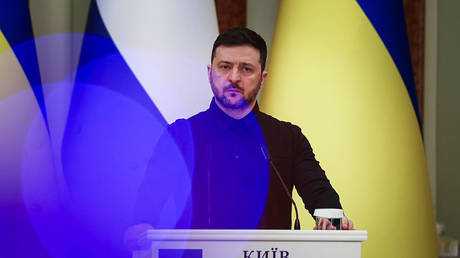
Volodymyr Zelensky’s decision to choke off the flow of Russian crude to Central Europe was sold as a masterstroke of economic warfare. By blacklisting Lukoil and halting its transit through the Druzhba pipeline, Kyiv aimed to drain the Kremlin’s war chest while forcing Hungary and Slovakia to pick a side. Instead, the move triggered an immediate diplomatic blowback, exposed deep fractures within the European Union, and left Ukraine in a precarious spot where its leverage over energy transit is rapidly eroding. The blockade did not stop the oil; it simply reconfigured the risks, placing the heaviest burden on the very transit routes Ukraine relies on for its own economic survival.
The Druzhba Bottleneck
The Druzhba pipeline is a relic of Soviet engineering that remains a vital artery for landlocked European nations. When the EU passed its Russian oil embargo in 2022, Hungary, Slovakia, and the Czech Republic secured exemptions because they lacked the infrastructure to switch to maritime imports overnight. They were the "unreachable" markets, physically tethered to the East.
Kyiv’s July 2024 sanctions on Lukoil were designed to exploit this dependency. By specifically targeting the private Russian giant, Ukraine bypassed the technicality of the EU’s exemptions. The strategy was simple. If the EU wouldn't shut the tap, Ukraine would. However, the immediate reality was far messier than the theory. Lukoil wasn't just a Russian entity; it was the primary supplier for refineries owned by MOL, the Hungarian energy titan that operates across both Budapest and Bratislava.
When the oil stopped flowing, the rhetoric in Central Europe turned white-hot. Hungarian officials labeled the move "blackmail," while Slovakia threatened to cut off the diesel exports that fuel Ukraine’s own military vehicles and generators. This is the central irony of the blockade. Ukraine is fighting a war of attrition that requires a constant influx of refined fuels, much of which actually originates from the very Russian crude it is trying to ban.
A Miscalculation of Leverage
Geopolitics is rarely a straight line. Kyiv banked on the idea that the European Commission would back its candidate for EU membership against the "troublemakers" in Budapest. That support never materialized in the way Zelensky’s advisors envisioned. Brussels, already exhausted by internal debates over rule-of-law violations in Hungary, had no appetite for a full-blown energy crisis in the middle of a transition year.
Valdis Dombrovskis and other EU trade officials took a cold, legalistic approach. They noted that overall oil volumes through the Druzhba hadn't plummeted to zero—other Russian firms like Tatneft and Rosneft were still pumping. To the bureaucrats in Brussels, this looked less like a principled stand against aggression and more like a targeted dispute that Ukraine needed to settle quietly.
Ukraine’s leverage is a wasting asset. The contract for the transit of Russian gas and oil is nearing its end. By moving early to disrupt the flow, Kyiv signaled to its neighbors that it is no longer a reliable transit partner. For a nation that hopes to become a European energy hub after the war, storing gas in its vast underground caverns for Western clients, this reputation for volatility is a self-inflicted wound.
The Shell Game of Energy Security
The blockade didn't actually remove Russian molecules from the system; it just made them more expensive to track. Traders are experts at the "shell game." When Lukoil oil is barred, it is often sold at the border to a non-sanctioned intermediary or swapped for volumes from another producer. The physical oil stays in the pipe. The only thing that changes is the name on the invoice and the premium paid to the middleman.
Hungary and Slovakia have spent decades building their economies around the chemistry of Urals grade crude. Their refineries are "tuned" to it. Switching to Brent or Middle Eastern grades requires massive capital expenditure and years of technical retrofitting. By forcing this issue now, Ukraine pushed these nations into a corner where their only options were to fold or fight back. They chose to fight, leveraging their veto power within the EU and NATO to complicate Ukraine’s path toward integration.
The Diesel Connection
The most dangerous oversight in the blockade strategy involves Ukraine’s own fuel tanks. Ukraine no longer operates its own major refineries; they were among the first targets destroyed by Russian cruise missiles in 2022. Consequently, the Ukrainian war effort is powered by imported fuel.
A significant portion of the diesel used by Ukrainian tanks and the gasoline used by its logistics convoys comes from refineries in Hungary and Slovakia. Those refineries run on Russian crude. If Ukraine successfully kills the supply of crude to its neighbors, it effectively sabotages its own supply of refined product. It is a circular firing squad.
Military logistics don't care about the ethics of the crude's origin; they care about the flashpoint of the fuel and the reliability of the delivery. By threatening the feedstock of MOL’s refineries, Kyiv essentially threatened its own front line. The realization of this dependency is likely why we saw a quiet softening of the "blockade" as autumn approached, with workarounds emerging that allowed the oil to resume under different legal guises.
The Shift to the Adriatic
If there is a winner in this mess, it isn't Kyiv. It is the operators of the Adria pipeline, which runs from the Croatian coast inland. Croatia has positioned itself as the new gatekeeper for Central European energy. However, this shift comes with a high price tag. Zagreb has significantly raised transit fees, knowing that Hungary and Slovakia have nowhere else to go.
This creates a new tension. Hungary now accuses Croatia of war profiteering, further destabilizing the unity of the EU’s eastern flank. Ukraine, meanwhile, sits on the sidelines of this new dispute, having lost its seat at the head of the table. Instead of being the indispensable transit partner, it is increasingly viewed as a risk factor that must be bypassed.
The long-term infrastructure projects now being fast-tracked are not designed to integrate Ukraine. They are designed to insulate Europe from Ukraine. Interconnectors are being built, and sea-to-land routes are being reinforced so that if Kyiv ever decides to pull the plug again, the impact will be negligible.
Beyond the Rhetoric
The hard truth is that economic sanctions are only effective if the person applying them isn't more vulnerable than the target. Russia has already pivoted its oil exports to India and China, often using a "shadow fleet" of aging tankers to bypass Western price caps. The Druzhba pipeline, while important, is no longer the Kremlin’s primary life support system.
For Ukraine, the pipeline was a leash. It provided a way to keep its neighbors engaged and gave Kyiv a voice in European energy policy. By snapping that leash, Zelensky may have gained a short-term PR victory at home, but he sacrificed a strategic tool that cannot be easily replaced. The "blockade" didn't stop the war, and it didn't bankrupt Lukoil. It did, however, prove that in the brutal world of energy politics, geography usually beats ideology.
The move also emboldened the populist elements within the EU. Figures like Viktor Orbán and Robert Fico thrive on the narrative of the "forgotten" Central European worker being victimized by outside forces. Ukraine handed them a perfect example on a silver platter. Every time a Slovakian farmer pays more for fuel, or a Hungarian factory faces an energy surcharge, the blame is directed squarely at Kyiv rather than Moscow.
The Friction of Integration
Ukraine’s path to the EU was always going to be defined by friction, but the Lukoil incident added a layer of distrust that will take years to peel back. Membership requires the unanimous consent of all member states. By targeting the core economic interests of two specific members, Ukraine has ensured that its accession talks will be plagued by technical delays and "unforeseen" hurdles.
There is a difference between being a victim of aggression and being a savvy geopolitical player. The veteran analysts in the energy sector saw the blockade for what it was—a desperate attempt to exert influence where none existed. You cannot dictate the energy policy of your neighbors when you are simultaneously asking them for billions in aid and military hardware.
The pipes are still there. The oil is still moving. The only thing that has truly changed is the level of animosity in the rooms where Europe’s future is decided. Kyiv wanted to show strength, but it mostly succeeded in showing its neighbors how to live without it.
Would you like me to analyze the specific shifts in the Adria pipeline's transit volumes since the Lukoil sanctions took effect?