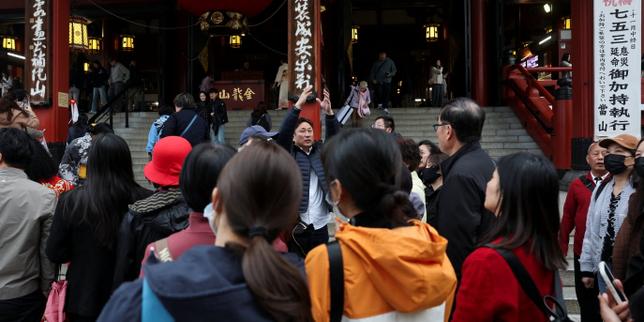
Japan is currently facing a massive paradox in its tourism strategy. On one hand, the streets of Ginza and the shrines of Kyoto are packed with more international visitors than ever before. On the other hand, the high-spending Chinese traveler has become a rare sight compared to the pre-2020 boom. It’s not just a lingering effect of the pandemic. It’s a deliberate, politically charged shift that is reshaping how Japan does business.
If you’ve walked through Tokyo lately, you’ve probably noticed the change. The "bakugai" or explosive buying phenomenon that defined the mid-2010s is effectively dead. While Americans, Southeast Asians, and Europeans are filling the gap in numbers, they don’t spend the same way. The absence of Chinese tour groups is a direct result of geopolitical friction and a grassroots boycott that hasn't let up. Expanding on this theme, you can find more in: The Italian Dream Property Trap and the Reality of Five Dollar Wine.
Why the Chinese Boycott of Japanese Tourism is Real
This isn't just about a slow economic recovery in China. It’s about the release of treated radioactive water from the Fukushima Daiichi nuclear plant. When Japan began this process in 2023, the backlash in China was immediate and fierce. Beijing slapped a ban on Japanese seafood, and social media did the rest.
I’ve seen how quickly these movements take hold. It starts with a few viral videos and ends with thousands of canceled flights. For many Chinese travelers, visiting Japan right now feels like a betrayal of national pride or a health risk, regardless of what the IAEA says. The sentiment is "Why spend my money there when they don't respect us?" It’s a powerful motivator that data-heavy economic reports often miss. Observers at Lonely Planet have shared their thoughts on this matter.
The numbers tell a story of a lopsided recovery. In 2019, Chinese visitors accounted for roughly 30% of all arrivals and nearly 40% of all tourist spending. Today, while Japan hits record-breaking total visitor numbers, the Chinese segment remains a shadow of its former self. They used to be the engine of the luxury retail sector. Now, that engine is sputtering.
The Economic Hole in Ginza and Beyond
Go to any major department store in Shinjuku. You’ll see signs in English, Korean, and Thai. The Mandarin signs are still there, but the queues at the tax-free counters are shorter.
Chinese tourists were famous for "explosive buying." They didn't just buy a souvenir; they bought ten high-end rice cookers and a suitcase full of Shiseido products. Western tourists don't do that. An American traveler might spend a lot on a boutique hotel or a Michelin-star meal, but they aren't hauling home bulk electronics.
- Retailers are hurting. Luxury brands that built their Tokyo flagship stores specifically to cater to Chinese shoppers are seeing a massive dip in "per-capita" spending.
- The hospitality shift. Hotels that once relied on massive Chinese bus tours are having to pivot to "individual travelers" who are more demanding and less predictable.
- Regional impact. Places like Hokkaido, which relied heavily on Chinese winter tourism, are struggling to find a replacement demographic that spends as freely on luxury seafood and high-end resorts.
It’s a tough pill for the Japanese government to swallow. They want the 60 million annual visitors target by 2030, but reaching that without a friendly relationship with their biggest neighbor is basically impossible.
A New Strategy for a Post Chinese Boom Era
Japan isn't just sitting around waiting for the boycott to end. They’re pivoting. The Japan National Tourism Organization (JNTO) is now aggressively targeting "high-value" travelers from other regions. They’re looking at the Middle East, Australia, and the wealthy elite in India.
The goal is quality over quantity. If you can’t get five million people to buy cheap gadgets, you try to get one million people to spend five times as much on "authentic" experiences. This is why we see a surge in "hidden Japan" marketing. They want you to go to the mountains of Tohoku or the craft villages of Kanazawa instead of just clogging up the Golden Pavilion in Kyoto.
But honestly, this pivot is expensive. It requires a total overhaul of infrastructure. It means more multilingual staff who speak more than just basic English or Mandarin. It means diversifying the food scene to include more Halal or vegetarian options, which Japan has historically been slow to adopt.
The Overtourism Problem No One Saw Coming
Here’s the kicker. Even with fewer Chinese tourists, Japan feels more crowded than ever. Why? Because the visitors who are coming are all going to the same five spots.
When Chinese tour groups came, they were managed. They stayed in specific hotels and moved in specific patterns. Now, you have a flood of independent travelers using TikTok to find the "secret" photo spot in Fujiyoshida, blocking traffic and upsetting locals. The boycott has inadvertently shifted the type of pressure Japan’s infrastructure is facing. It’s no longer about managing "shopping madness" in cities; it’s about managing "social media madness" in rural towns.
Looking at the Geopolitical Deadlock
Don't expect a quick fix. The relationship between Tokyo and Beijing is at a multi-decade low. Between the semiconductor export bags and the maritime disputes in the East China Sea, tourism is just another pawn on the chessboard.
For the Japanese travel industry, the lesson is clear. Relying on a single market is a recipe for disaster. Diversification isn't just a buzzword; it's a survival tactic. They’re learning the hard way that a political shift in Beijing can empty out a department store in Osaka overnight.
If you’re planning a trip, realize that the Japan you see now is in a state of transition. It's trying to figure out how to be a global destination that doesn't need its closest neighbor's approval. It's a bold move, but it's a risky one.
What You Should Do Instead
If you want to experience Japan without the "overtourism" crowds or the ghost of the retail boom, stop following the standard itinerary.
Avoid the "Golden Route" of Tokyo-Kyoto-Osaka during peak seasons. Head to Kyushu for incredible hot springs and a much more relaxed vibe. Check out the Seto Inland Sea for world-class art and cycling. These areas never relied as heavily on the Chinese tour group model, so they feel much more authentic and less like a theme park built for shoppers.
Support local businesses that aren't part of the massive duty-free chains. Those smaller shops are the ones truly feeling the squeeze of the shifting economy. They offer a level of "omotenashi" or hospitality that you won't find in a crowded Shinjuku mall anyway.
The boycott might be a headache for the Japanese government, but for the savvy traveler, it's an opportunity to see a country forced to rediscover its own identity beyond being a shopping destination for its neighbors.