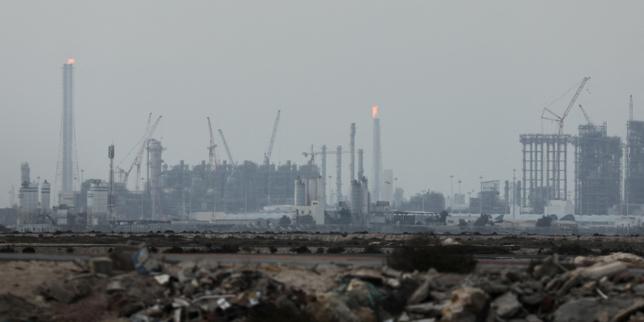
The global semiconductor supply chain is currently confronting a critical inelasticity: the total reliance on helium-4 for cryogenic cooling and plasma etching in an era of escalating Middle Eastern instability. While the market frequently fixates on neon or xenon shortages, helium represents a more fundamental failure point because it cannot be synthetically produced at scale. It is a finite byproduct of natural gas extraction, and its supply chain is governed by a precarious trio of extraction physics, liquefaction logistics, and geopolitical proximity.
The current conflict in the Middle East does not merely threaten a shipping lane; it threatens the operational continuity of "Fab" environments that require high-purity gaseous and liquid helium to maintain the thermal stability of extreme ultraviolet (EUV) lithography machines and to purge deposition chambers.
The Triad of Helium Dependency in Silicon Manufacturing
To understand why a regional conflict in the Levant or the Persian Gulf triggers an immediate risk assessment in Taiwan and Arizona, one must categorize helium’s role into three non-negotiable industrial functions.
1. The Thermal Management of Lithography
Modern EUV lithography systems, primarily those manufactured by ASML, operate at extremely high power levels to generate light at the 13.5 nm wavelength. The mirrors and internal components within these machines generate immense heat. Helium is the only element with a high enough thermal conductivity and a low enough boiling point ($4.22\text{ K}$) to provide the necessary cooling without reacting with the delicate optics.
2. Controlled Atmosphere and Purging
During Chemical Vapor Deposition (CVD) and Atomic Layer Deposition (ALD), the presence of any atmospheric impurity—even at parts-per-billion levels—results in catastrophic yield loss. Helium is used as a carrier gas because its small atomic radius allows it to displace other gases efficiently, and its inert nature ensures it does not bond with the silicon wafer or the deposited precursor chemicals.
3. Leak Detection and Vacuum Integrity
Because helium atoms are among the smallest in the periodic table, they are the industry standard for pressure-testing vacuum chambers. A fab cannot maintain the "ultra-high vacuum" environments required for advanced nodes without constant helium-based leak detection protocols.
The Geography of Extraction: A Fragile Duopoly
The structural vulnerability of the helium market stems from its concentration. Unlike nitrogen or oxygen, which can be scrubbed from the atmosphere, helium is harvested from specific natural gas fields where it has been trapped by radioactive decay over millions of years.
The United States and Qatar currently account for the vast majority of global production. The "Helium 2.0" and "Helium 3.0" projects in Qatar represent a massive centralization of supply. When conflict destabilizes the Strait of Hormuz or the Suez Canal, the "transit risk" for liquified helium (LHe) becomes an existential threat to just-in-time manufacturing models.
- The Qatar Factor: Qatar’s production is localized at the North Field. While the extraction sites are secure, the export route depends entirely on maritime stability. A blockade or an increase in insurance premiums for tankers in the Persian Gulf creates an immediate price spike that ripples through the balance sheets of Intel, TSMC, and Samsung.
- The Russian Variable: The Amur gas processing plant in Russia was designed to be a significant global supplier, potentially easing the reliance on Qatari gas. However, sanctions and technical delays have effectively removed this volume from the Western supply chain, tightening the market to a degree that leaves no margin for error during Middle Eastern escalations.
- The U.S. Federal Reserve Depletion: The historical buffer provided by the U.S. Federal Helium Reserve in Amarillo, Texas, has been systematically privatized and depleted. The industry no longer has a "lender of last resort" for molecules.
The Cost Function of Disruption: Quantifying the Impact
A shortage in helium does not result in a linear increase in chip prices; it results in a binary operational status. Semiconductor fabs are designed to run 24/7. The cost of "idling" a fab due to a lack of cooling or purging gases is measured in tens of millions of dollars per day.
The financial impact follows a specific sequence of escalation:
- Logistics Surcharge Phase: Initial regional tensions lead to "War Risk" surcharges on shipping. Helium is transported in specialized cryogenic ISO containers (ISO tank containers). The number of these containers globally is finite. If they are diverted around the Cape of Good Hope instead of passing through the Suez Canal, the "cycle time" for a single container increases by 20-30 days. This effectively reduces the global transport capacity by roughly 15% without a single molecule being lost at the source.
- Allocation and Force Majeure Phase: If the supply is physically interrupted, industrial gas suppliers (such as Linde, Air Liquide, or Air Products) invoke "Force Majeure" clauses. Under these conditions, helium is diverted away from non-essential sectors—like party balloons or certain lower-tier industrial applications—and prioritized for medical (MRI) and high-value technology (Semiconductor) sectors.
- Yield Degradation Phase: If purity levels drop because lower-grade helium is substituted, or if the "flow rate" of purging gas is reduced to conserve stock, the defect rate on the silicon wafers rises. At the 3nm or 2nm node, a 1% decrease in yield can wipe out the profit margin of an entire production run.
The Engineering Response: Recycling and Substitution Limits
Strategic consultants often suggest "substitution" as a remedy for commodity shortages. In the case of helium, the laws of physics provide a hard ceiling to this strategy.
Neon and Argon as Alternatives?
Argon can be used for some purging processes, but it is significantly heavier and has different thermal properties. In lithography, there is no substitute for helium's combination of inertness and thermal conductivity.
The Circular Solution: Helium Recovery Systems
The only viable long-term mitigation strategy is the implementation of closed-loop recovery systems within the fab.
- Capture: Exhaust gases from the tools are captured before they are vented.
- Purification: The gas is passed through pressure swing adsorption (PSA) units to remove impurities.
- Re-liquefaction: The gas is cooled back to a liquid state for reuse.
The limitation here is capital expenditure. Retrofitting an existing fab with a 90% recovery system requires an investment of hundreds of millions of dollars and significant floor space, which is at a premium in cleanroom environments. New "Greenfield" fabs in Ohio or Arizona are being designed with these systems integrated from day one, but the legacy capacity remains dangerously "once-through."
Strategic Imperatives for the Semiconductor C-Suite
The current geopolitical friction in the Middle East serves as a stress test for the "Resilient Supply Chain" narratives promulgated over the last three years. To mitigate the helium bottleneck, firms must move beyond simple procurement and into active resource management.
The first priority is the diversification of the liquefaction footprint. Having a contract for helium in Qatar is useless if the liquefaction plant or the port is inaccessible. Procurement teams must secure "off-take agreements" from emerging North American sources, specifically from nitrogen-rich gas fields in Canada and the Western U.S. that were previously considered marginal. These fields offer a "land-based" supply chain that avoids maritime chokepoints.
The second priority is the mandatory integration of recovery technology as a prerequisite for any new tool installation. If a lithography tool does not have a high-efficiency helium recovery interface, it represents a long-term liability to the firm’s operational stability.
The third priority involves strategic stockpiling at the point of consumption. Historically, helium was treated as a utility—piped in as needed. Fabs must now transition to a "Strategic Helium Reserve" model, maintaining on-site cryogenic storage capable of sustaining operations for at least 90 days of disrupted supply. This requires a shift in accounting from "Just-in-Time" to "Just-in-Case," accepting the higher carrying costs of inventory as a necessary insurance premium against geopolitical volatility.
The Fourth Industrial Revolution is built on a foundation of silicon, but that silicon is cooled and shaped by a gas that is literally escaping into space. The firms that treat helium as a strategic asset rather than a commodity expense will be the ones that maintain uptime when the next regional conflict closes the gates of the global supply chain.
Would you like me to conduct a comparative analysis of the helium recovery ROI for a 5nm versus a 28nm fabrication facility?