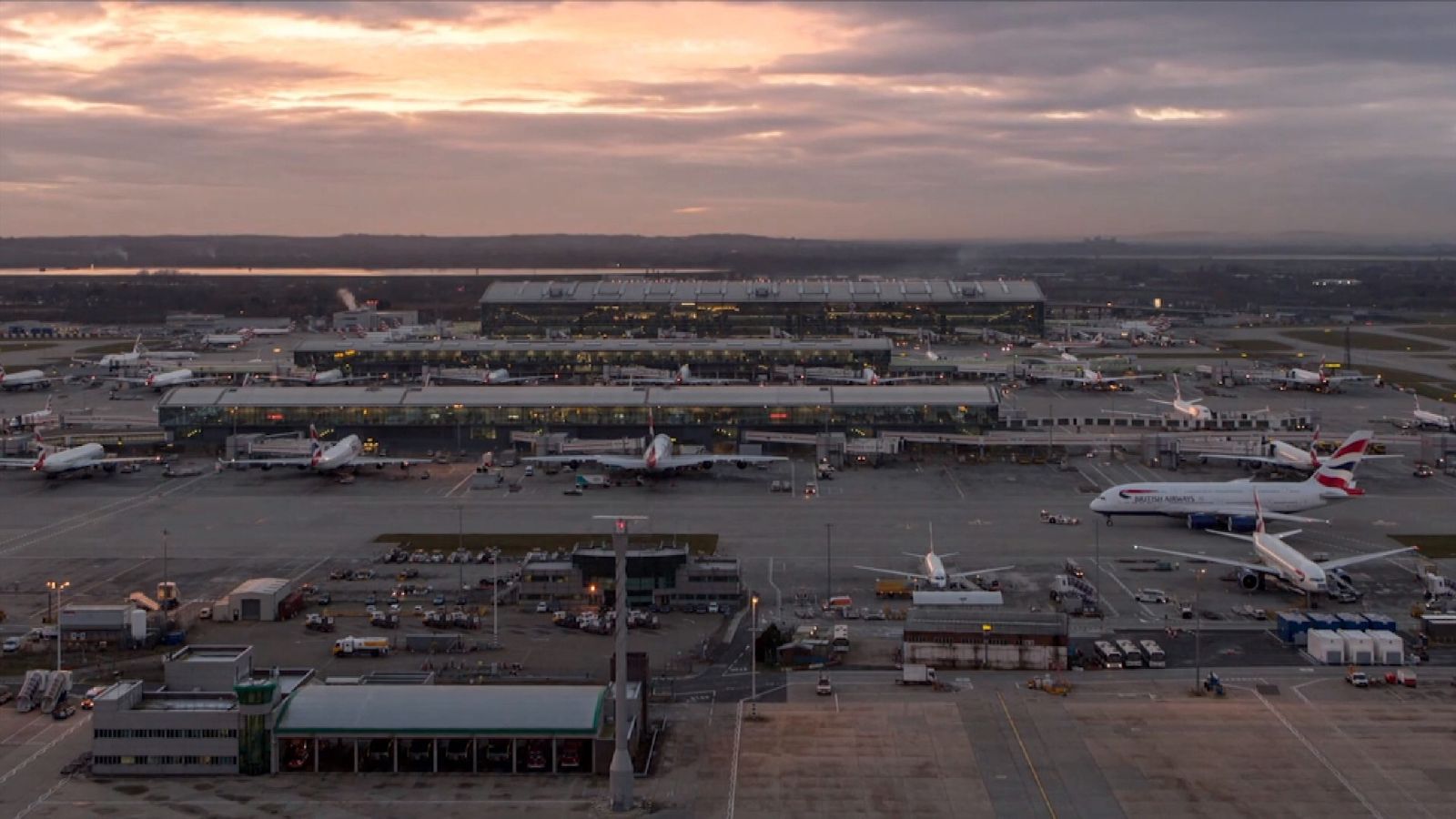
Heathrow Airport is sounding a public alarm that the long-delayed third runway project faces the same catastrophic cost inflation that crippled HS2. This is not a sudden epiphany from the airport’s leadership. It is a strategic pivot designed to force the UK government into providing financial guarantees or regulatory concessions before a single sod of earth is turned. The comparison to the High Speed 2 rail project is intentional and calculated. By invoking the ghost of a project that saw its budget triple before being partially scrapped, Heathrow’s executives are signaling that the current private-funding model for the expansion is fundamentally broken.
The core of the crisis lies in the intersection of soaring construction costs, high interest rates, and a regulatory framework that limits how much Heathrow can charge airlines to recoup its investment. If the expansion proceeds under the existing rules, the airport warns it could face a multi-billion-pound black hole. This is the reality of British infrastructure in the 2020s. We are no longer debating the environmental impact or the noise pollution in West London alone. We are debating whether the UK can build anything of scale without it becoming a financial ward of the state.
The HS2 Warning Shot
When Heathrow’s management points to HS2, they are talking about "inflationary contagion." Large-scale infrastructure projects in Britain suffer from a unique cocktail of hyper-local planning resistance and a shallow pool of specialized contractors. This drives prices up far beyond the standard Consumer Price Index.
HS2 failed because its scope was constantly altered to appease local stakeholders, leading to expensive tunneling and design changes that served politics rather than engineering. Heathrow faces an even tighter squeeze. The airport is hemmed in by the M25 motorway and dense residential boroughs. To build a third runway, the project must navigate some of the most complex land-use requirements in Europe.
The original estimate for the expansion hovered around £14 billion. Analysts now suggest that under current market conditions, that figure is a fantasy. If the cost drifts toward £30 billion—a trajectory mirrored by the central section of HS2—the debt interest alone would swallow the airport’s operating profits. This is why the "HS2-style spiral" isn't just a catchy phrase for a press release. It is a literal description of a balance sheet collapse.
The Civil Aviation Authority Deadlock
The shadow player in this drama is the Civil Aviation Authority (CAA). As the economic regulator, the CAA determines the "H7" price cap—the amount Heathrow can charge per passenger.
Airlines like British Airways and Virgin Atlantic are already furious. They argue that Heathrow is already one of the most expensive airports in the world to operate from. From their perspective, any further increase in passenger fees to pay for a third runway would make London uncompetitive compared to Paris, Frankfurt, or Dubai.
- Heathrow's Position: We cannot build without higher fees to attract investors.
- The Airlines' Position: We will move our hubs if you raise fees one penny more.
- The Regulator's Position: We must protect the consumer from price gouging.
This creates a stalemate. Without a guarantee that they can raise fees significantly, Heathrow's private shareholders—which include sovereign wealth funds from Qatar and China—are unlikely to sign off on the capital expenditure. They are looking at a project where the risks are uncapped but the rewards are strictly regulated. In a world of 5% interest rates, the "regulated asset base" model that fueled British infrastructure for decades is no longer attractive.
Supply Chain Fragility and The Skills Gap
One factor rarely discussed in the broadsheets is the sheer lack of physical capacity to build this runway. The UK construction sector is currently cannibalizing itself. The workers, heavy machinery, and raw materials required for a project of this magnitude are currently tied up in Hinkley Point C and the remaining sections of HS2.
When demand for specialized engineering exceeds supply, the price doesn't just go up; it explodes. We saw this with the Great Western Main Line electrification and the Crossrail project. Every month of delay adds tens of millions to the final bill through "holding costs" and the loss of projected revenue. Heathrow is currently caught in a cycle of "re-evaluating" plans, which in the construction world is often code for watching the budget burn while nothing happens on site.
The Net Zero Conflict
It is impossible to discuss the third runway's financial viability without addressing the carbon cost. The UK’s commitment to legally binding Net Zero targets by 2050 has turned a physical runway into a legal liability.
Every time a new planning application is submitted, it is met with a barrage of judicial reviews centered on the Climate Change Act. These legal battles are not just an annoyance. They represent a massive hidden cost. Millions are spent on lawyers and consultants to "future-proof" the environmental impact assessments.
If the government introduces a frequent flyer levy or a carbon tax on jet fuel, the demand for those new take-off and landing slots might vanish. Investors are terrified of "stranded assets." A third runway that cannot be fully utilized because of flight caps or carbon quotas is a multi-billion-pound strip of useless tarmac. The HS2 comparison holds firm here too. Part of the rail project's failure was the inability to reconcile its high carbon footprint during construction with its long-term green promises.
Private Equity and Sovereign Wealth Cold Feet
For years, Heathrow was seen as a "trophy asset." It was a cash cow that provided steady, predictable returns for pension funds and national investment vehicles. That era ended with the pandemic.
The airport’s debt pile is already substantial. Adding another £15 billion to £20 billion of leverage in an era of "higher for longer" interest rates is a move that makes even the most aggressive fund managers pause. The Spanish construction giant Ferrovial has already moved to divest its stake in the airport. When the primary industrial shareholder wants out, it sends a clear signal to the market.
The "spiral" Heathrow warns of is not just about the cost of concrete. It is about the cost of capital. If the perceived risk of the third runway increases, the interest rate Heathrow has to pay on its bonds increases. This creates a feedback loop where the project becomes more expensive simply because people fear it will be more expensive.
The Political Vacuum
Successive Prime Ministers have used Heathrow as a political football. We have seen "no ifs, no buts" promises to cancel it, followed by parliamentary votes to approve it, followed by years of silence.
This lack of executive decisiveness is the primary driver of the HS2-style mess. In countries like Singapore or the UAE, infrastructure is treated as a 30-year certainty. In the UK, it is treated as a five-year electoral gamble. Because the government refuses to put taxpayer money on the line—insisting this must be a "private sector" project—it loses the ability to streamline the process.
Heathrow is currently asking for the impossible. They want the government to provide the political and legal cover of a state project while maintaining the independence of a private company. This tension is reaching a breaking point. The warning about HS2 is an ultimatum. Either the state simplifies the planning and regulatory hurdles, or the third runway will remain a collection of blueprints and broken promises.
Engineering the M25 Crossing
The most significant technical hurdle—and the biggest "known unknown" in the budget—is the M25. To build the runway as planned, the busiest motorway in the country must either be tunneled or bridged.
Both options are nightmare scenarios for a budget. A tunnel requires massive displacement of existing utilities and years of traffic disruption that would trigger astronomical compensation claims. A bridge would be an engineering marvel but a maintenance liability. On HS2, the cost of "mitigation" (hiding the tracks or moving them to avoid sensitive areas) accounted for nearly 40% of the budget in some sections. Heathrow is looking at a similar "mitigation trap." To get the runway built, they must spend so much on surrounding infrastructure that the runway itself becomes an afterthought in the accounting.
The Regional Rivalry
While London dithers, the rest of the world is moving. Istanbul has opened a massive new hub. Dubai is expanding Al Maktoum International. Even within the UK, Manchester and Birmingham have looked at Heathrow's paralysis as an opportunity to snatch long-haul traffic.
If Heathrow does not expand, it doesn't just stay the same. It declines. A hub airport relies on "connectivity density." As slots become rarer and more expensive, airlines move smaller, regional routes out to make room for high-profit long-haul flights. This hurts the UK’s internal economy. However, the cost of fixing this problem is now so high that the cure might be more painful than the disease.
The warning from Heathrow's board is a plea for a new national strategy on infrastructure. They are effectively saying that the "British way" of building—clogged with legal challenges, crippled by high interest rates, and strangled by cautious regulation—is no longer compatible with mega-projects. If the third runway follows the HS2 path, it will be because the UK tried to build a 21st-century asset using a 19th-century planning system and a 20th-century financial model.
The next step for the Department for Transport is to stop treating Heathrow as a private problem and start treating it as a systemic risk to the nation’s ability to compete.