The oxygen cylinders did not explode first. Silence did. In the moments before the steel-blue sky over Kabul fractured, there was the rhythmic, metallic hiss of ventilators and the soft shuffle of nurses' Crocs against linoleum. For a doctor in the Sardar Mohammad Daoud Khan military hospital, the world is measured in heartbeats and intravenous drips. Then, the scream of an engine tore the air.
A hospital is supposed to be a sanctuary. It is the one place on earth where the tribalism of war is meant to dissolve at the threshold of the emergency room. But when the dust settled over the shattered glass and the smell of cordite replaced the scent of antiseptic, the world watched a red line turn into a bloodstain.
The reports that filtered out of Kabul were sanitized by distance. News wires spoke of "airstrikes" and "targeted operations." They mentioned Pakistan’s involvement with the detachment of a ledger. But for the people on the ground, and for the diplomats in New Delhi watching the telemetry of a regional crisis, this wasn't just a tactical error. It was a message written in rubble.
The Geography of a Grudge
To understand why a hospital in Afghanistan matters to a citizen in Delhi or a shopkeeper in Islamabad, you have to look past the maps. Look at the shadows. For decades, the relationship between India, Pakistan, and Afghanistan has been a delicate arrangement of mirrors. When one moves, the others reflect or distort that motion.
India has spent billions of dollars in Afghanistan. Not on tanks, but on the Parliament building. Not on missiles, but on the Salma Dam. On schools. On clinics. The hospital was a symbol of that soft power. It was a physical manifestation of a different kind of war—one fought with stethoscopes and textbooks instead of Kalashnikovs.
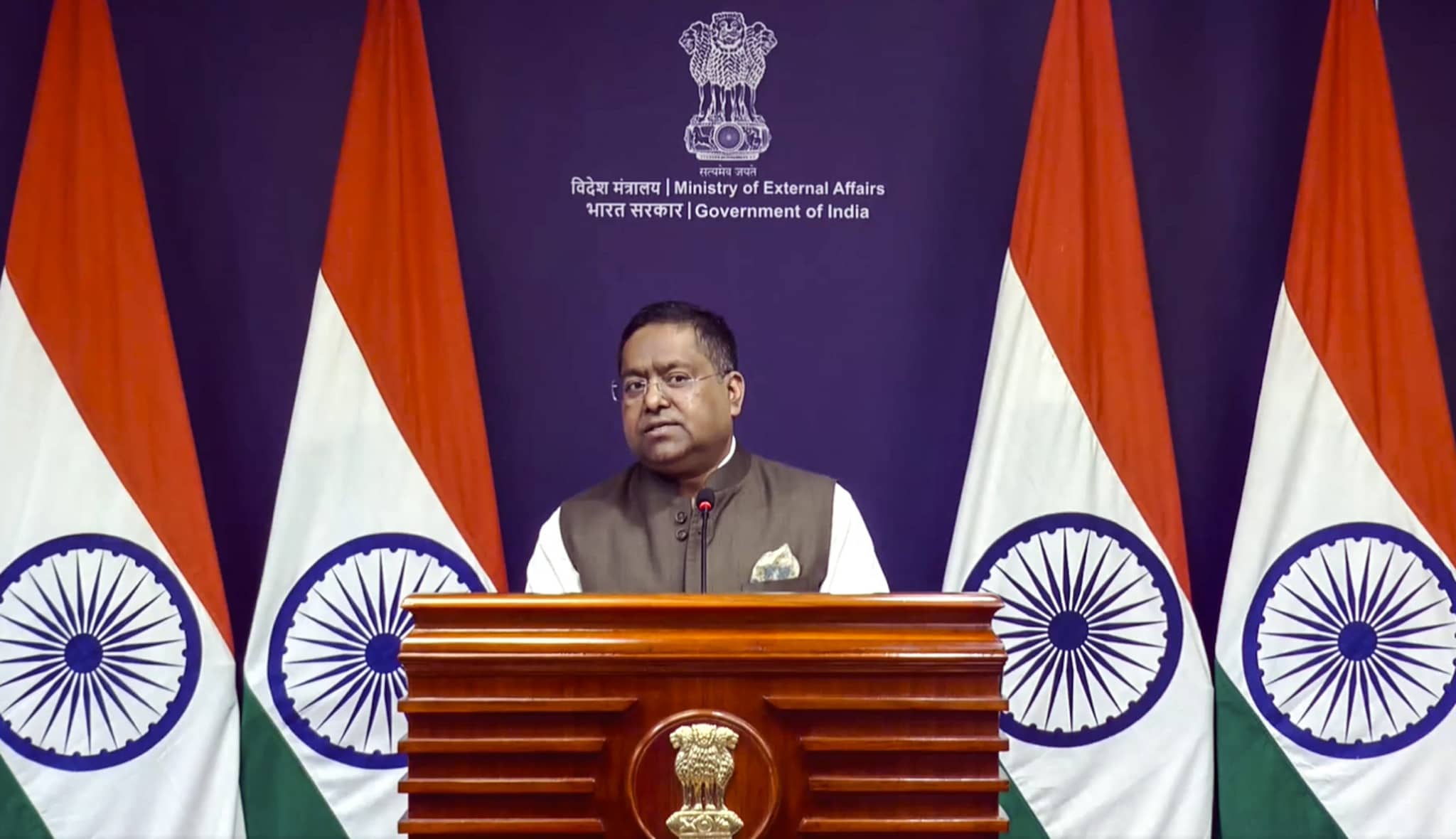
When the bombs fell, they didn't just hit a building. They hit the idea of a stable, civil society. The Indian Ministry of External Affairs, usually a place of measured, bureaucratic prose, issued a condemnation that crackled with a rare, cold heat. It was more than a formal protest. It was an indictment of a strategy that involves the systematic destruction of the one thing any country needs to survive: its infrastructure of mercy.
The Invisible Stakes of a Cold Sky
The human mind cannot easily process the death of a thousand people. We are wired for the individual. Consider a hypothetical surgeon, let’s call him Dr. Aria.
Aria grew up in Kabul. He survived the first Taliban era. He studied in India, perhaps in the bustling, chaotic halls of AIIMS. He returned to his home to fix the broken bodies of his countrymen. When the plane appeared on the radar, Dr. Aria was likely closing a wound or checking a fever. He represents the bridge between these two nations.
When a neighboring power—in this case, Pakistan—is accused of directing strikes on such a facility, that bridge is dynamited. The facts are these: the Afghan government and international observers pointed the finger squarely at Pakistani intelligence and military coordination. They argued that the sophistication of the strike, the timing, and the target profile weren't the work of a disorganized militia. This was state-sponsored precision directed at a civilian-military hybrid center.
The Pakistani government, as it has done for forty years, denied it. They spoke of "misinformation" and "deflecting internal failures." This is the dance. This is the script. But the script has become predictable, and the audience is exhausted.
The Burden of Being a Witness
India’s reaction was not just about the loss of life. It was about the loss of an investment in human dignity. For New Delhi, Afghanistan is the "Great Game" played in 4K resolution. If Afghanistan falls into a permanent state of chaos, the spillover doesn't stop at the Khyber Pass. It flows into the Kashmir Valley. It flows into the streets of Mumbai.
Security isn't a wall. It is a state of mind. When a hospital is bombed, the state of mind is terror.
The strategy behind these strikes—if we accept the evidence of coordination—is to prove that nothing is safe. It is to prove that the "old guard" of Afghan society, and its Indian backers, cannot protect the most vulnerable. It is a psychological amputation. You take away the doctors, and you take away the hope that things will ever be normal again.
There is a grim irony in the silence that follows such an event. The international community wrings its hands. There are meetings in Geneva and New York. There are "strongest possible terms" and "deep concerns." These phrases have become the background noise of the 21st century. They are the static on a radio that no one is listening to anymore.
The Real Cost of a Rubble-Strewn Ward
Statistics are the armor we wear to keep from feeling the truth. We say "thirty dead" or "fifty wounded" and the numbers act as a buffer. But the truth is in the details.
It’s in the tray of surgical instruments that will never be used. It’s in the medical records of a thousand patients that are now just charred confetti blowing through the streets of Kabul. It’s in the eyes of the young Afghan girl who was supposed to have a follow-up appointment for a shrapnel wound from a previous war, only to find that the place of her healing has become a place of her death.
This is the cycle. One side builds a school; the other side burns it. One side builds a hospital; the other side bombs it.
India’s condemnation was a signal that the "wait and see" approach is dying. For too long, the world has treated these border-crossing skirmishes and "accidental" strikes as the price of doing business in a volatile region. But a hospital is not a business. It is a sacred contract.
When Pakistan’s fingerprints are found on the controls of those planes, it shifts the narrative from a regional rivalry to a global concern. This isn't just about New Delhi versus Islamabad. It's about whether the world is willing to accept a reality where "collateral damage" includes the very people trying to stop the bleeding.
The Echo in the Halls of Power
Walking through the corridors of the South Block in Delhi, you feel the weight of this history. The red sandstone walls have seen empires come and go. They have seen the partition of a continent. But there is a new tension now. It is the realization that soft power has a ceiling.
You can build all the hospitals you want, but if your neighbor is willing to blow them up to make a point, the stethoscope is no match for the missile.
This realization is forcing a shift in how India views its role. It’s no longer enough to be the "big brother" or the "charitable neighbor." There is a growing, quiet fury that demands accountability. Not just a press release. Not just a tweet. Accountability that changes the calculus for the person in the cockpit and the person in the command center.
The world is moving toward a harder edge. The idealism that defined the post-Cold War era is being buried under the debris of Kabul’s wards. We are entering an age where the healer is a high-value target because the healer represents a future that the warlord cannot control.
The Finality of the Unseen
Night falls over Kabul, and the city is a patchwork of shadows and generators. The hospital stands like a broken tooth. The doctors who survived are still there, working in the dark, using the light from their mobile phones to stitch wounds.
They don't have time for the geopolitical chess match. They don't care about the press releases from New Delhi or the denials from Islamabad. They only care about the person on the table. They only care about the blood that won't stop.
But the rest of us must care. We must care because the moment we stop being shocked by the bombing of a hospital is the moment we admit that the world is no longer a civil place. It is the moment we accept that there are no sanctuaries left.
The sky over Afghanistan is clear tonight. It is a beautiful, cold, indifferent blue. It is the same sky that watched the planes arrive, and it is the same sky that will watch the next ones. The only thing that has changed is the silence. It is heavier now. It is a silence filled with the ghosts of a thousand missed heartbeats, and the knowledge that the world’s conscience is as fragile as a pane of glass in a blast zone.
A doctor reaches for a suture. The thread is thin, almost invisible. He tries to pull the edges of the world back together, one stitch at a time. But the wound is deep. And the people who caused it are already looking for their next target.
Would you like me to analyze the historical parallels between this event and previous regional hospital attacks?